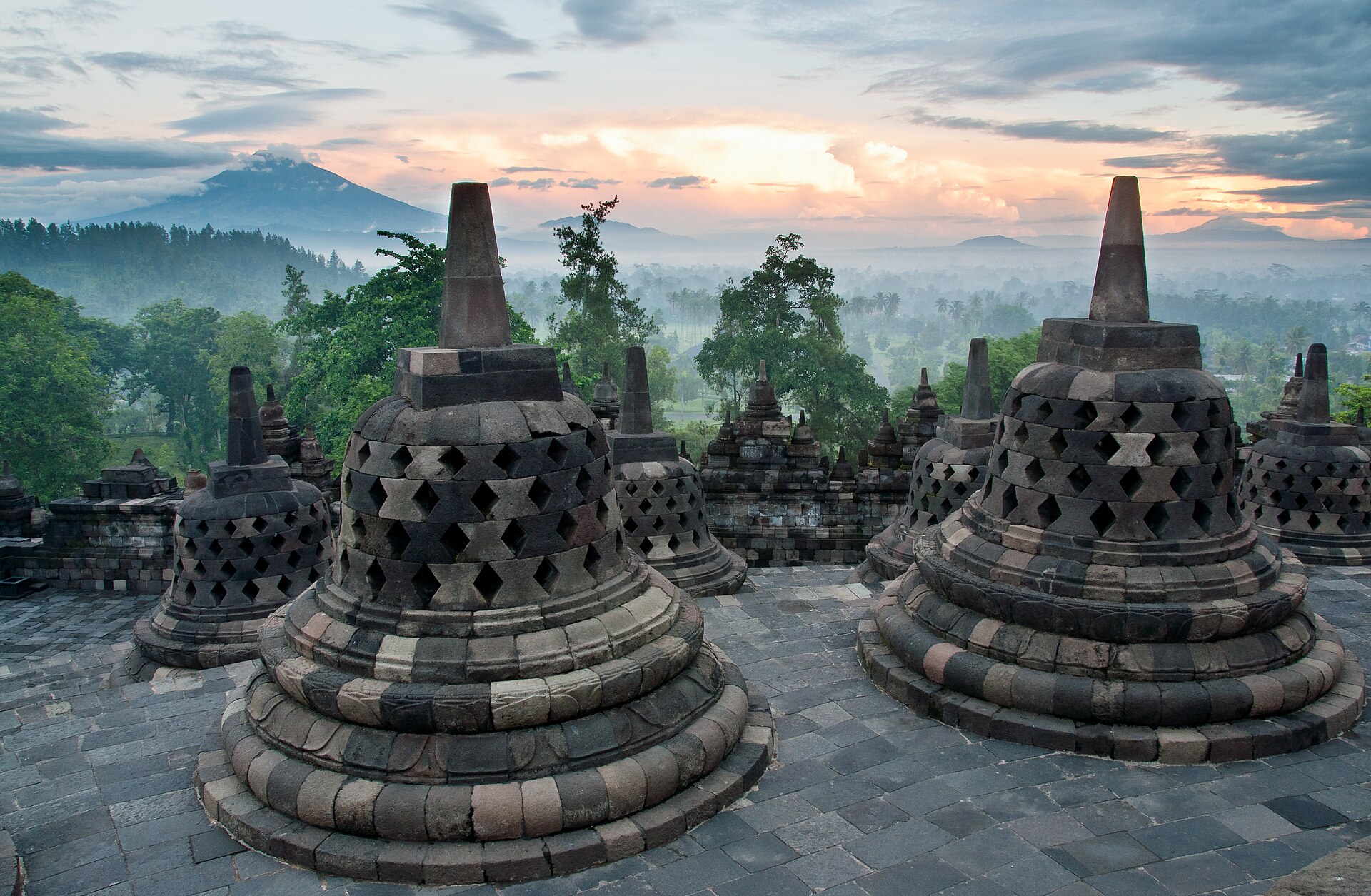
Borobudur at sunrise · Justine Hong · CC BY 2.0

Buddhism

Tradition·Founded c. 480 BCE·est. ~500 million worldwide

Vedic Religion → Buddhism → 3 branches

Branch
Rite of Buddhism

Paritta — the protective chant.

Monks called to the house for an illness, a birth, a threat. A white thread runs from the chanting to a water pot to every hand in the room, and the water is drunk afterward.

⏱ at illness, a new house, a birth, a threat◌ monks invited in; the household listening
What happensMonks chant the protective suttas, often through a thread held by everyone present and tied to a water pot
What it needsA quorum of monastics, a length of white thread, water to be blessed
What it aims atProtection, plainly asked for — the practical religion beside the philosophical one
Understanding it — context, not catechism: how this rite is held

Paritta is where Theravada Buddhism does the thing its philosophy says it does not do. Specific suttas — the Ratana, the Karaniya Metta, the Angulimala — are chanted for protection against illness, spirits, difficult births and general misfortune, with a white thread carried from the monks' hands round the room and into a pot of water that is afterward drunk or sprinkled. Doctrinally the explanation is that the power lies in the truth of the words and the state of mind produced by hearing them, not in any transaction with a spirit. In practice it is apotropaic religion, it is extremely popular, and monastics perform it willingly.

The same ground, other faiths

rites that share this one's ideas
Wudu — the ablution. Islam Go deeper →
The kusti prayer, five times a day. Zoroastrianism Go deeper →
A Agni — the fire that carries. Vedic Religion · figure Meet them →
The Namokar mantra. Jainism Go deeper →
Shabbat — the day of rest. Judaism Go deeper →

The conversation

argument stays attached to the rite it is about All discussion →

Sign in to open the first thread. Everything here is attributed.

Built on Hatchable