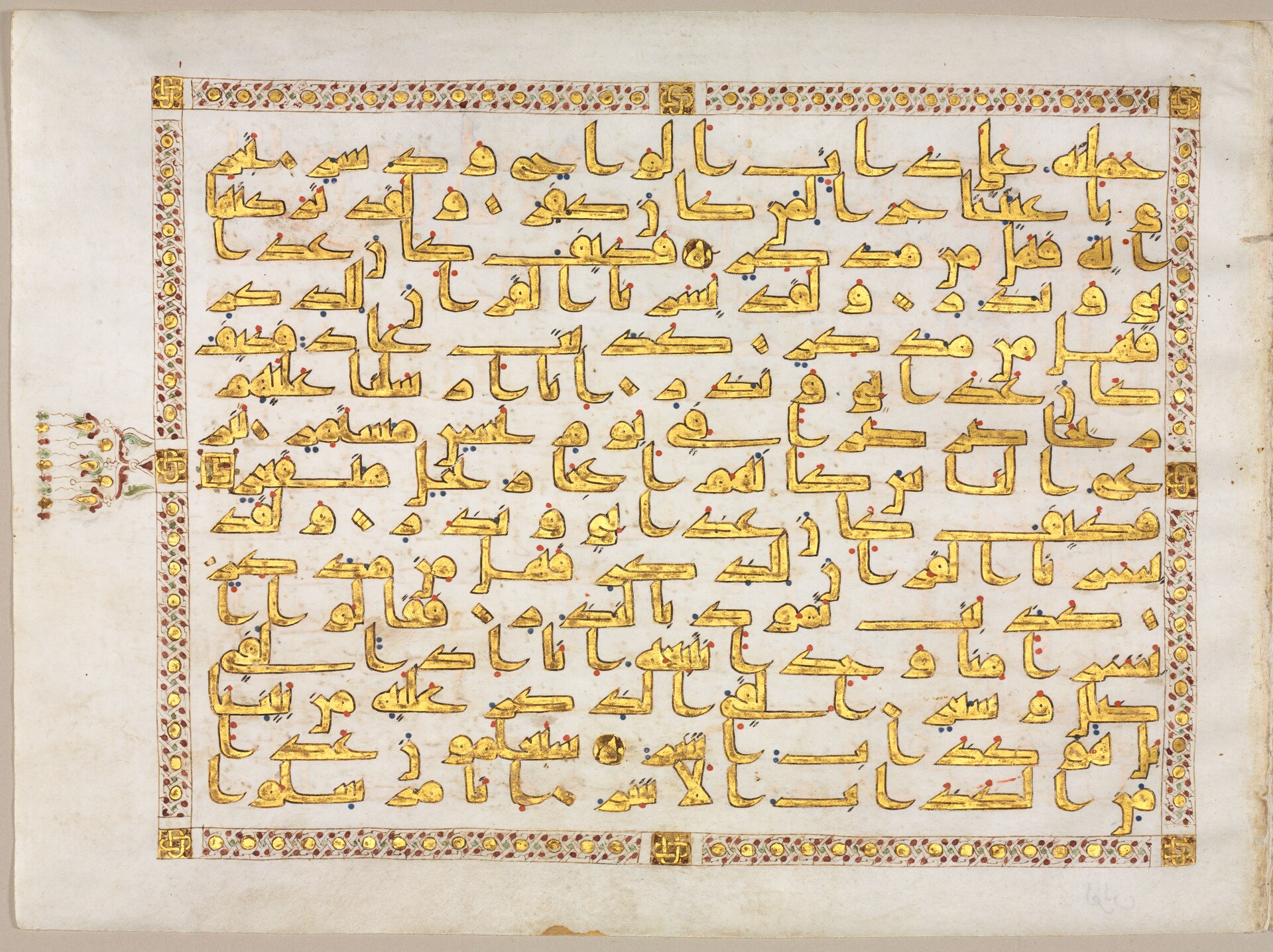
Do not waste, even at a river.
A hadith has the Prophet find Sa'd using too much water for wudu and object. Even at a running river, Sa'd asks. Even there, he is told. Another has a woman condemned over a cat she shut in until it starved, and a prostitute forgiven for pulling water up for a dog.
Israf and tabdhir — excess and squandering — are named vices in the Quran, and the tradition attaches them to water first because water is what a desert religion notices. The wudu-at-the-river hadith is the standard proof text, and jurists specified amounts: a mudd of water for ablution, a sa' for the full bath, both small. The animal material is unusually strong for a pre-modern legal system: a hadith condemning a woman over a cat, another forgiving a sinner for watering a thirsty dog, prohibitions on branding an animal's face, on using a living creature as a target, and on slaughtering within sight of another animal. Contemporary Islamic environmentalism — the 2015 Islamic Declaration on Global Climate Change, the green mosque movement, the halal-and-tayyib argument about factory farming — builds directly on this material. The tension is obvious and worth stating: the argument is being made most loudly in and about states whose economies are built on hydrocarbons, and Muslim environmentalists say so themselves.
The same ground, other faiths
claims that share this one's ideasSign in to open the first thread. Everything here is attributed.