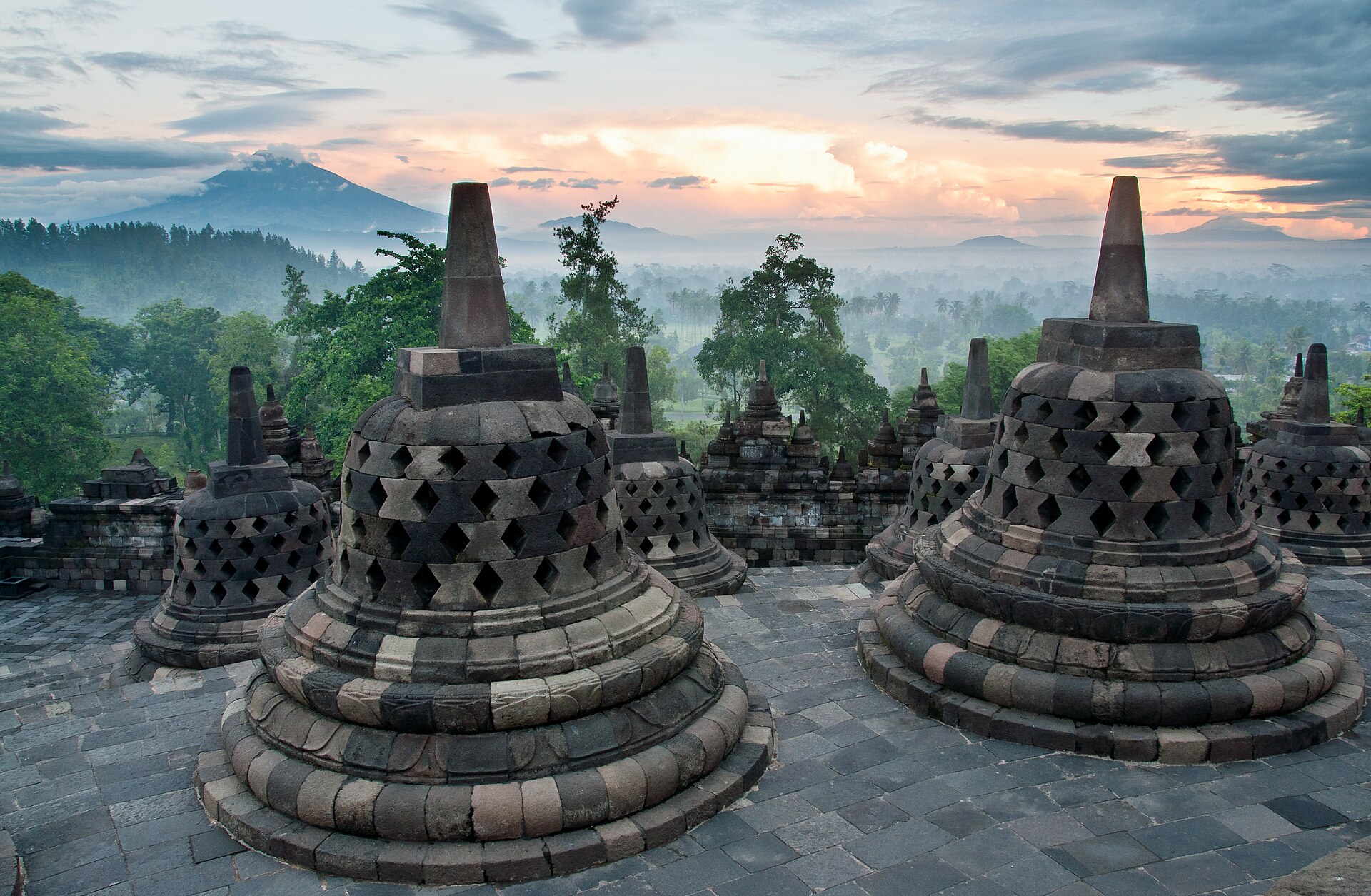
Everything that arises passes away.
Anicca, the first of the three marks. Not a mood about mortality: a claim that nothing at all — not the mountain, not the mind watching it — holds still long enough to be a thing.
Impermanence is the load-bearing claim: the other two marks follow from it. If nothing persists, then nothing can be held without loss (dukkha), and there is no unchanging core to be a self (anatta). The tradition means it at every scale — geological, biographical, and momentary, down to the doctrine that mind-states arise and vanish faster than they can be counted. What makes it religious rather than merely true is the instruction attached: not "therefore despair" but "therefore stop clutching." Meditation practice is largely the business of watching arising and passing until the nervous system believes what the mind already concedes.
All conditioned things are impermanent. When one sees this with wisdom, one turns away from suffering.
Dhammapada 277 (rendered)The mark stated as method: seeing it is the turn.
The same ground, other faiths
claims that share this one's ideasSign in to open the first thread. Everything here is attributed.