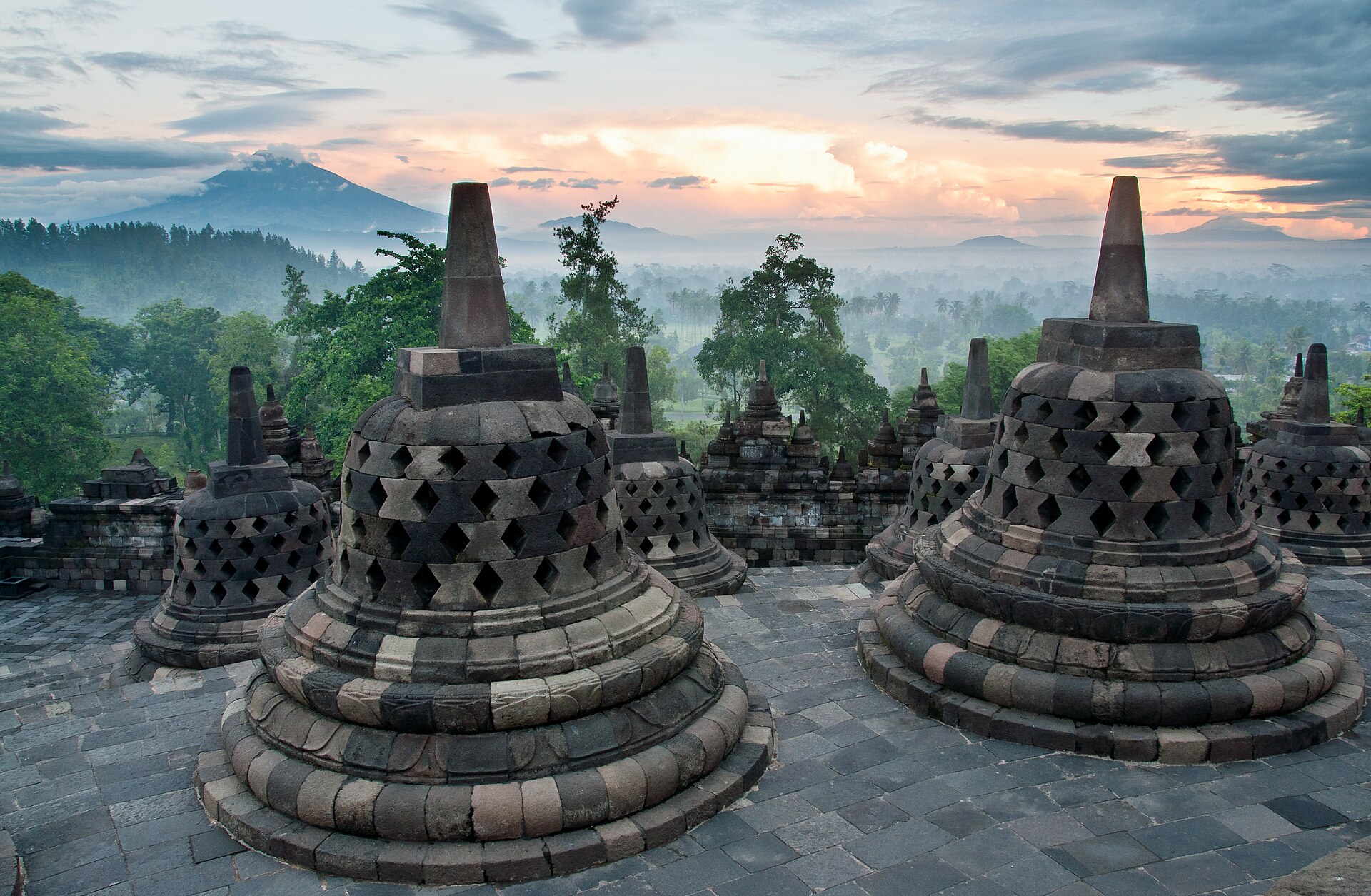
Borobudur at sunrise · Justine Hong · CC BY 2.0

Buddhism

Tradition·Founded c. 480 BCE·est. ~500 million worldwide

Vedic Religion → Buddhism → 3 branches

Branch
Precept of Buddhism

The Eight Precepts.

On observance days a layperson takes on three more: nothing to eat after midday, no music, dancing, perfume or jewellery, and no comfortable bed. A monastic life rented for twenty-four hours.

What it asksThe five, plus: no eating after noon, no entertainment or adornment, no luxurious bed
Who it bindsLaypeople, voluntarily, on observance days and retreats
Where it bitesThe noon rule is the one that bites — it turns an abstract commitment into an afternoon of being hungry
Understanding it — context, not catechism: how this passage is held

The eight precepts are how a layperson tries monasticism on for a day. On uposatha observance days, and throughout a retreat, the usual five are extended: the third changes from avoiding sexual misconduct to celibacy outright, and three more are added — no solid food after midday, no entertainment, cosmetics or jewellery, and no high or luxurious bed. In Theravada countries older laypeople in white robes keep them at the temple on full-moon days as a matter of course. The one everybody talks about is the noon rule, because hunger arrives on schedule and makes an abstract undertaking extremely concrete by about four in the afternoon.

The same ground, other faiths

claims that share this one's ideas
The fasting year. Jainism · rite Go deeper →
Lent — the forty days. Christianity · rite Go deeper →
S Shiva — destroyer and regenerator. Hinduism · figure Meet them →
The Yom Kippur fast. Judaism · rite Go deeper →
Life is ordered by submission. Islam · core tenet Go deeper →
Haumai is the disease; the five thieves are the symptoms. Sikhism · core tenet Go deeper →

The conversation

argument stays attached to the claim it is about All discussion →

Sign in to open the first thread. Everything here is attributed.

Built on Hatchable