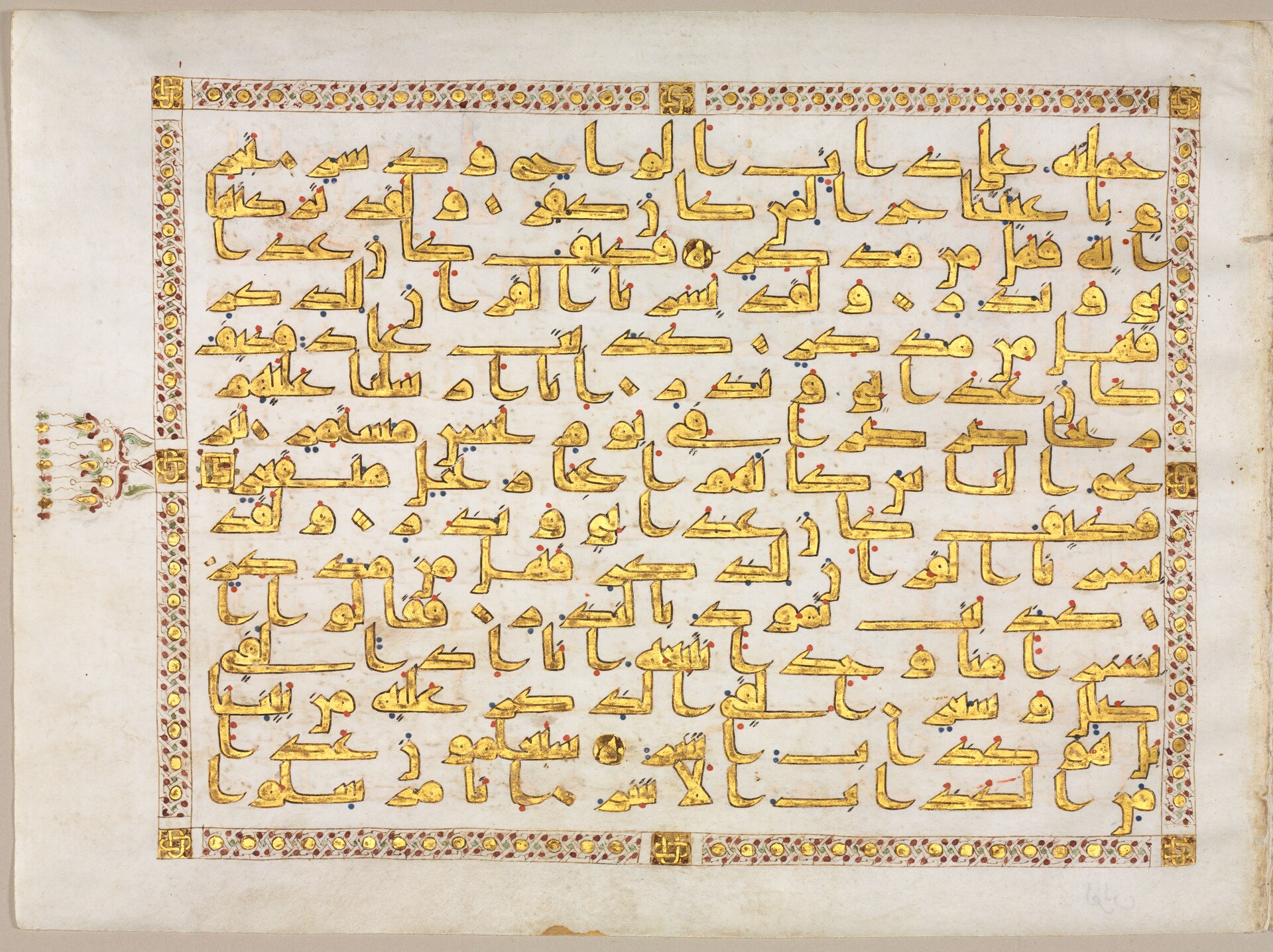
The adhan.
Seven lines, five times a day, and in a Muslim-majority city you cannot be outdoors and not hear it. Bilal, an enslaved Ethiopian, was chosen to be the first to call it, which the tradition tells as a deliberate reversal of who gets to speak for a city.
The call is seven lines and takes about ninety seconds, and in a Muslim-majority city it structures the day for everyone in earshot regardless of belief. The hearer is meant to repeat each line quietly, except the two about hastening to prayer and to success, which are answered with there is no power and no strength save in God. Bilal ibn Rabah, an enslaved Ethiopian, was chosen as the first muezzin, and the tradition tells this as a deliberate reversal — the voice of the city given to the person with the least claim on it. Amplification is entirely modern, and it has become a political question: Israel, India, Nigeria, Egypt and Indonesia have all legislated or campaigned on mosque loudspeaker volume in the last decade, and Egypt moved to a unified broadcast call in Cairo to reduce the overlap of thousands of mosques. The call also marks time in places with no clocks, and pre-modern Islamic astronomy developed partly to fix it accurately.
The same ground, other faiths
rites that share this one's ideasSign in to open the first thread. Everything here is attributed.