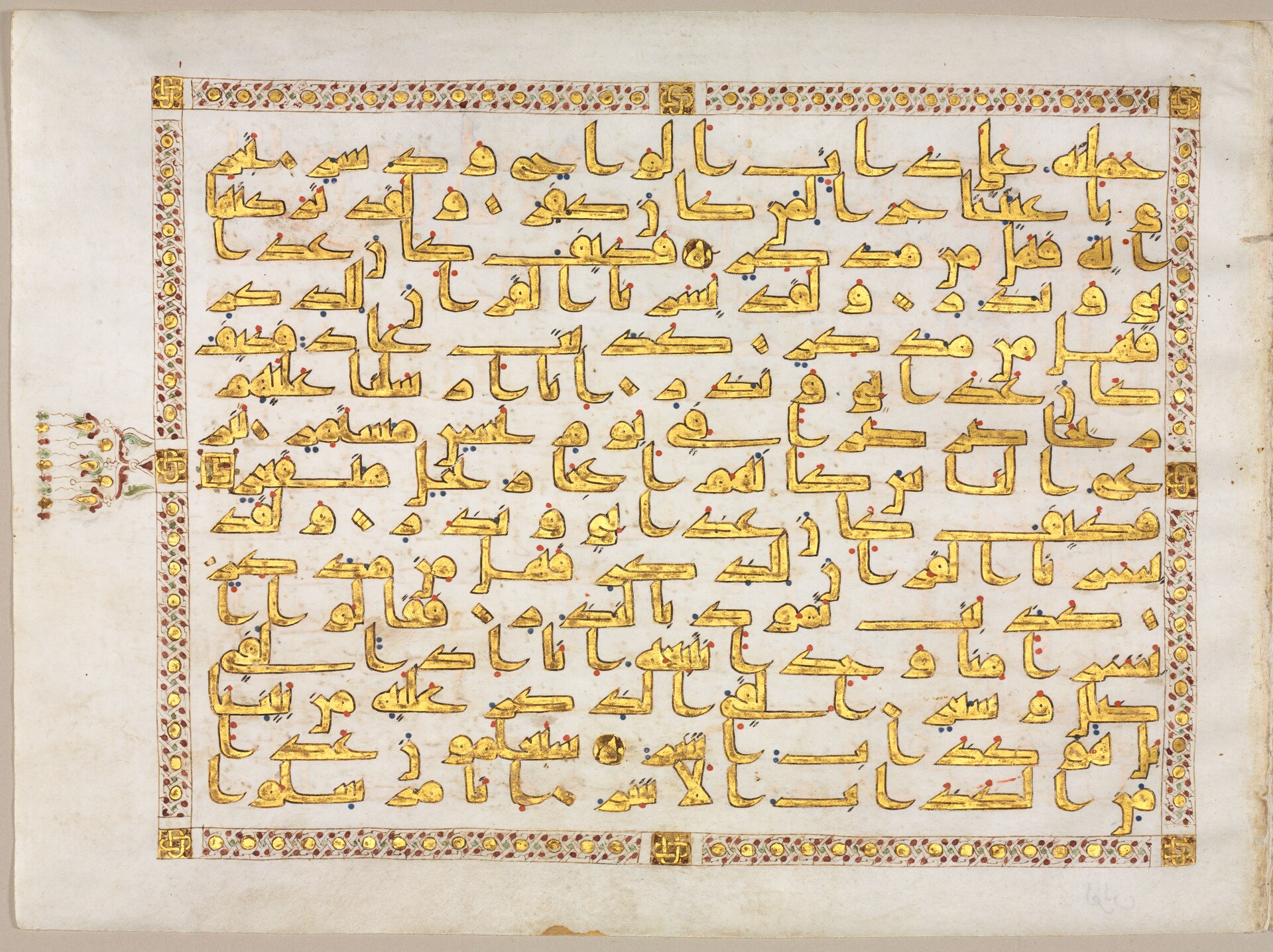
Khidr and Musa.
Musa asks to learn from a servant of God and is told he will not be able to bear it. Khidr sinks a working boat, kills a boy, and rebuilds a wall for a town that refused them food. Musa objects each time, is dismissed, and only then hears the reasons. It is the tradition's sharpest statement that you are not owed an explanation in advance.
Musa asks to follow a servant of God, whom tradition names Khidr, in order to learn, and is warned he will not be able to bear it. Three things happen: Khidr scuttles a boat belonging to poor fishermen, kills a young boy, and rebuilds a collapsing wall in a town that refused them both hospitality. Musa objects each time despite promising not to, and after the third is dismissed. Only then is he told: the boat was about to be seized by a king taking every sound vessel, the boy would have grown to oppress his believing parents, and under the wall was treasure belonging to two orphans that needed to stay hidden until they were grown. It is the Quran's most direct treatment of the problem of apparent injustice, and its answer is uncomfortable — not that suffering is illusory but that the explanation is withheld, and that the demand for it in real time is itself the failure. Khidr became a major figure in Sufi tradition as the teacher who appears without lineage, and is claimed as the initiator of several orders.
The same ground, other faiths
claims that share this one's ideasSign in to open the first thread. Everything here is attributed.