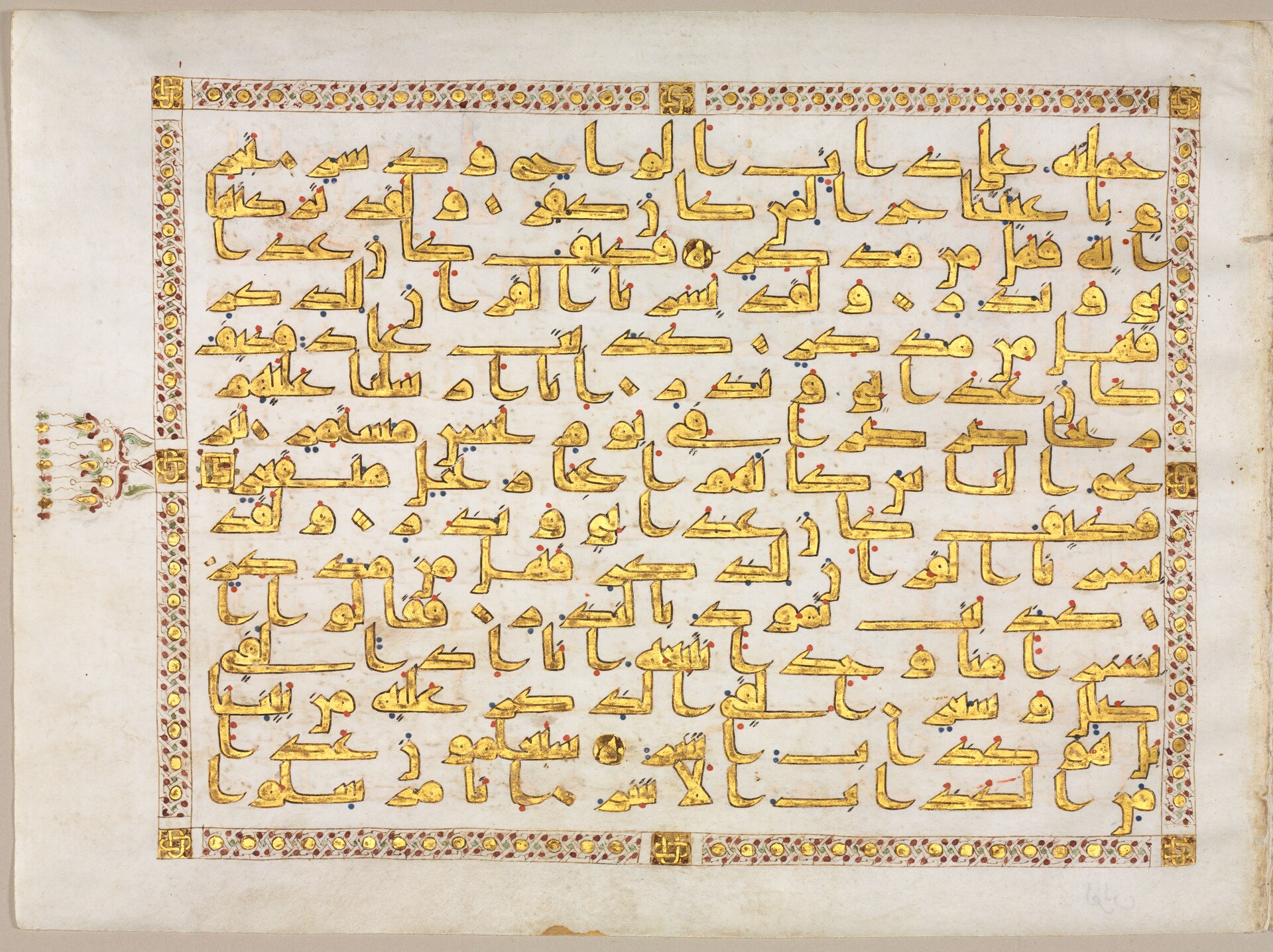
Bilal under the rock.
Enslaved, pinned under a stone in the midday sun by his owner to make him recant, he said one, one. Abu Bakr bought and freed him, and the Prophet made him the first to call the prayer from the roof of the Kaaba — an Ethiopian former slave given the voice of the city.
Bilal ibn Rabah was enslaved in Mecca, owned by Umayya ibn Khalaf, and when he accepted Islam he was dragged into the desert at midday, laid on his back and weighted with a boulder to force him to recant. What he said instead was ahad, ahad — one, one. Abu Bakr bought and freed him. After the migration to Medina, when the community needed a way to call people to prayer and rejected bells and horns as belonging to other communities, the Prophet chose Bilal to call it, and at the taking of Mecca he climbed onto the roof of the Kaaba to do so — an Ethiopian former slave standing on the most sacred structure in Arabia, giving the voice of the city. It is the single most retold story about race and status in Islam, told to every Muslim child, and it is the standard answer given when the religion's own history of slavery is raised. Both things are in the record: Islamic law regulated and did not abolish slavery, and this story sits at the centre of the tradition's self-image.
Ahad. Ahad.
Reported words of Bilal ibn Rabah under torture, in the sira of Ibn Ishaq (rendered)One, one. The Arabic is a single word, repeated, under a boulder in the midday sun.
The same ground, other faiths
claims that share this one's ideasSign in to open the first thread. Everything here is attributed.