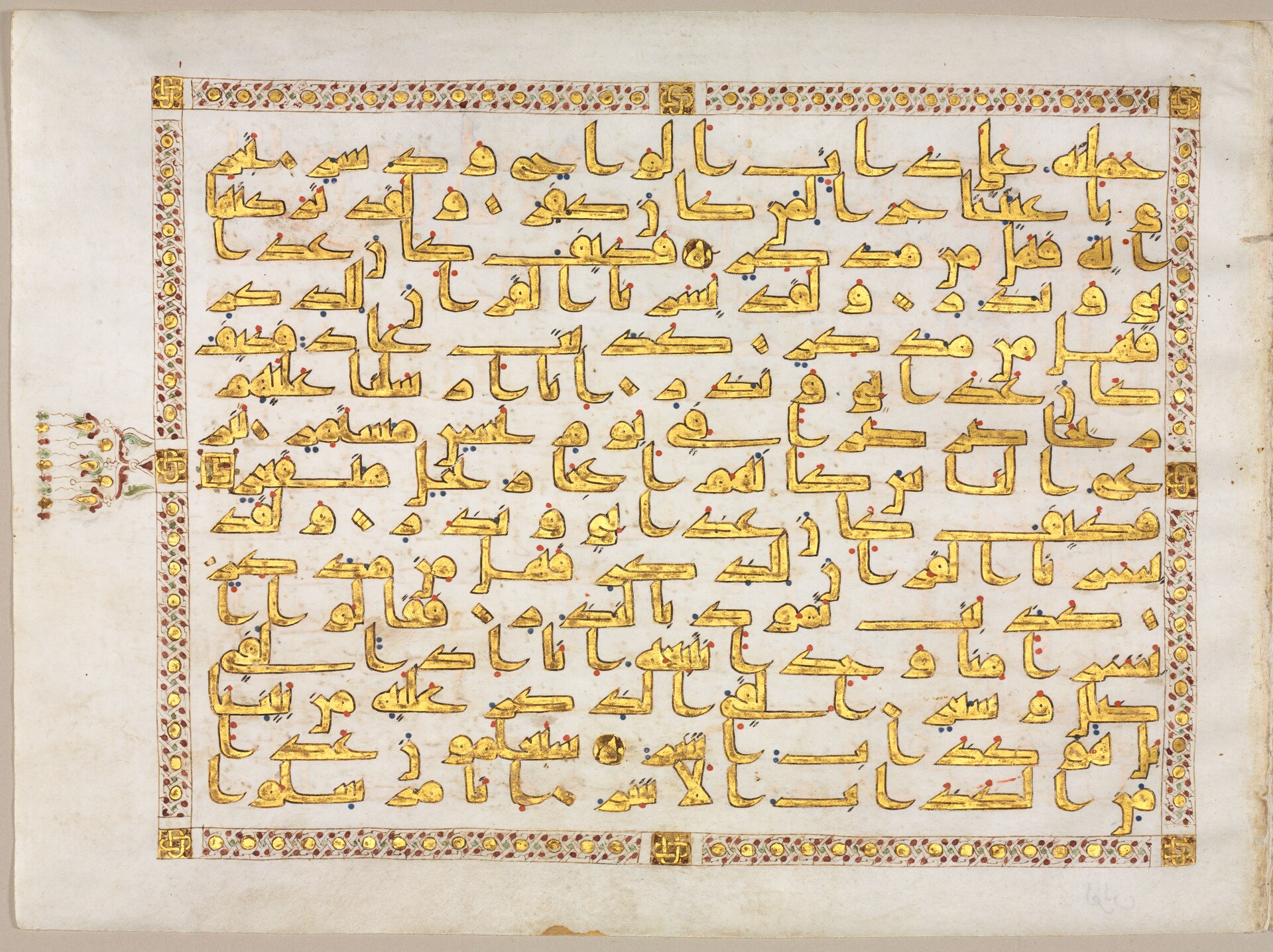
Karbala.
In 680 the Prophet's grandson Husayn, with about seventy-two companions and his family, was surrounded on the plain of Karbala, cut off from the Euphrates for three days, and killed. His sister Zaynab survived, was marched to Damascus as a captive, and spoke in the court of the man responsible. Shia Islam is organised around this story.
In October 680 Husayn ibn Ali, grandson of the Prophet, refused allegiance to the Umayyad caliph Yazid and set out for Kufa, whose people had invited him. He was intercepted on the plain of Karbala by a far larger force, cut off from the Euphrates for three days, and killed along with about seventy-two companions and members of his family, including an infant son. The women and children were taken captive and marched to Damascus, where his sister Zaynab spoke in the court of the man who had ordered it — her speech is recited annually and is the reason the story survives as an act of witness rather than only a defeat. Shia Islam is organised around this event in a way that has no exact parallel elsewhere: it generates the mourning calendar, the pilgrimage to Karbala, the theology of intercession, and a political reading in which the just minority stands against illegitimate power. Sunni Muslims also revere Husayn and generally condemn Yazid; the difference is what is built on it. The phrase every day is Ashura and every land is Karbala was used to enormous effect in the Iranian revolution.
The same ground, other faiths
claims that share this one's ideasSign in to open the first thread. Everything here is attributed.