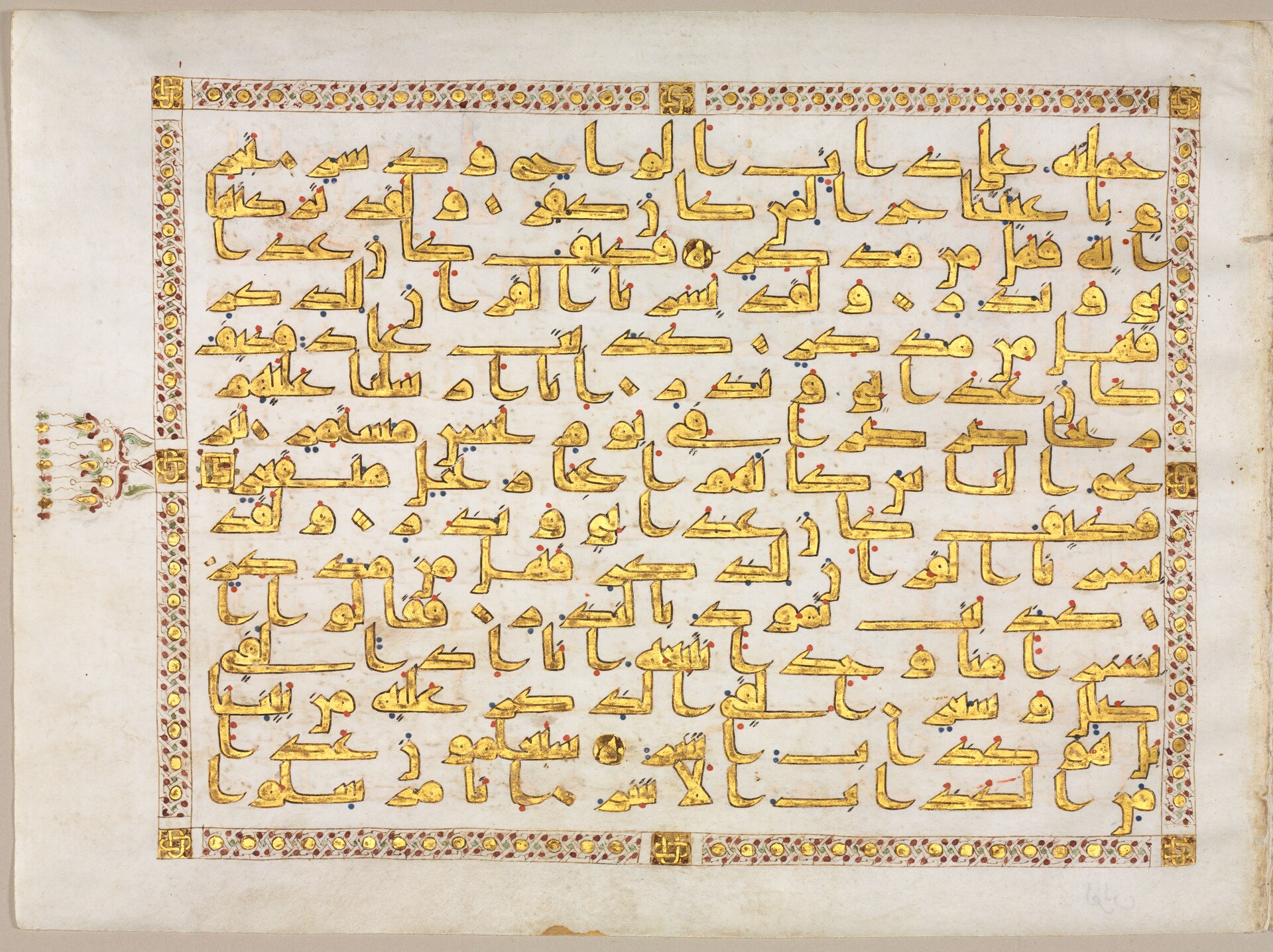
Rabia, with fire and water.
Asked where she was going with a torch in one hand and a bucket in the other, she said she meant to burn paradise and put out hell, so that people would stop loving God for the reward and the fear. She lived in eighth-century Basra and never married, on the grounds that it would be a distraction.
Rabia al-Adawiyya lived in Basra in the eighth century, was reportedly sold into slavery as a child and freed, and refused marriage on the grounds that it would divide her attention. The story most attached to her has her walking with a torch in one hand and a bucket of water in the other; asked why, she says she is going to burn down paradise and put out the fires of hell, so that people will stop worshipping God for the reward and out of the fear, and love God for God alone. Her prayers as transmitted make the same move: if I worship you for fear of hell, burn me in it; if for hope of paradise, exclude me from it; but if I worship you for your own sake, do not withhold your everlasting beauty. She is the figure who moved Sufism from asceticism to love as its central category, and she did it as a woman with no institutional position at all, which the later orders had to accommodate. Most of what is known comes through Attar's Memorial of the Saints, written four hundred years later, so the historical Rabia and the transmitted one are not easily separated.
O God, if I worship you for fear of hell, burn me in it; if I worship you in hope of paradise, exclude me from it; but if I worship you for your own sake, do not withhold from me your everlasting beauty.
Attributed to Rabia al-Adawiyya of Basra, d. 801, transmitted in Attar, Memorial of the Saints (rendered)Transmitted four centuries after her; the historical Rabia and the remembered one cannot be cleanly separated.
The same ground, other faiths
claims that share this one's ideasSign in to open the first thread. Everything here is attributed.