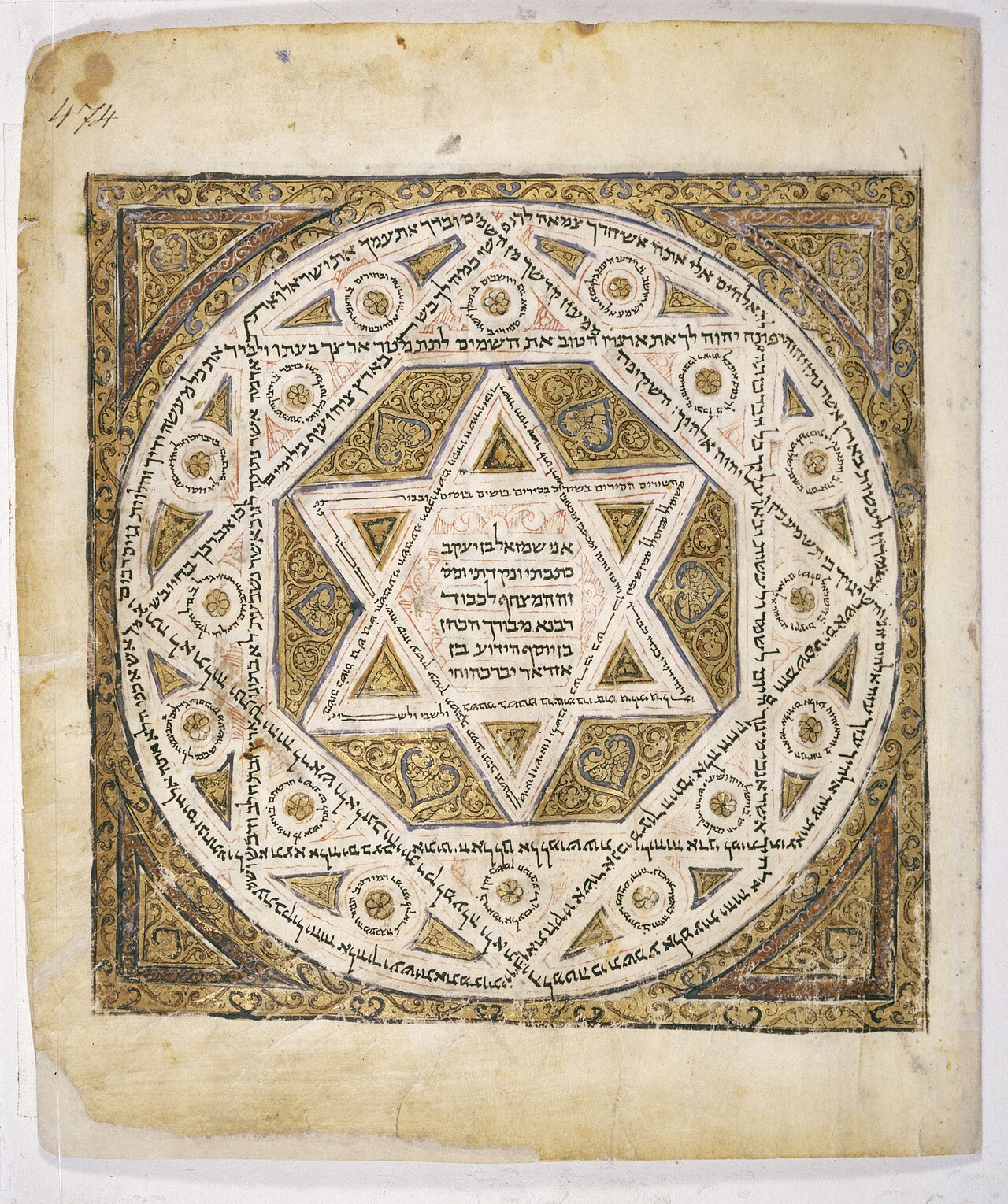
The Shechinah — the presence that went into exile.
Kabbalists say l'shem yichud before a commandment — for the sake of uniting the Holy One and his Shechinah. Friday night welcomes Shabbat as a bride, and Sephardi communities sing Lecha Dodi to a different melody every week of the year.
The Shechinah began as a rabbinic term for God's presence in a place — resting on the Temple, on a court of judges, between two people studying, at the head of a sick person's bed. It is grammatically feminine, and the rabbis worked the grammar hard enough that the tradition ended up with a feminine aspect of God nobody planned. Kabbalah made this a structural claim: the Shechinah is the tenth sefirah, the receptive end of the divine, exiled from the higher sefirot by human sin and reunited by human action, which is why kabbalists preface a commandment with a declaration of intent to unite the Holy One and his Shechinah. Friday night mystically weds them, which is why the Shabbat is met as a bride and why Jewish law regards Friday night as the appropriate time for marital sex. Since the 1970s Jewish feminist theology has taken the Shechinah far beyond anything the rabbis intended, and the objection from traditionalists is not that she is feminine but that she is being addressed.
The same ground, other faiths
claims that share this one's ideasSign in to open the first thread. Everything here is attributed.