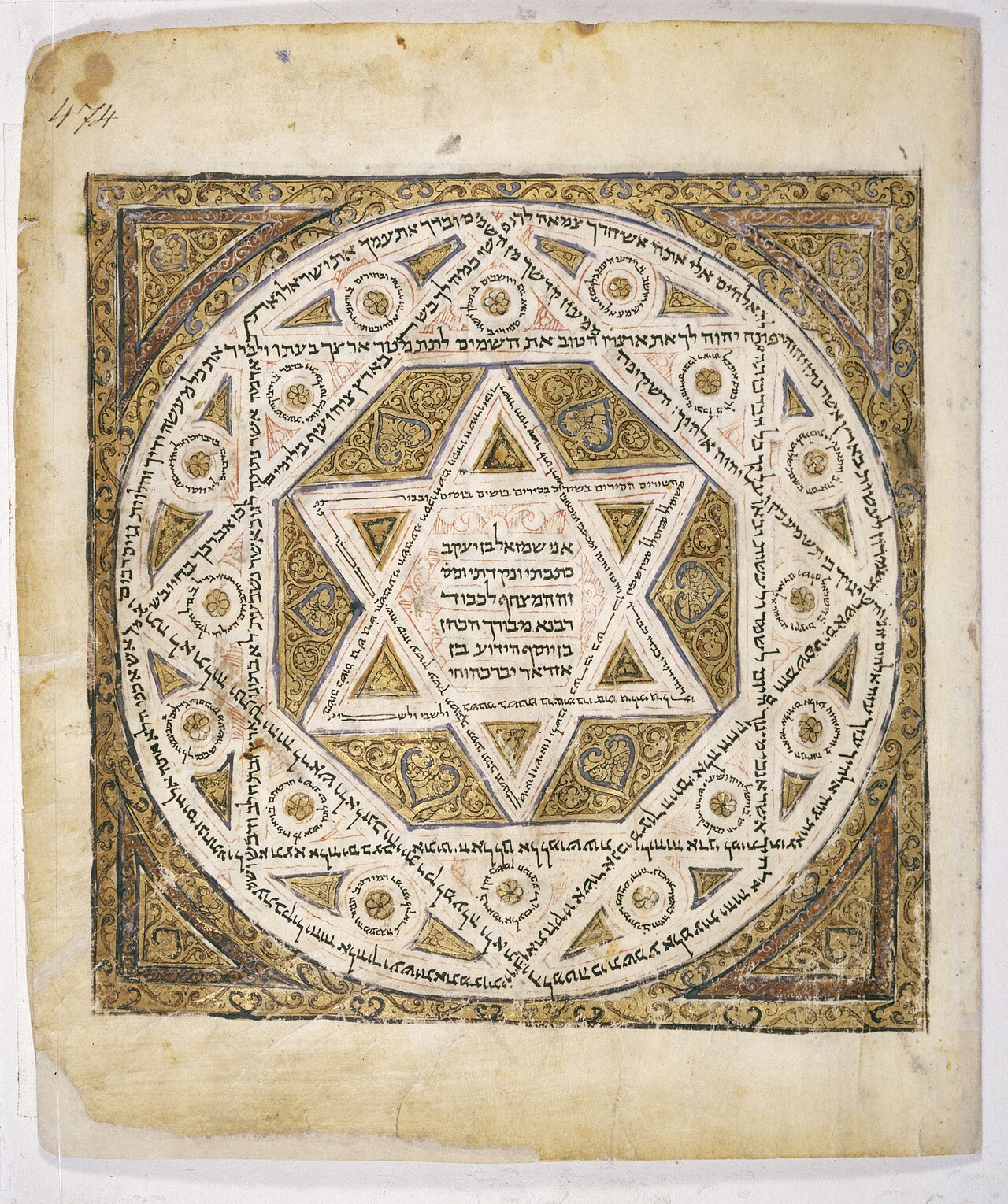
God has no body, and no image of God is possible.
Maimonides made incorporeality the third of thirteen principles, and the Torah's outstretched arm became language stooping to be understood. The commandment is enforced hard enough that a tradition three thousand years old produced almost no religious portraiture.
Jewish aniconism is not squeamishness about art; it is a claim about what God is not. Maimonides argued in the Guide for the Perplexed that every physical description of God in scripture is an accommodation to human language, and that anyone taking them literally has left monotheism — a position sharp enough that his books were burned by other Jews in Montpellier within forty years of his death. The result is visible in any synagogue: no statues, no God-images, decoration that runs to lions, vines and lettering. Where Jewish figurative art did appear — the third-century Dura-Europos frescoes, illuminated haggadot, the painted wooden synagogues of Poland — it shows people and events, never the divine. Even the Name is guarded: four letters, never pronounced, replaced by Adonai in prayer and HaShem outside it, and printed with a dash in many English books so a page cannot be desecrated. The one thing the tradition does treat as an image of God is a human being, which is why the same theology that forbids portraits makes humiliating a person a form of bloodshed.
To whom then will you liken me, that I should be his equal? says the Holy One.
Isaiah 40:25 (rendered)The prophetic form of the second commandment: not do not carve, but there is nothing to carve.
The same ground, other faiths
claims that share this one's ideasSign in to open the first thread. Everything here is attributed.