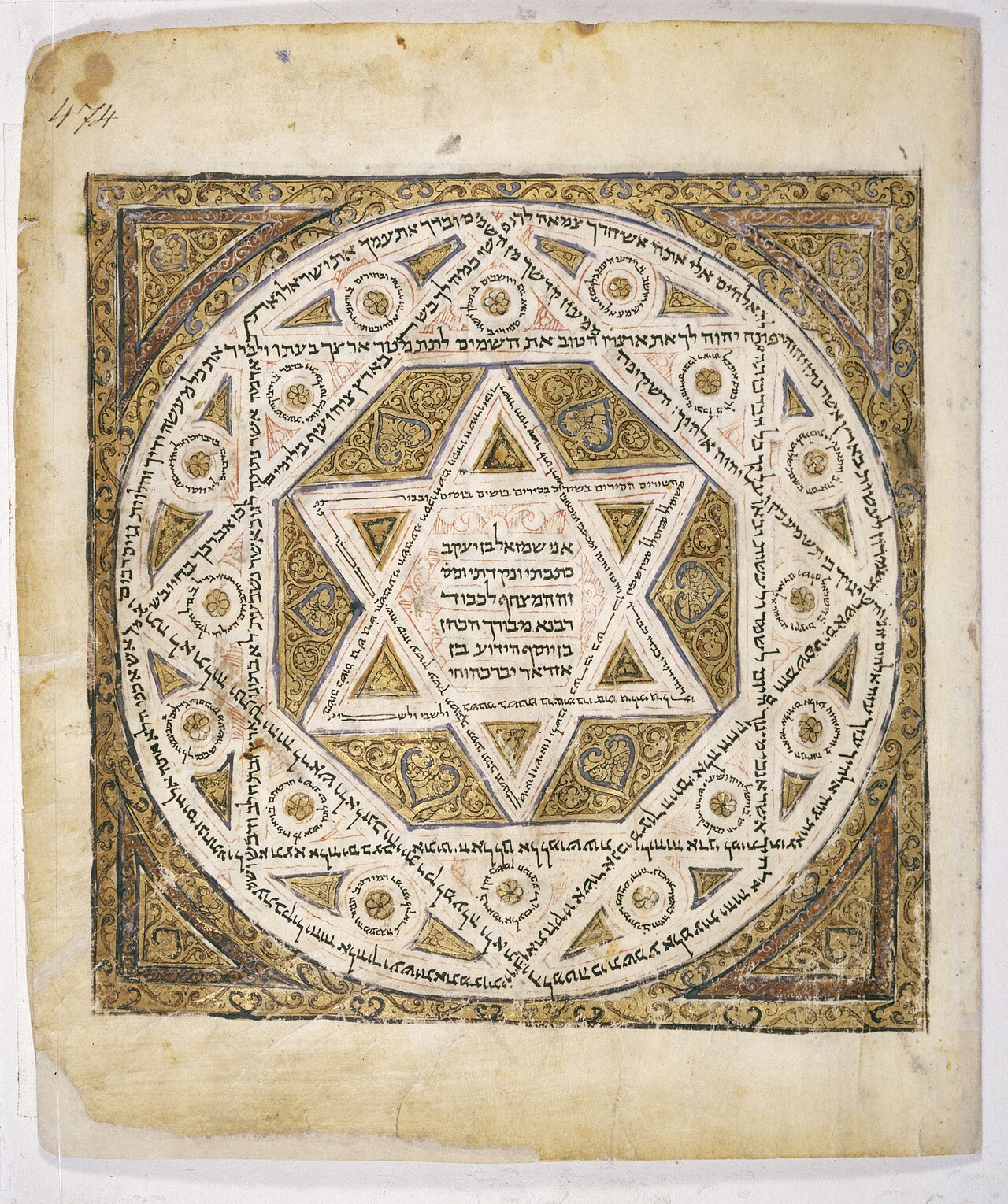
Esther, in a book where God is never named.
The name Esther is read against hester, hiding, and the rabbis found in it the model for a God who acts without appearing. It is also the book with the highest body count in the Tanakh, and Jews read it in costume.
Esther is the only book of the Tanakh in which God is not mentioned once, and the rabbis nearly kept it out for that reason — the Talmud records the debate about whether it defiles the hands, the technical marker of canonicity. What got it in was partly its popularity and partly a reading of its silence as the point: the name Esther is heard against hester panim, the hidden face, and the book becomes a model of providence that leaves no fingerprints. It is also violent and morally awkward. Esther is taken into a harem, not a marriage of choice; the Jews of Susa are permitted to kill seventy-five thousand people; and the book ends in a celebration. Jews read it aloud twice a year in costume with children making noise, which is either a coping mechanism or a moral scandal depending on who is describing it. Contemporary readings by Jewish feminists have taken far more interest in Vashti, who is deposed in chapter one for refusing to be displayed.
The same ground, other faiths
claims that share this one's ideasSign in to open the first thread. Everything here is attributed.