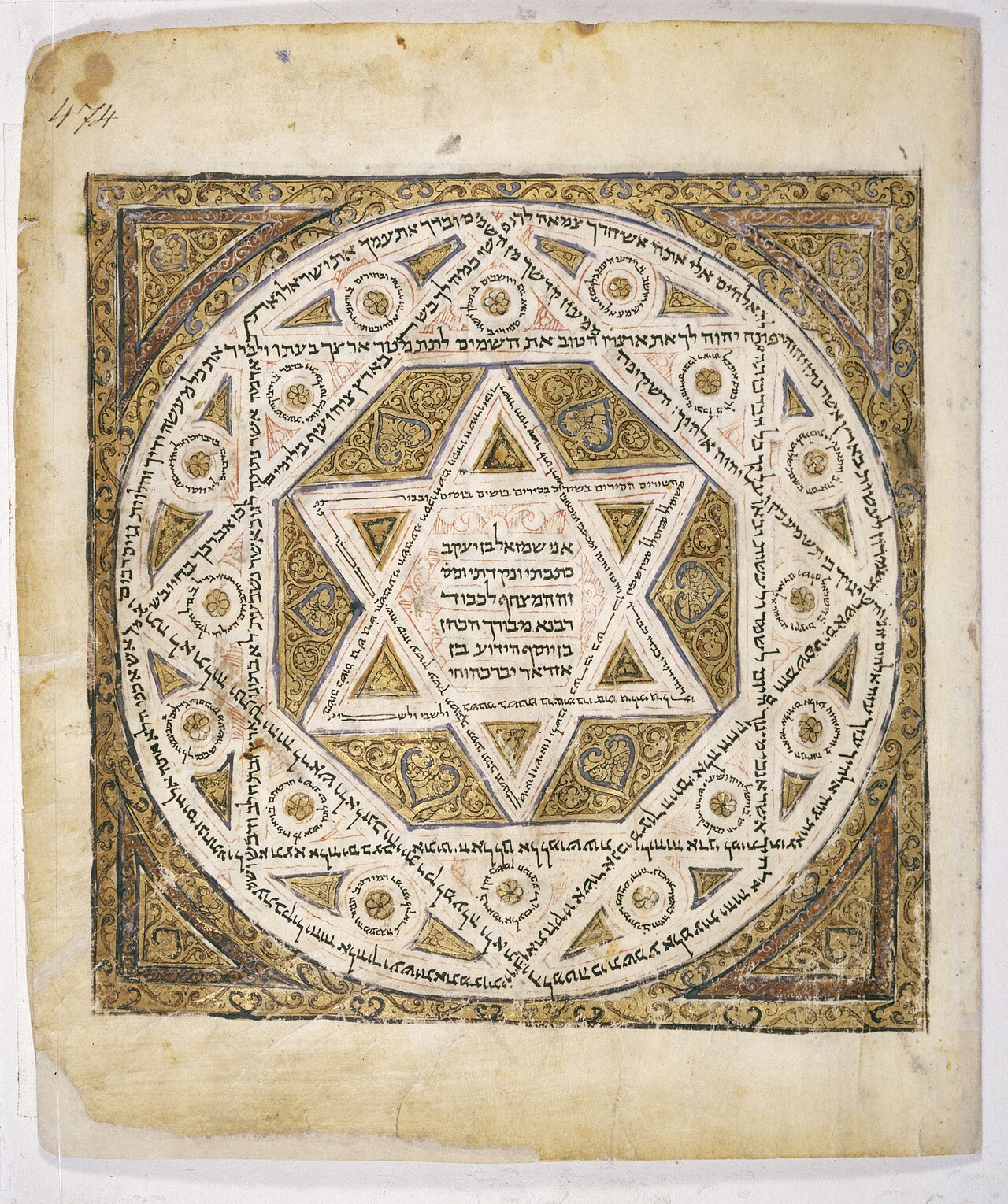
Three prayers a day.
The weekday Amidah has nineteen blessings and takes about four minutes if you mean it. Most Jews who pray daily do it in a room with other people before work, and the whole thing is over in twenty-five minutes.
Fixed daily prayer is the spine of observant Jewish life and the thing that most distinguishes it from a religion of festivals. The three services were matched by the rabbis both to the patriarchs and to the Temple offerings they replaced after 70 CE, which is why Mincha is squeezed into the working afternoon and why Musaf, an additional service, exists on Shabbat and festivals. At the centre is the Amidah, said standing with the feet together in imitation of angels, silently, then repeated aloud by the leader for those who cannot read it — a provision from an age of low literacy that survives as the structure. Nineteen blessings on a weekday: praise, then requests for understanding, repentance, forgiveness, health, a good harvest, the ingathering of exiles, justice, Jerusalem, and the messiah, then thanks and peace. Reform services are shorter, in the vernacular in large part, and often held only on Friday night; Conservative services are close to the traditional length. Across all of it, the daily minyan is a scheduling problem communities organise their week around, and the reason mourners can say kaddish at all.
The same ground, other faiths
rites that share this one's ideasSign in to open the first thread. Everything here is attributed.