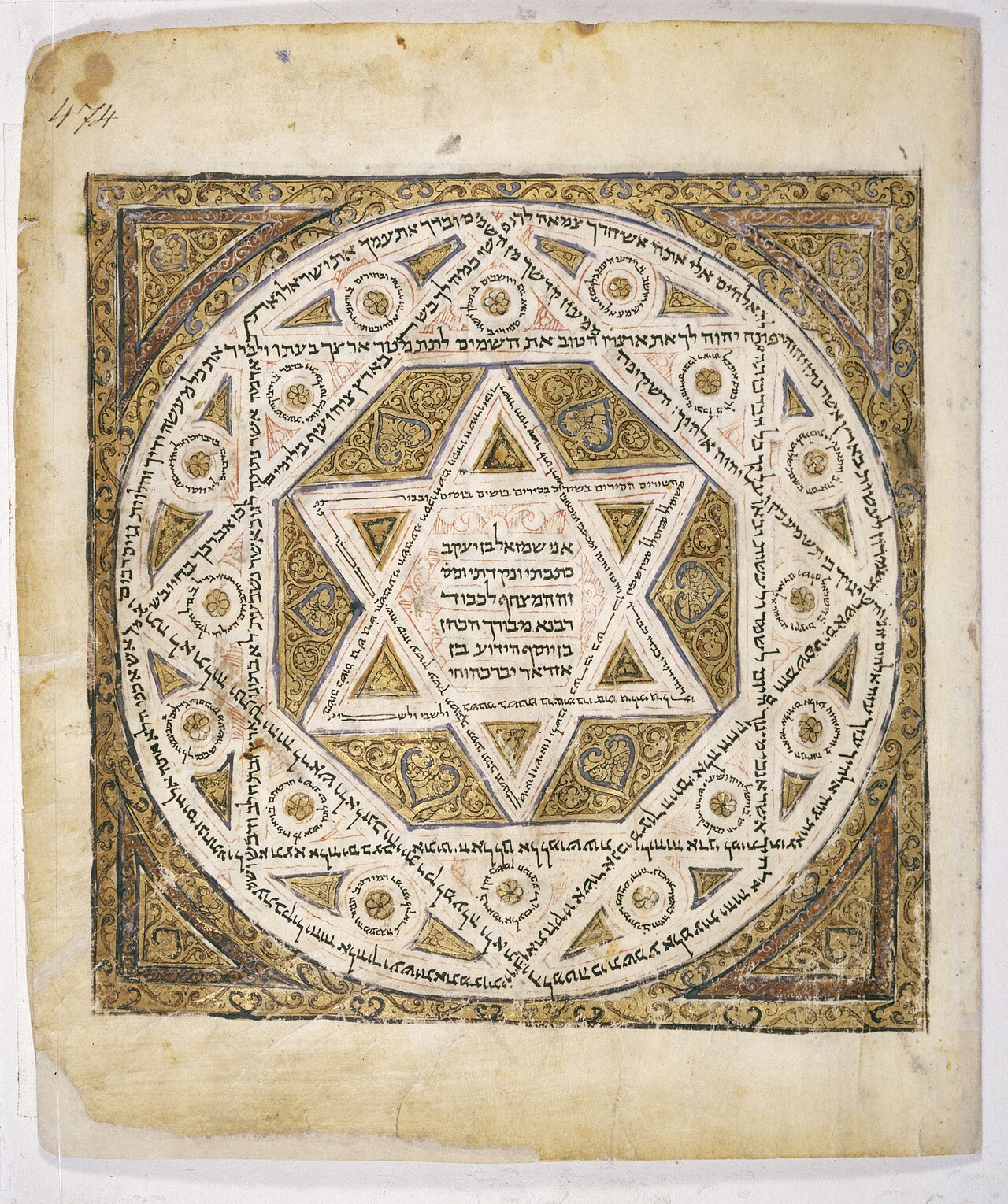
Rosh Hashanah and the shofar.
Sephardi communities begin selichot at the start of Elul, a full month of them; Ashkenazim start the Saturday night before. The shofar is deliberately not a musical instrument — the broken blast is meant to sound like sobbing.
Rosh Hashanah is the head of the year and a court date. The liturgy is built on the image of a book opened and a judgment written on Rosh Hashanah and sealed on Yom Kippur, with the ten days between them for changing the verdict — the Unetaneh Tokef poem lists who by fire and who by water and concludes that repentance, prayer and charity avert the severity of the decree. The shofar is the day's central commandment: a hollowed ram's horn, not a musical instrument, sounded in a fixed pattern of long blasts, broken blasts and short staccato ones, a hundred sounds across the morning. Selichot, penitential prayers, run up to it — from the start of Elul in Sephardi and Mizrahi communities, a full month, and only from the Saturday night before in Ashkenazi ones. Tashlich sends the year's sins into moving water on the first afternoon; the apple in honey is a folk custom with no legal standing that everybody does. The pairing with Yom Kippur ten days later is the point: the judgment is announced and then left open long enough to do something about it.
The same ground, other faiths
rites that share this one's ideasSign in to open the first thread. Everything here is attributed.