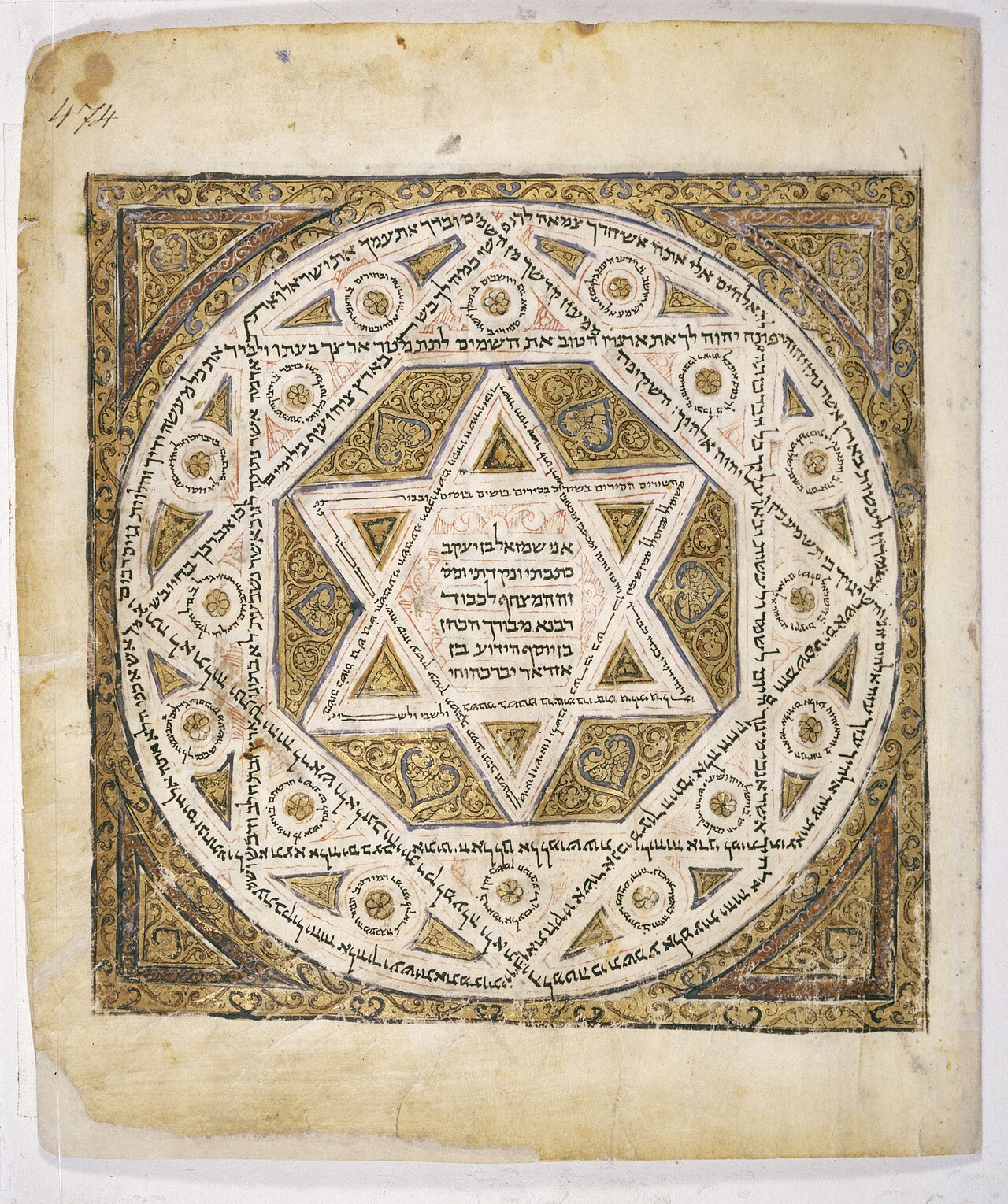
Reading the scroll.
Monday and Thursday were market days, and they are still reading days. If a scroll is dropped the congregation traditionally fasts; when one is beyond repair it is buried, in the ground, like a person.
Public reading of the Torah is the oldest continuously performed liturgical act in the Western world and the reason the text is preserved as accurately as it is. The scroll is handwritten on parchment by a sofer, takes roughly a year, costs as much as a car, and is invalid if one letter is cracked or missing. It is read with a silver pointer so that skin never touches it, chanted to a system of cantillation marks that are not printed in the scroll and must be memorised, and read by someone who has practised for weeks. People are called up to the reading — seven on Shabbat, three on a weekday — and the honour is distributed with a politics all its own; a kohen first, a levi second, then everyone else. In Orthodox synagogues only men are called; Conservative and Reform call everyone, and this is one of the visible differences on walking in. Monday and Thursday readings exist because those were market days when villagers came to town, a piece of agricultural logistics from the Second Temple period still shaping the week. The annual cycle finishes and restarts on the same day, Simchat Torah, without a gap.
The same ground, other faiths
rites that share this one's ideasSign in to open the first thread. Everything here is attributed.