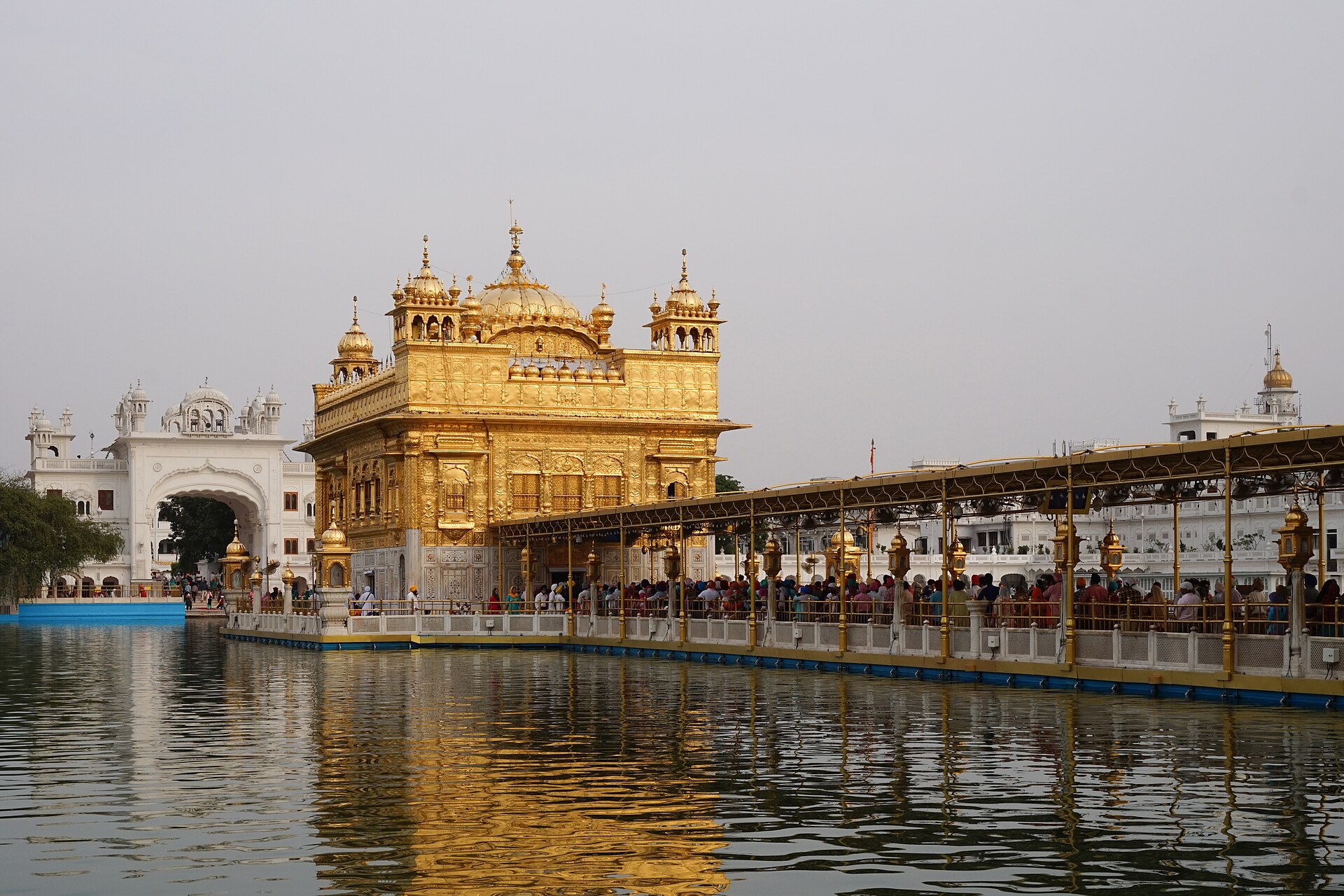
Anand Sahib.
Guru Amar Das wrote it in his seventies and it is what a Sikh ceremony ends with — the wedding, the funeral, the naming, the completion of a reading. The Sikh marriage rite is named after it: Anand Karaj, the act of bliss.
Anand Sahib is what closes things. Guru Amar Das wrote forty stanzas in Raag Ramkali on bliss — meaning specifically the state of having found the Guru, not good fortune — and the first five stanzas with the fortieth are recited at the end of almost every Sikh gathering, immediately before the Ardas. A Sikh will hear it at a wedding, at a funeral, at the completion of a scripture reading, at the opening of a shop. The Sikh marriage rite takes its name from it. The composition's theological weight is that bliss is presented as available now, in the ordinary condition, which fits the tradition's refusal of an afterlife-centred religion. Its liturgical weight is simpler: it is the sound of a Sikh event ending.
I am in bliss, O my mother, for I have found the true Guru.
Guru Amar Das, Anand Sahib, Guru Granth Sahib Ang 917 (rendered)The first line of what every Sikh ceremony ends with.
The same ground, other faiths
claims that share this one's ideasSign in to open the first thread. Everything here is attributed.