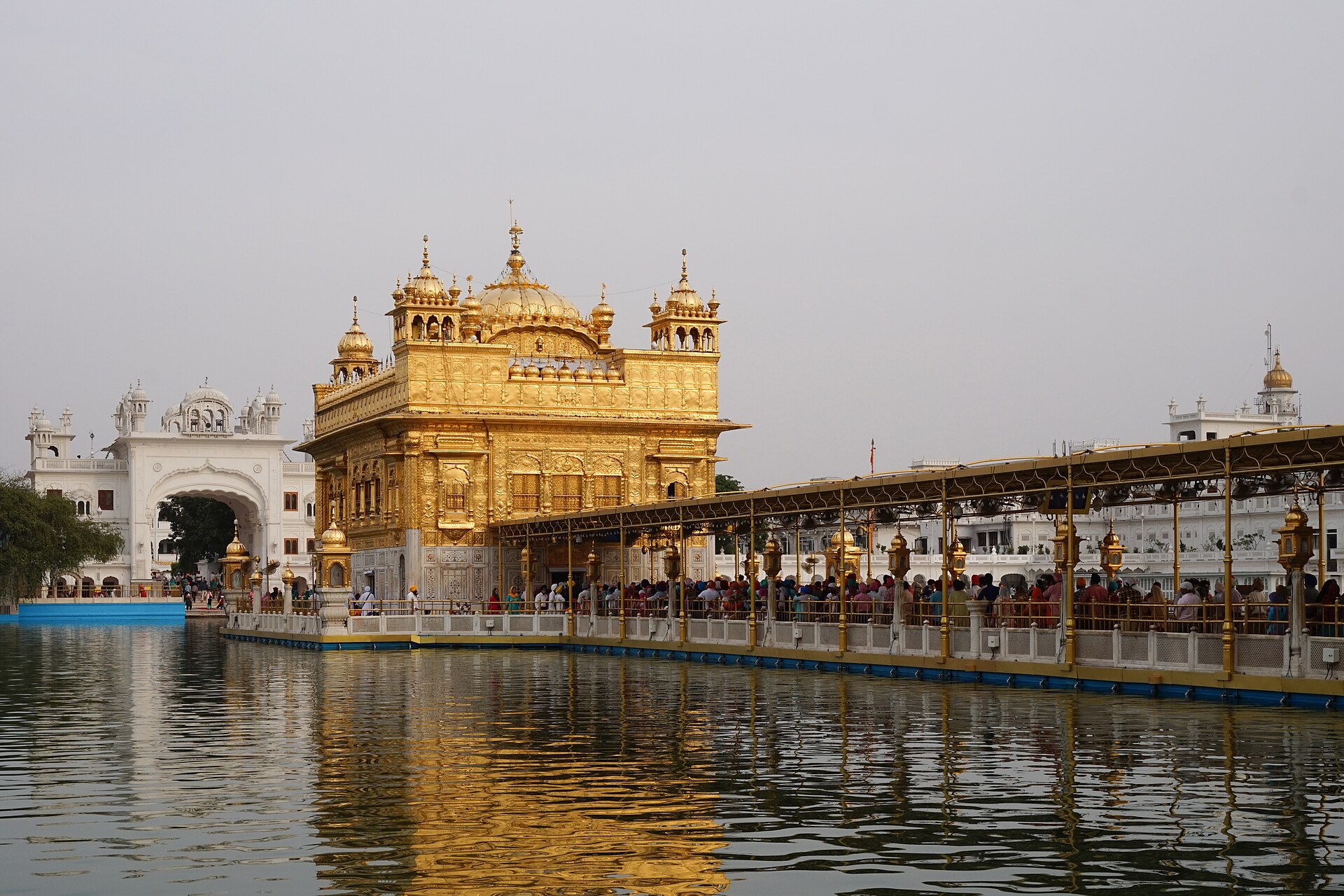
What makes a gurdwara.
Not the building — a gurdwara is anywhere the Guru Granth Sahib is properly installed, with a triangular saffron Nishan Sahib flying outside and a kitchen running inside. A room above a shop in Southall and the Harmandir Sahib are the same category of thing.
A gurdwara is defined by contents, not architecture: the Guru Granth Sahib installed with a canopy over it, a Nishan Sahib — the triangular saffron flag on a cloth-wrapped pole, rewrapped ceremonially each year — outside, and a langar. That is why a converted cinema in Southall, a farmhouse in Kent and the Harmandir Sahib are the same kind of place. There is no consecration, no diocese, and no central authority that licenses one. Governance is by committee, usually elected by the local sangat, and gurdwara committee elections are notoriously contentious — British and Canadian courts have heard a steady stream of disputes over control of buildings and funds, and there have been physical confrontations inside gurdwaras over committee control, interfaith weddings and the display of pictures of militant figures. The openness of the institution and the fractiousness of its governance are two sides of the same fact: nobody outranks the local sangat.
The same ground, other faiths
claims that share this one's ideasSign in to open the first thread. Everything here is attributed.