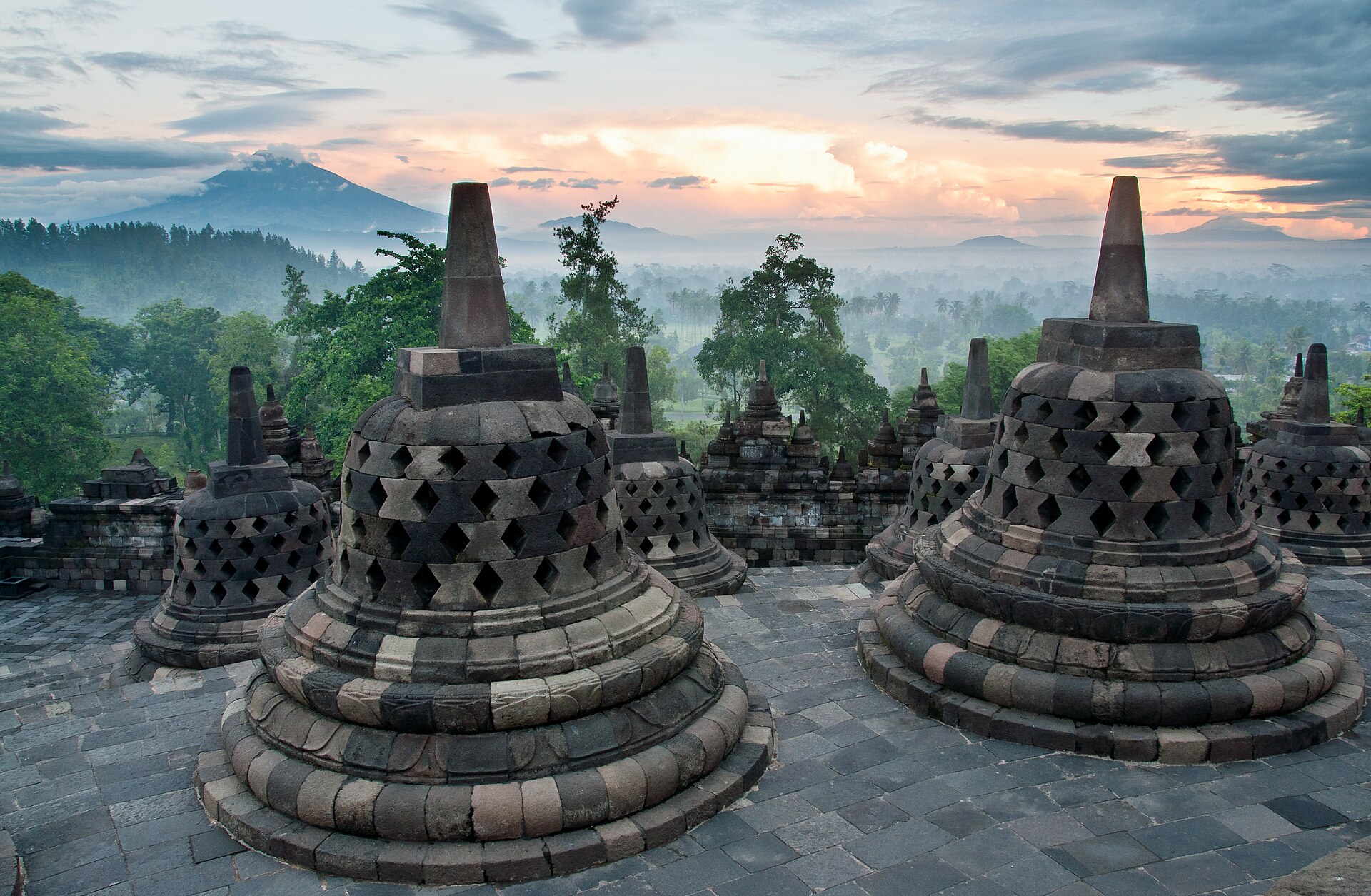
Core tenet of Buddhism
The middle way avoids both indulgence and mortification.
The Buddha tried luxury and tried starvation; the path runs between the two failures.
Understanding it — context, not catechism: how this passage is held
Biography as doctrine. The Buddha lived both extremes — a prince's luxury, then austerities that nearly killed him — and rejected both from experience. The middle way is not moderation as compromise; it is the discovery that the instrument only plays in tune when the string is neither slack nor snapping.
From the sources — the passages this rests on; concise renderings, cited
These two extremes are not to be pursued: devotion to sense pleasure, which is low and unprofitable, and devotion to self-torment, which is painful and unprofitable. The Tathagata has found the middle way.
SN 56.11
The same ground, other faiths
claims that share this one's ideas
Every soul is already omniscient.
Jainism
Go deeper →
Liberation happens while you are alive.
Sikhism
Go deeper →
Knowledge liberates.
Advaita Vedānta
Go deeper →
The arhat completes the path.
Theravāda
Go deeper →
Buddhahood is reachable in one lifetime.
Vajrayāna
Go deeper →
Awakening is sudden, not gradual.
Zen
Go deeper →
Sign in to open the first thread. Everything here is attributed.