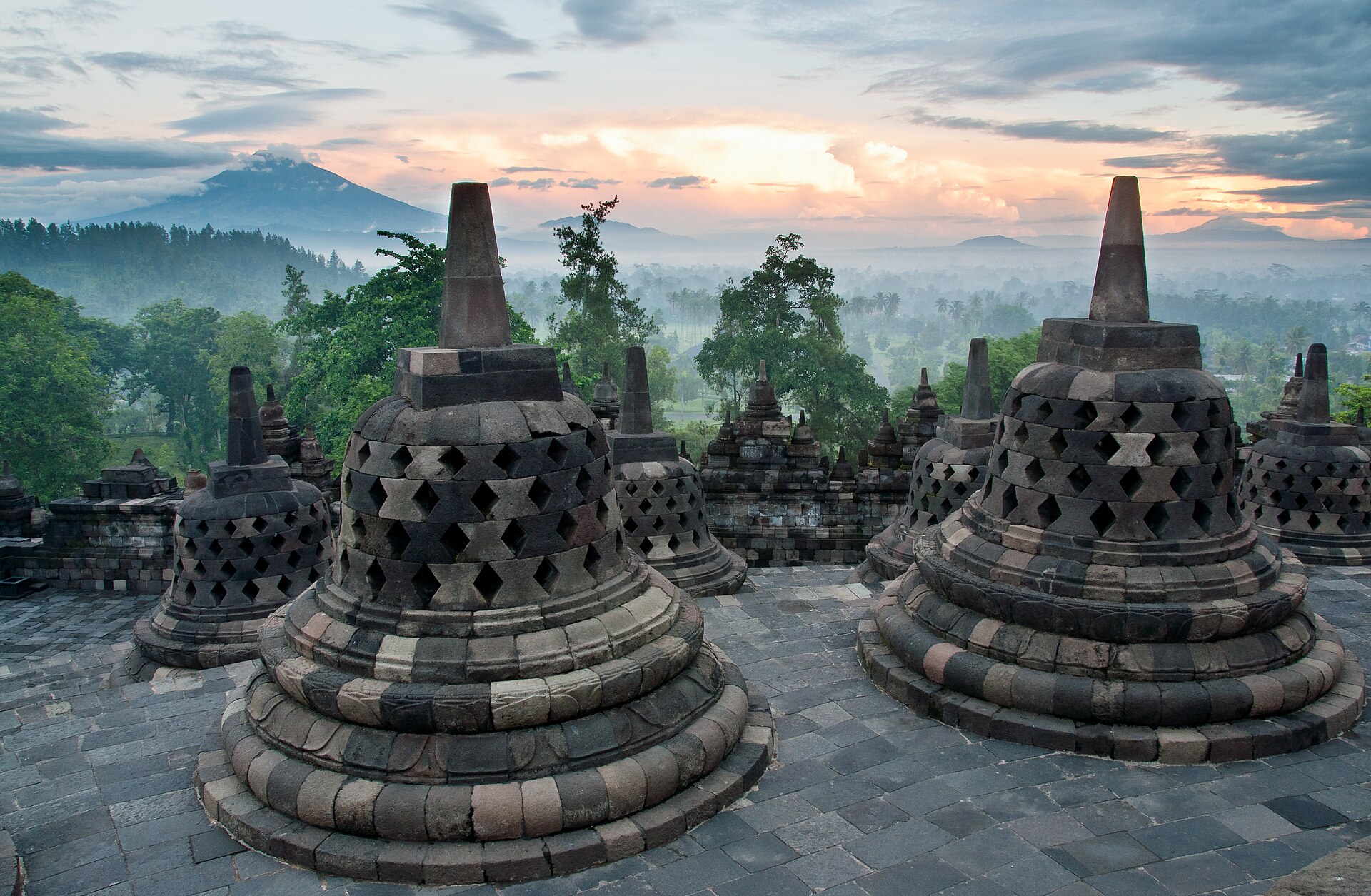
Rite of Buddhism
The daily sit.
Attention returned, again, to breath and body — the tradition's laboratory.
⏱ daily◌ the practitioner
What happensSit; place attention on the breath; when it wanders, return it — ten thousand times
What it needsA cushion and a clock; nothing else
What it aims atSamatha steadies the mind; vipassana sees — toward jhana and mindfulness
Understanding it — context, not catechism: how this rite is held
The posture is the oldest technology the tradition owns: spine tall, attention placed on the breath, thoughts allowed to pass without pursuit. Concentration (samatha) steadies the instrument; insight (vipassana) then reads the fine print of experience — impermanence, unsatisfactoriness, non-self — directly, not from doctrine.
From the sources — the passages this rests on; concise renderings, cited
Breathing in long, one knows: I breathe in long. Breathing out long, one knows: I breathe out long.
Satipatthana Sutta — MN 10The foundation text of Buddhist mindfulness practice.
The same ground, other faiths
rites that share this one's ideas
Many paths, one goal: knowledge, devotion, action, discipline.
Hinduism · core tenet
Go deeper →
Samayika — forty-eight minutes as a monk.
Jainism
Go deeper →
The four who went into the orchard.
Judaism · story
Read it in full →
The Philokalia.
Christianity · scripture
Open the book →
Nitnem — the daily banis.
Sikhism
Go deeper →
Ascetic discipline liberates.
Shaivism · core tenet
Go deeper →
Sign in to open the first thread. Everything here is attributed.