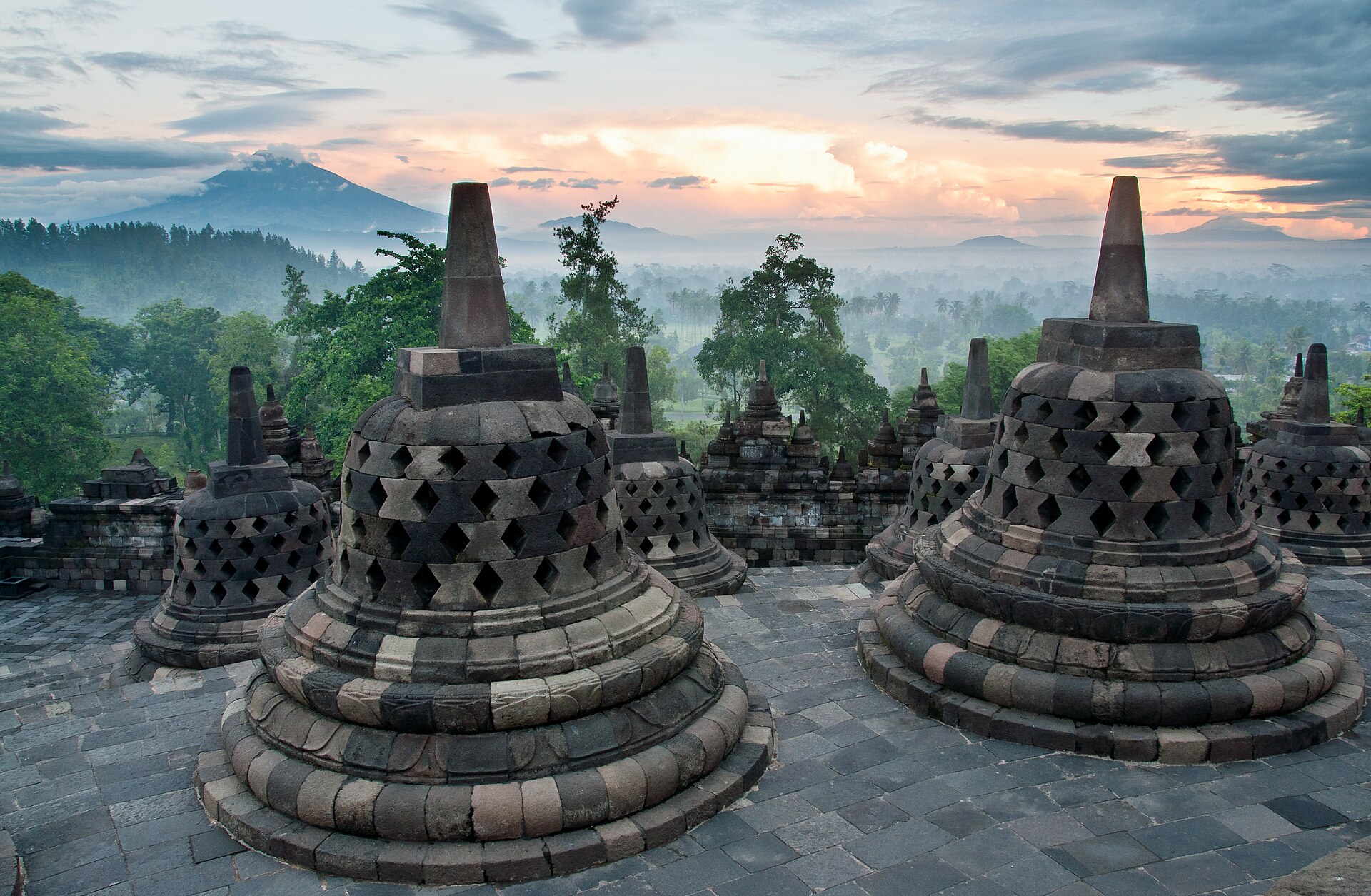
Jhana — the absorbed mind.
Eight deepening states of concentration, mapped with an engineer's precision: rapture, then stillness, then an equanimity so fine it barely has a name.
Jhana are the absorption states — eight of them, mapped in remarkable psychological detail, ascending from rapture and pleasure through their dropping away into pure equanimity and then into formless states. Two things are worth knowing: the Buddha found them useful but not sufficient (he learned them from teachers he then left, because absorption alone does not liberate), and the modern argument over how deep an absorption must be to count as jhana is one of the more heated technical disputes in contemporary practice.
The same ground, other faiths
claims that share this one's ideasSign in to open the first thread. Everything here is attributed.