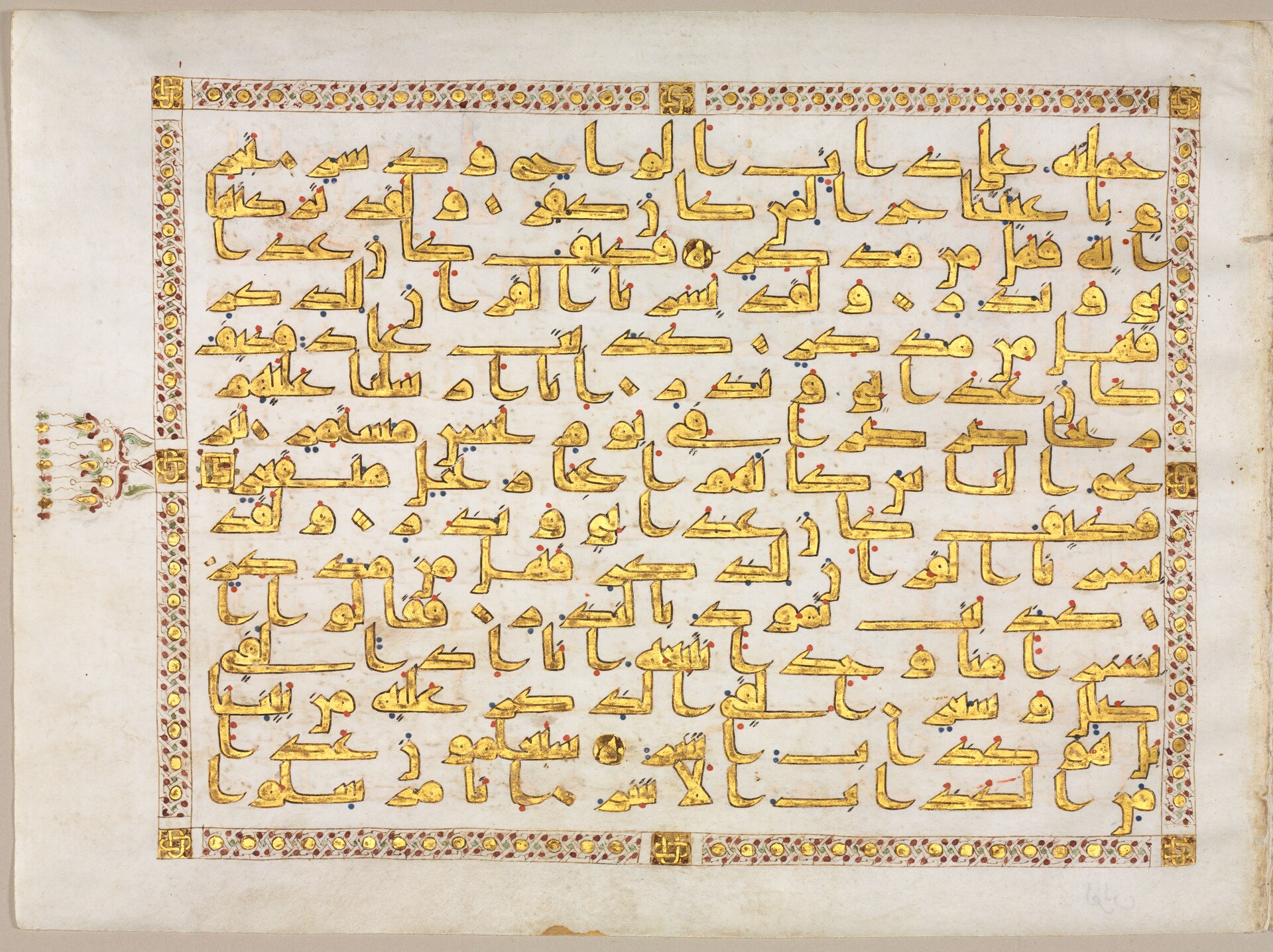
Six things are asked of belief.
God, His angels, His books, His messengers, the Last Day, and the decree — the good of it and the bad of it. A stranger walked into the mosque, asked the Prophet to define faith, and got exactly that list. The stranger was Jibril.
The five pillars are what a Muslim does; the six articles are what a Muslim holds. They come from the hadith of Jibril, in which a stranger in white with no dust of travel on him sits knee to knee with the Prophet and asks three questions — what is islam, what is iman, what is ihsan — and confirms each answer, then leaves. The Prophet tells his companions that was Jibril, come to teach you your religion. Sunni catechisms have been built on that structure ever since. The sixth article, qadar, is the one that carries the doctrinal weight: it is the ground of the freedom argument that has never been settled. Twelver Shia use a different list of five roots — divine unity, justice, prophecy, imamate, resurrection — which puts God's justice and the imamate at the level of creed rather than of law.
That you believe in God, His angels, His books, His messengers, and the Last Day, and that you believe in the decree, its good and its bad.
Sahih Muslim 8 — the hadith of Jibril (rendered)The Prophet's answer when a stranger asked him to define iman.
The same ground, other faiths
claims that share this one's ideasSign in to open the first thread. Everything here is attributed.