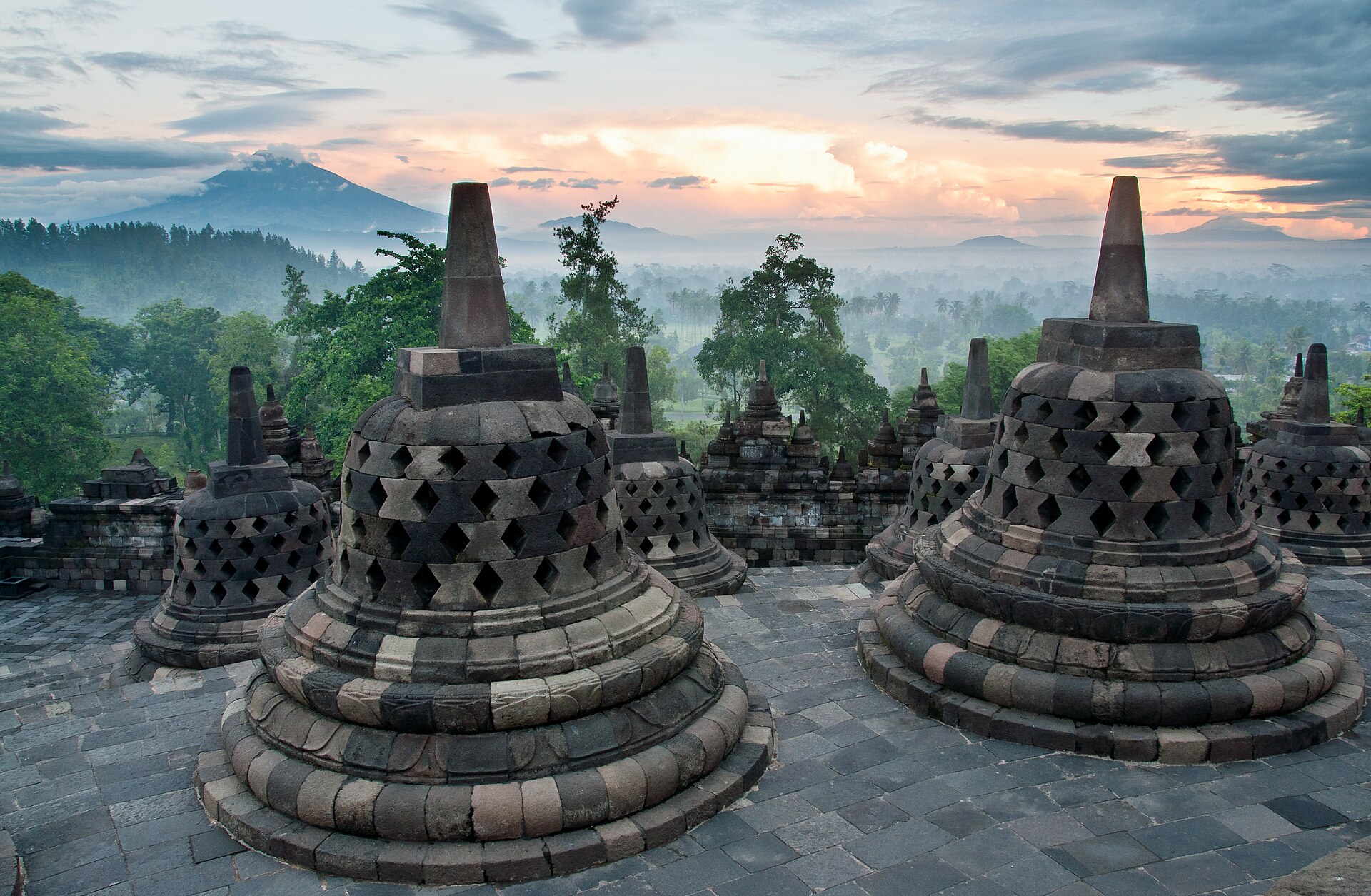
Borobudur at sunrise · Justine Hong · CC BY 2.0

Buddhism

Tradition·Founded c. 480 BCE·est. ~500 million worldwide

Vedic Religion → Buddhism → 3 branches

Branch
Y Figure of Buddhism

Yama — the judge of the dead.

An inherited judge and a whole bureaucracy of hells, plus the insistence that no one is being punished: the realms are karma ripening, and every one of them empties out in the end.

Names & titlesYama — Enma, Shinje
DomainDeath, judgment, and the administration of the hells
RelationsKsitigarbha works his realms; Yamantaka is the wrath that subdues him
Depicted asHolding the mirror that plays a life back to its owner; or biting down on the whole wheel of becoming
StandingPainted at monastery gates — the tradition's one deliberate use of fear
Understanding it — context, not catechism: how this passage is held

Yama is inherited from the Vedic world and put to a new use. He judges, there are hells with vivid and specific torments, and the wheel of becoming is often shown clenched in his jaws — and yet the doctrine underneath insists there is no judge in the moral sense, only karma ripening according to cause. Both things are held at once, and the paintings are on the monastery wall for a reason: Buddhist teachers have generally been pragmatic about fear as a first motivator for people who are not yet moved by anything subtler. The hells, unlike their Abrahamic counterparts, are temporary. Everyone gets out.

The same ground, other faiths

claims that share this one's ideas
The soul is liberated by its own effort. Jainism · core tenet Go deeper →
The dead will rise. Judaism · core tenet Go deeper →
Christ will come again. Christianity · core tenet Go deeper →
Every soul stands before God on the Last Day. Islam · core tenet Go deeper →
A human birth is the opening, and it closes. Sikhism · core tenet Go deeper →

The conversation

argument stays attached to the claim it is about All discussion →

Sign in to open the first thread. Everything here is attributed.

Built on Hatchable