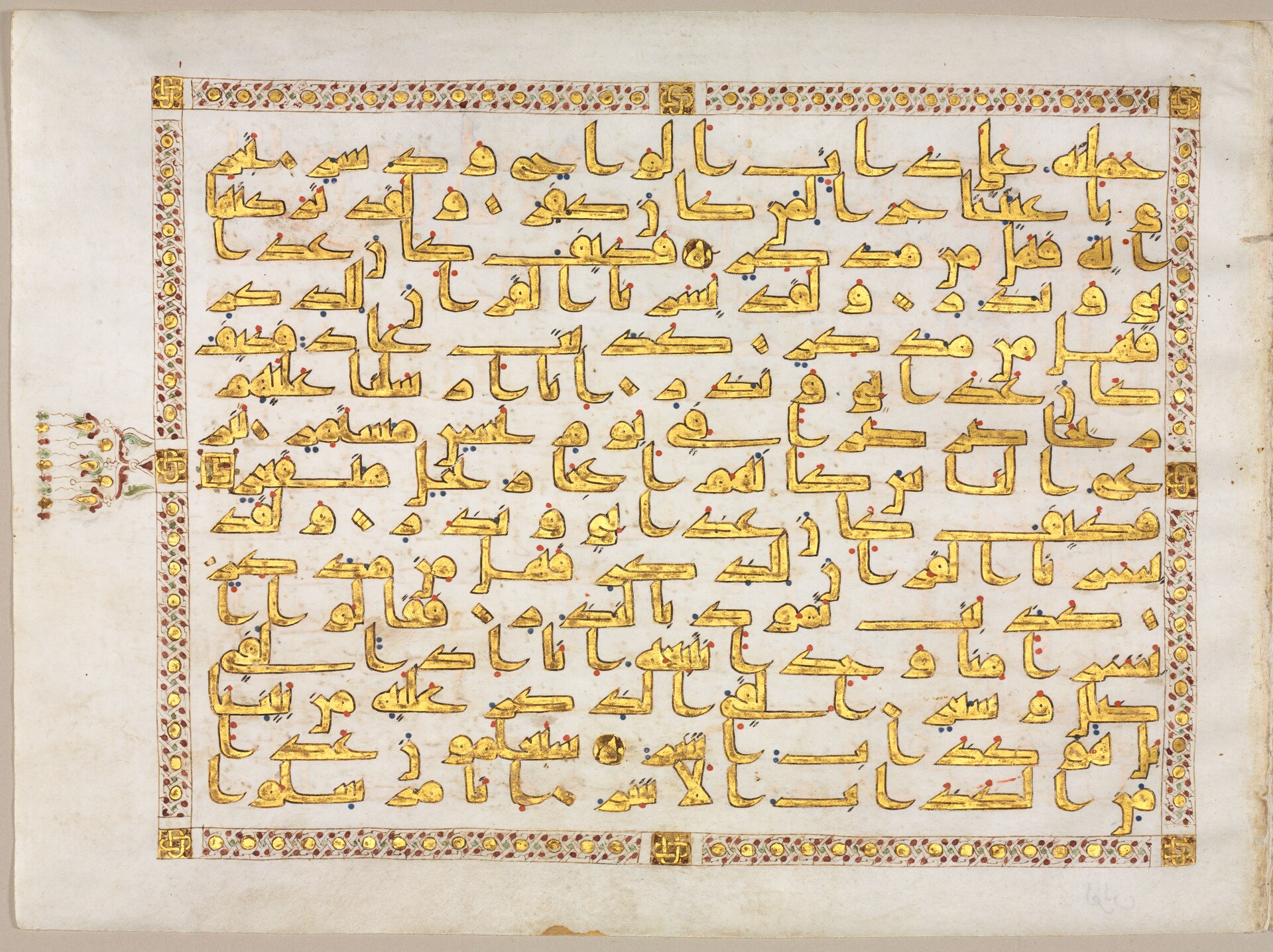
Ibrahim and the son.
The Quran's version has the son answer that he will be found patient, so the consent is on the record. The son is not named in the text, which the commentators have argued about for a thousand years, and the ram is substituted at the last moment. Every Eid al-Adha repeats the substitution.
The Quran's telling in sura 37 differs from the Genesis account in ways that matter. Ibrahim tells his son what he has seen in the dream and asks what he thinks; the son answers that he will find him, God willing, among the patient. The consent is explicit and on the record, which changes the story from a test of one man's obedience into an agreement between two. The son is not named in the passage, and Muslim commentators divided for centuries over whether it was Ishmael or Isaac, with the majority settling on Ishmael partly on the strength of the surrounding verses. A great sacrifice is substituted at the moment of the act. Eid al-Adha repeats the substitution annually across the entire Muslim world, and the standing at Mina during the Hajj, including the stoning of the pillars, is set in the same narrative landscape. The story is also where the tradition's hardest question sits — what a command like that would mean and whether it could recur — and the standard answer is that it cannot, because prophecy is closed.
The same ground, other faiths
claims that share this one's ideasSign in to open the first thread. Everything here is attributed.