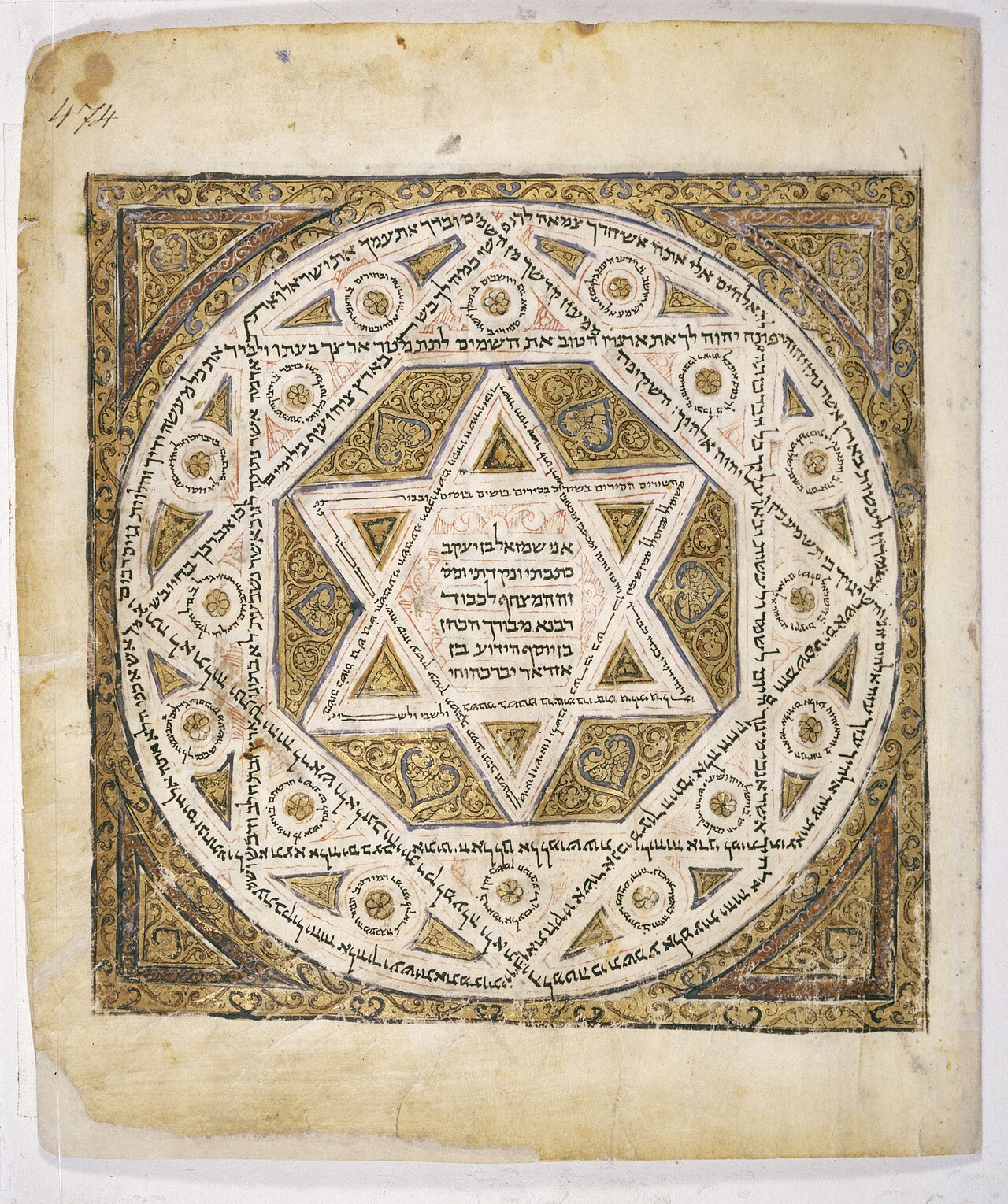
God contracted to make room for the world.
Tzimtzum. Isaac Luria taught in Safed in the 1570s that the Infinite withdrew from a point so that something not-God could exist, and that the vessels made to hold the light shattered. Every commandment kept lifts one fallen spark — which is where the word tikkun comes from.
Tzimtzum is the founding move of Lurianic Kabbalah and the strangest thing Judaism asserts about God. Isaac Luria, teaching in Safed in the early 1570s and dead at thirty-eight, described the Infinite contracting from a point to leave a space where something other than God could exist, then sending light into vessels that could not hold it and shattered. Divine sparks fell into the husks of the material world, and the work of every commandment is to raise one — which is how tikkun, repair, entered the vocabulary it now lives in. Hasidism took the doctrine toward panentheism: nothing exists but God and the world is an appearance. The Vilna Gaon and the Lithuanian schools read tzimtzum figuratively and treated the literal reading as heresy; the excommunication of 1772 was partly about exactly this. Jews who have never heard the word use its vocabulary weekly, because tikkun olam came out of it.
The same ground, other faiths
claims that share this one's ideasSign in to open the first thread. Everything here is attributed.