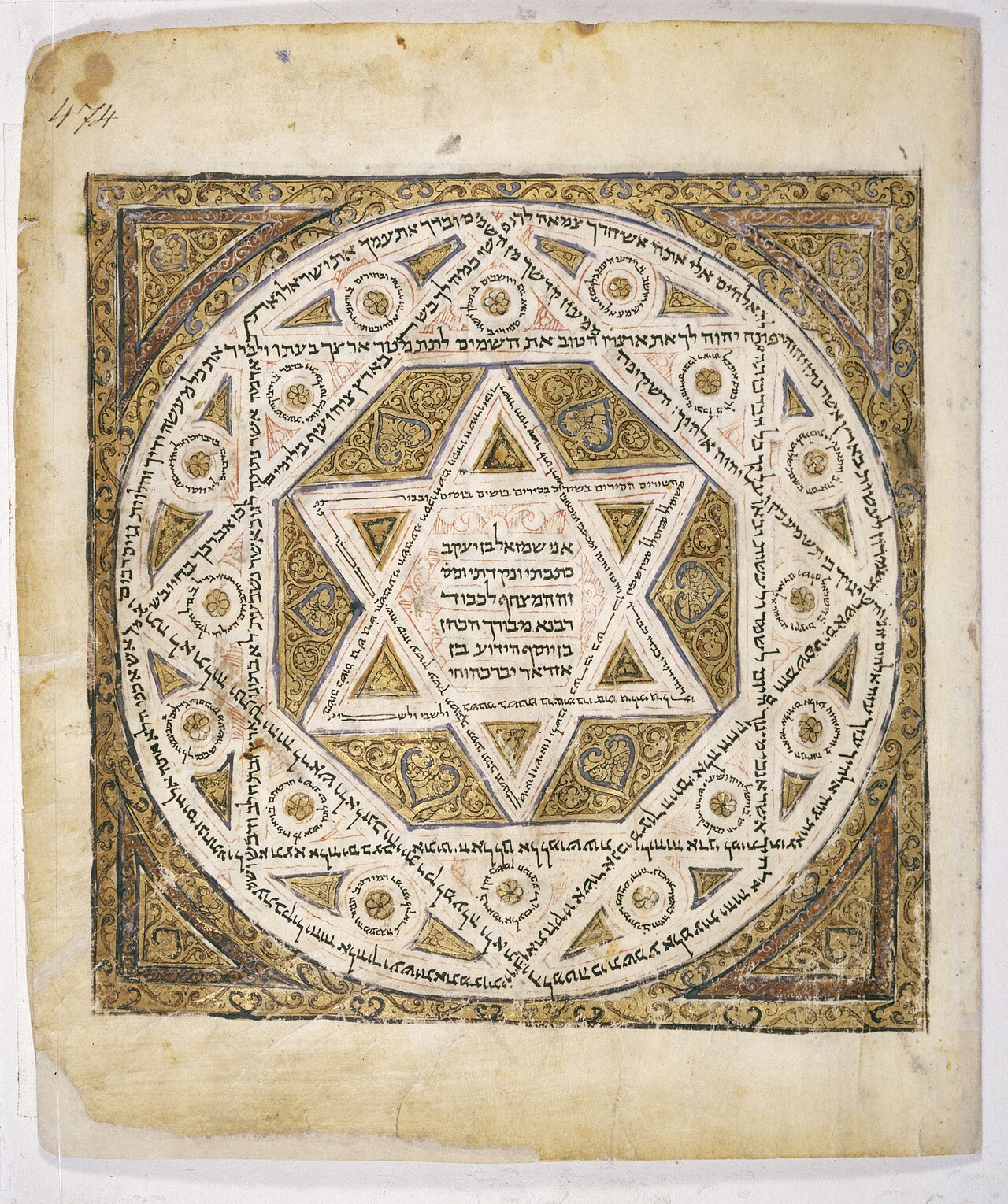
Study, daily, as an obligation.
Daf yomi was proposed by Meir Shapiro in 1923 so that a Jew in Warsaw and a Jew in New York would be on the same page on the same day. The thirteenth cycle finished in 2020 with tens of thousands in a stadium in New Jersey.
Talmud Torah is a commandment in its own right, and the daily liturgy places its value as equal to all the others combined. The characteristic form is chavruta: two people, one text, reading aloud and arguing, which is why a beit midrash is loud. Nobody is required to be a scholar to participate, and the tradition's highest praise is reserved for people who study while doing something else for a living — Hillel the woodcutter, Akiva the shepherd, Rashi the wine grower. Daf yomi, a page of Talmud a day, was proposed by Rabbi Meir Shapiro at a conference in Vienna in 1923 with the explicit aim that Jews everywhere would be on the same page on the same day; the cycle takes seven years and five months, and the thirteenth completion in January 2020 filled MetLife Stadium and Barclays Center. It is now also an app, a podcast in several languages, and — since Michelle Farber's Daf Yomi for Women began in 2012 and Hadran's first women's siyum in 2020 — no longer only a men's practice, which in the Orthodox world is a change of real size. The women's Talmud question was itself the argument a generation ago; the argument has moved on to ordination.
Turn it and turn it, for everything is in it; grow old and grey over it, and do not stir from it, for you have no better portion than this.
Pirkei Avot 5:22 (rendered)The instruction that produced two thousand years of commentary on commentary.
The same ground, other faiths
rites that share this one's ideasSign in to open the first thread. Everything here is attributed.