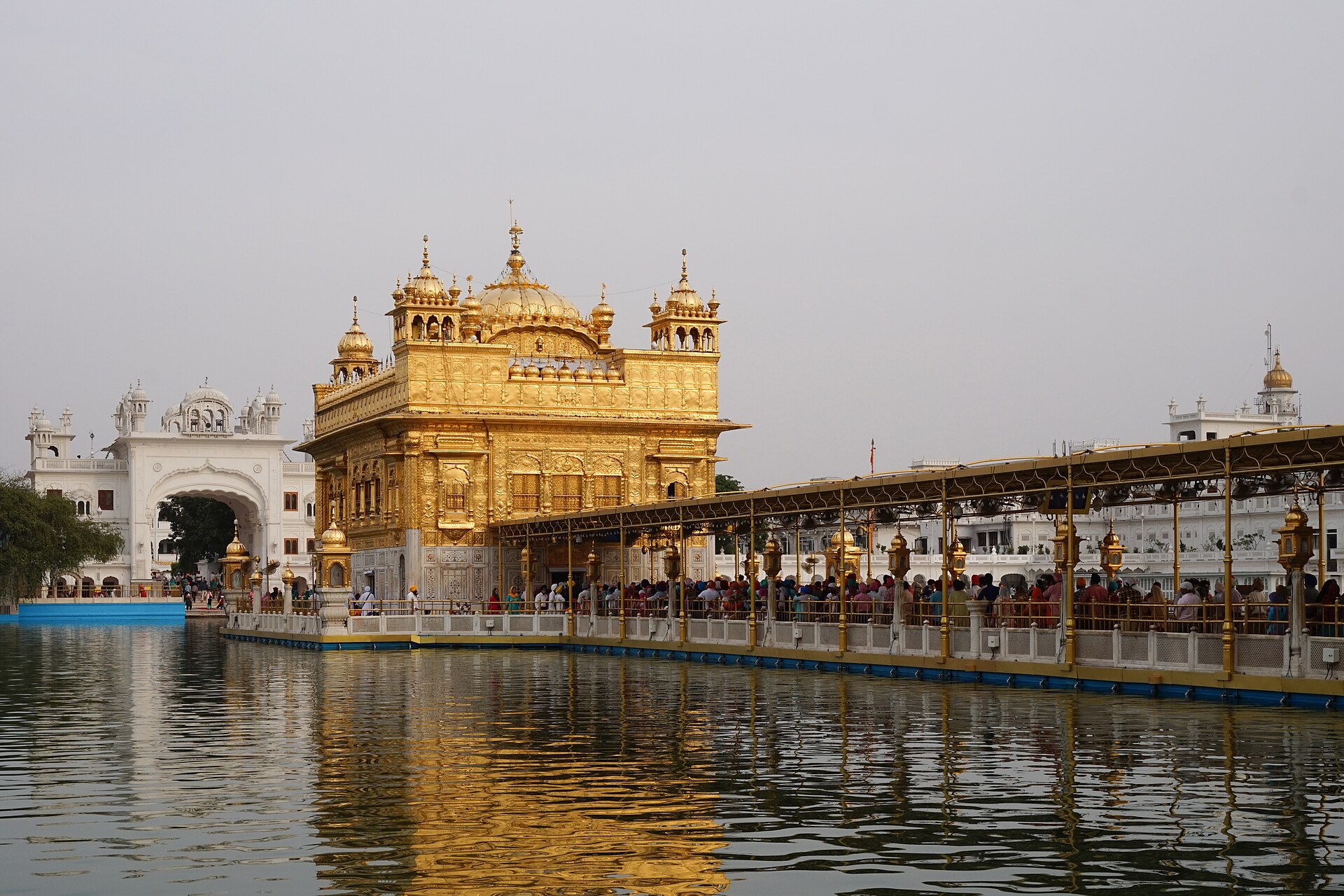
The Guru now lives in the book and the body.
Guru Gobind Singh ended the human succession in 1708: authority passed jointly to the Guru Granth Sahib — the scripture as living Guru — and the Guru Panth, the community itself.
In 1708, dying, Guru Gobind Singh ended the line of human Gurus and vested authority in two places at once: the Guru Granth Sahib, the scripture, and the Guru Panth, the assembled community. That dual settlement is why Sikhism has scripture treated as a living person — the book is enthroned, fanned, put to rest at night, and consulted for guidance by opening it at random — and also a tradition of collective decision-making in assembly. Removing the possibility of a new human Guru also closed off the most common route to schism.
Acknowledge the Guru Granth as the visible body of the Gurus.
Edict of Guru Gobind Singh, 1708 (rendered)The succession's final act: the book crowned.
The same ground, other faiths
claims that share this one's ideasSign in to open the first thread. Everything here is attributed.