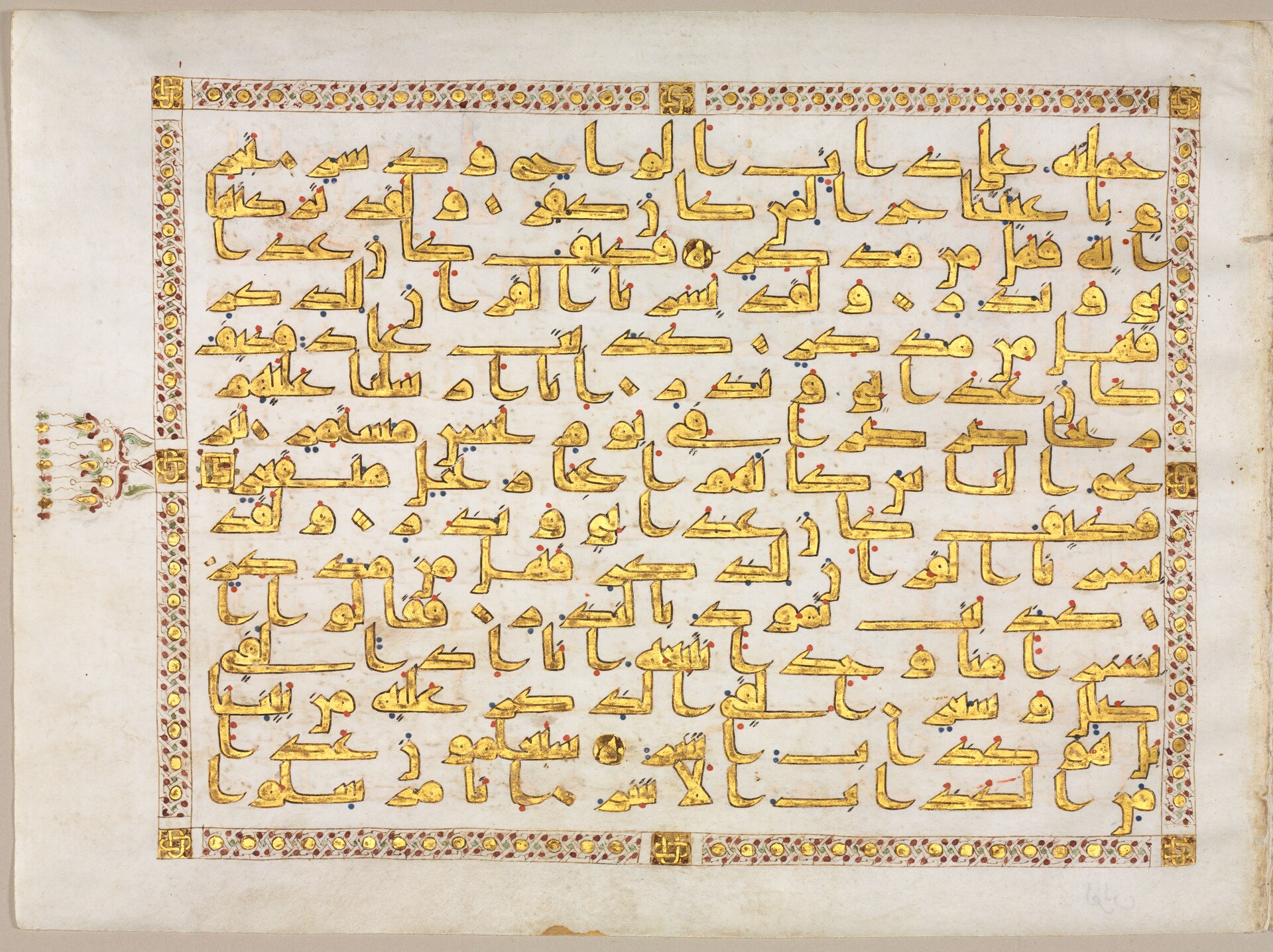
The hafiz.
The whole book — about 6,236 verses — carried in memory, with a chain of teachers behind it. Millions of people hold it, many of them children, and Indonesia, Egypt, Turkey, Nigeria and Iran run competitions for it on national television. It is the reason the text has a second, independent transmission line.
Committing the entire Quran to memory produces a hafiz, and it is a mass phenomenon rather than an elite one: millions of people hold roughly 6,236 verses in memory, an enormous number of them children who complete it before adolescence. The method is oral and relational — a student recites to a teacher who corrects, and the teacher recited to their own teacher, giving a chain, an ijaza, claimed back to the Prophet. This means the text has two independent transmission lines, written and memorised, which is a genuinely unusual arrangement among world scriptures and is central to Muslim confidence in its stability. Indonesia, Egypt, Turkey, Nigeria, Iran and Pakistan each produce thousands of huffaz a year, and national competitions are broadcast with substantial prizes. The cost is real: full memorisation typically takes several years of daily work, and in some madrasa systems it displaces general education, which is a live argument about children's futures rather than about theology.
The same ground, other faiths
claims that share this one's ideasSign in to open the first thread. Everything here is attributed.