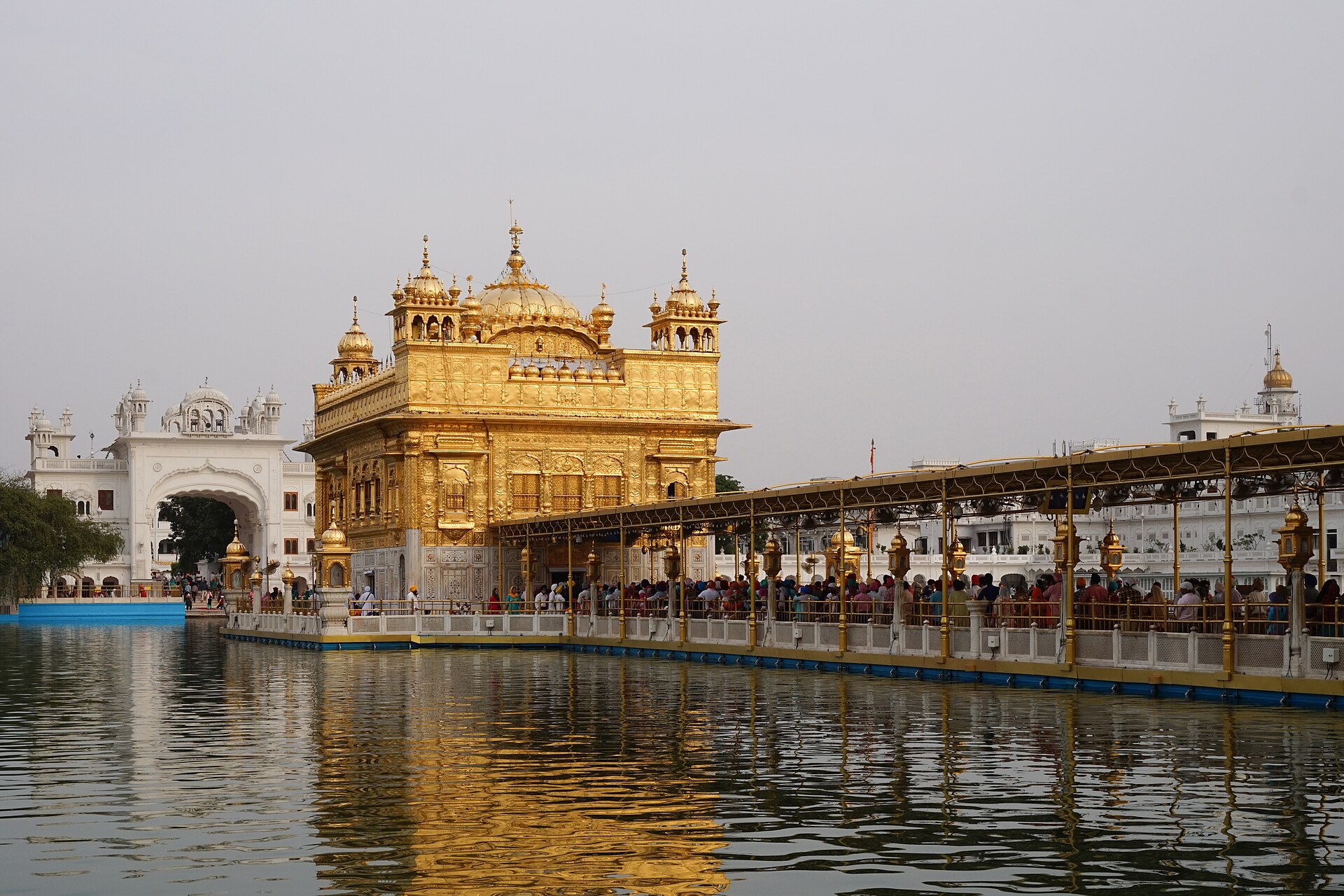
Hola Mohalla.
Guru Gobind Singh took the spring festival of coloured water and turned it into three days of mock battle at Anandpur Sahib. Nihangs ride bareback, fight with gatka, and split coconuts at a gallop; about a million people come, and the roadside langars run continuously.
Hola Mohalla is the Khalsa in public and it is not a metaphor. Guru Gobind Singh instituted it at Anandpur Sahib in 1701 as a martial counterpart to Holi — others have Holi, mine is Hola, in the line traditionally attributed to him — and the three days involve mock battles, tent-pegging, bareback riding, gatka displays and a final procession from Takht Kesgarh Sahib. The Nihangs, the standing armed order in blue, run it, and the event is where they are most visible: enormous dumalla turbans, steel weapons worn openly, and the ritual preparation of sukha or degh, a cannabis drink they defend as a battlefield tradition and which mainstream Sikh bodies say plainly violates the prohibition on intoxicants. That argument recurs every March. Attendance runs to about a million, the roadside langars are continuous, and the Punjabi state deals with it as a logistics problem.
Others have their Holi; mine is Hola.
Traditionally attributed to Guru Gobind Singh, quoted in Punjabi accounts of the founding of Hola Mohalla (rendered)The attribution is traditional rather than textually secure, and the festival was built on it anyway.
The same ground, other faiths
rites that share this one's ideasSign in to open the first thread. Everything here is attributed.