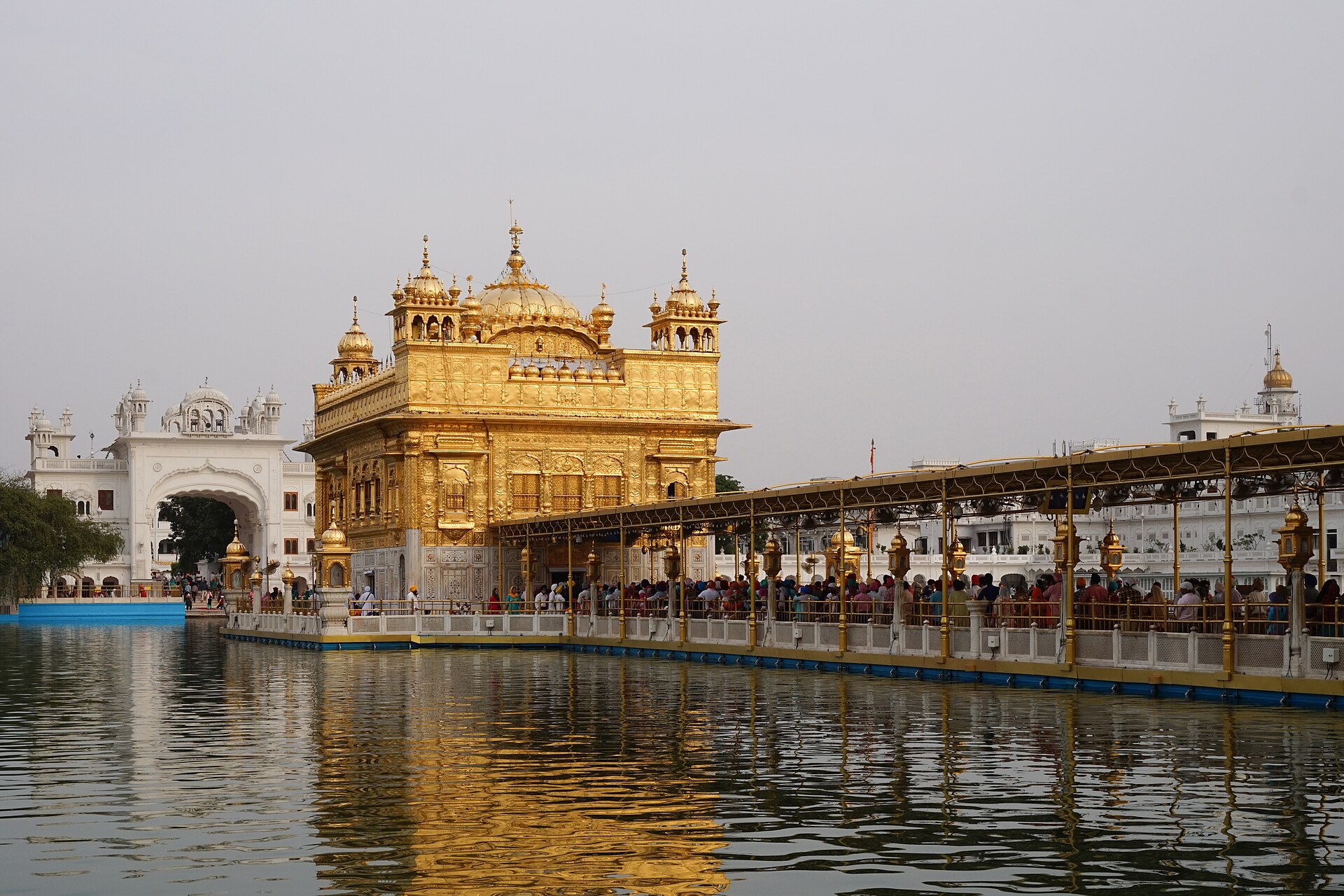
Bandi Chhor Divas.
The night Guru Hargobind walked out of Gwalior fort with fifty-two princes holding his cloak, which happens to fall on Diwali. Sikhs light the Golden Temple to the waterline and are careful to say what they are celebrating, because the coincidence has been used to fold them into someone else's festival.
Bandi Chhor Divas is the clearest case of Sikhs insisting on their own meaning for a shared date. The lights, the timing and the fireworks coincide with Diwali, and Sikh institutions have spent decades pushing the name Bandi Chhor — the release of the imprisoned — because the coincidence has repeatedly been used to describe Sikhs as celebrating a Hindu festival. What is marked is Guru Hargobind's refusal to leave Gwalior fort without the fifty-two princes imprisoned with him. Amritsar is the centre of it: the Golden Temple lit to the waterline, reflected in the tank, with the largest crowds of the year. Some Sikh scholars point out that Sikhs were lighting lamps at Amritsar on that night from Guru Amar Das's time as a gathering day, before the Gwalior story attaches to it, so the layering is old. The insistence on the name is recent, deliberate, and part of a wider project of distinguishing Sikh from Hindu observance.
The same ground, other faiths
rites that share this one's ideasSign in to open the first thread. Everything here is attributed.