Dharam yudh — the war with conditions on it.
No revenge, no plunder, no forced conversion, no harm to those not fighting, the sword put down when the injustice ends — and the whole thing licensed only when every other means has been exhausted. The Khalsa is meant to be able to defend anybody, which is precisely why the ninth Guru died for Brahmins.
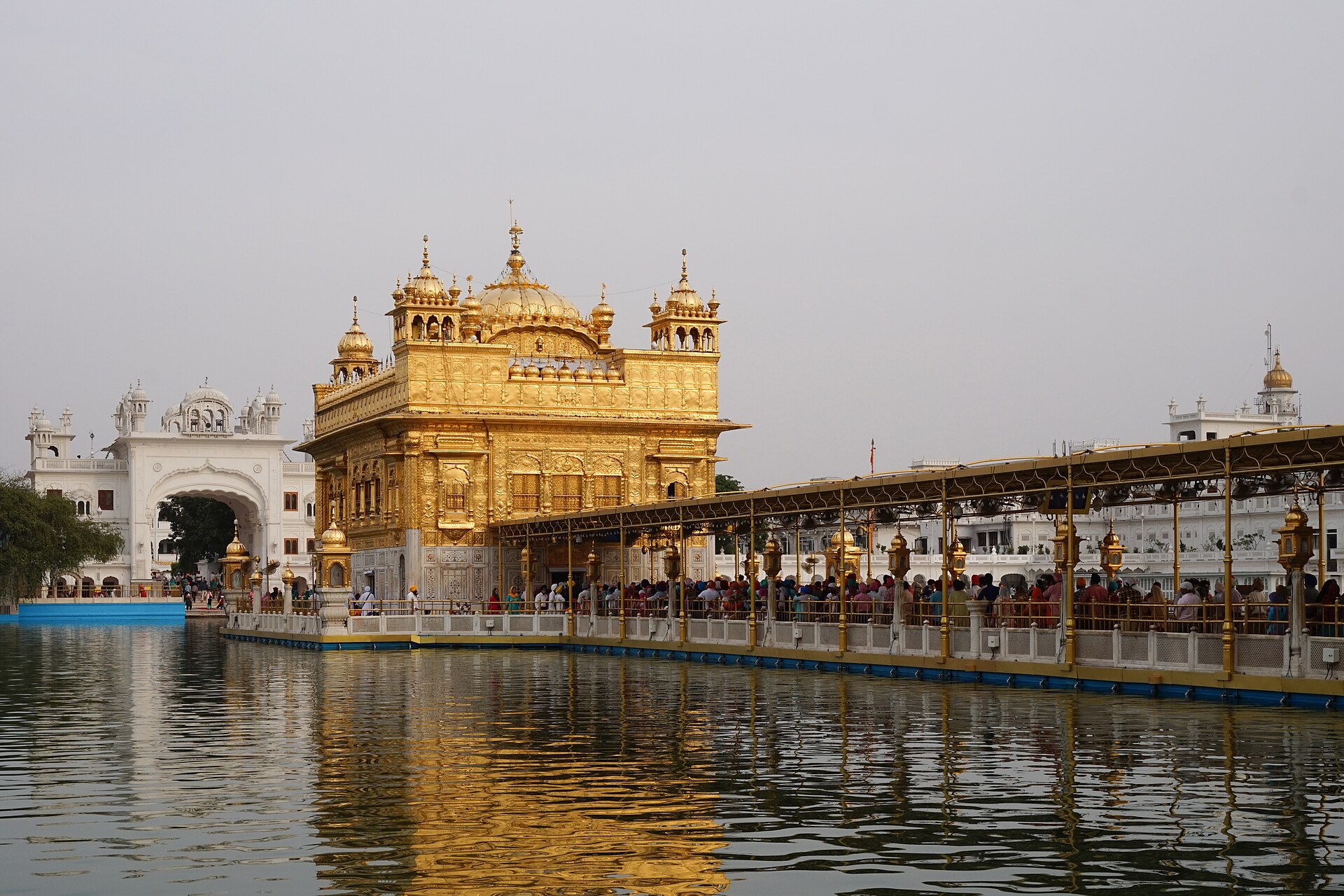
Dharam yudh is the conditional licence, and reading it correctly requires holding two things at once. The conditions are conventionally listed as: the sword is the last resort; the motive cannot be revenge, territory or conversion; no plunder; no harm to non-combatants, places of worship or those who surrender; and the fight ends when the injustice does. Bhai Kanhaiya, blessed for giving water to enemy wounded, is the story that fixes the limit, and the ninth Guru dying for Brahmins is the story that fixes the scope. The twentieth century put this under real strain. The 1984 army operation at the Golden Temple, the pogroms against Sikhs that followed, and the decade of militancy and state counter-insurgency in Punjab are argued about within the community precisely in these terms — who was fighting a dharam yudh and who was not — and the argument runs between Sikhs, not only between Sikhs and the Indian state. Descriptions of Sikhism as either simply martial or simply peaceable are picking one side of a live dispute.
The same ground, other faiths
claims that share this one's ideasSign in to open the first thread. Everything here is attributed.