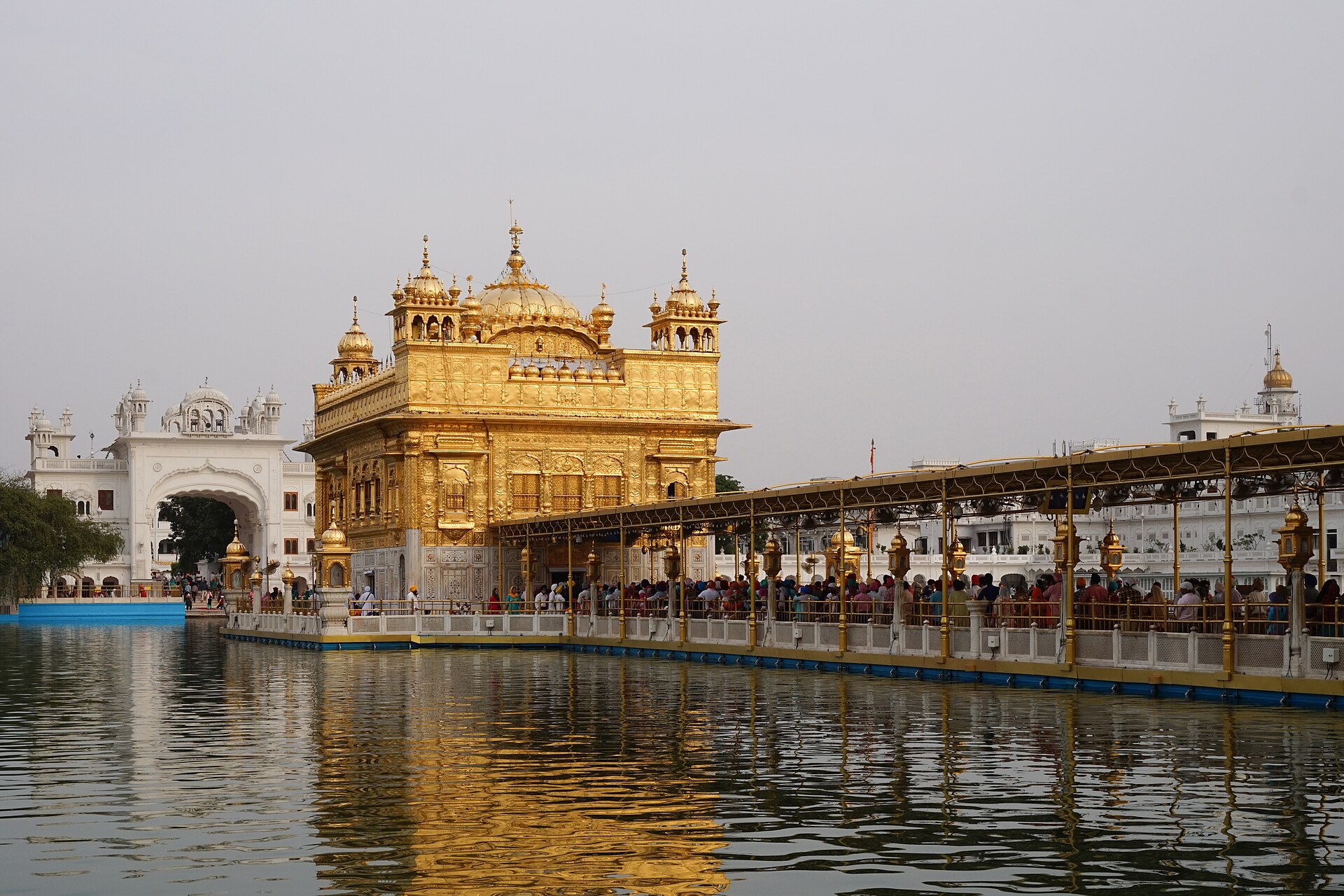
Daswandh — the tenth.
A tenth of income to the community, given directly and without assessment, on the reasoning that what you keep was never entirely yours. Guru Amar Das built it into the manji system in the sixteenth century; there has never been a tithe collector.
Daswandh — a tenth — was formalised by Guru Amar Das through the manji system and later the masands, agents who collected offerings for the Guru. That system was also the tradition's first corruption scandal: the masands became extortionate enough that Guru Gobind Singh abolished the office outright and told Sikhs to give directly. The modern version has no assessment, no receipt and no collector; a Sikh decides what a tenth means and gives it to the sangat, to a gurdwara, or straight to someone who needs it. Combined with kar seva — unpaid physical labour, including the periodic dredging of the Amritsar sarovar by volunteers — it funds an enormous amount. The absence of accounting is the standing weakness: gurdwara committees in Punjab and the diaspora control very large sums with limited oversight, and control of the golak is the reason committee elections are fought as hard as they are.
One who eats what he has earned by his own labour, and gives some of it away — Nanak, that one has found the road.
Guru Nanak, Raag Sarang, Guru Granth Sahib Ang 1245 (rendered)Honest work and giving stated as a single test, in one couplet.
The same ground, other faiths
claims that share this one's ideasSign in to open the first thread. Everything here is attributed.