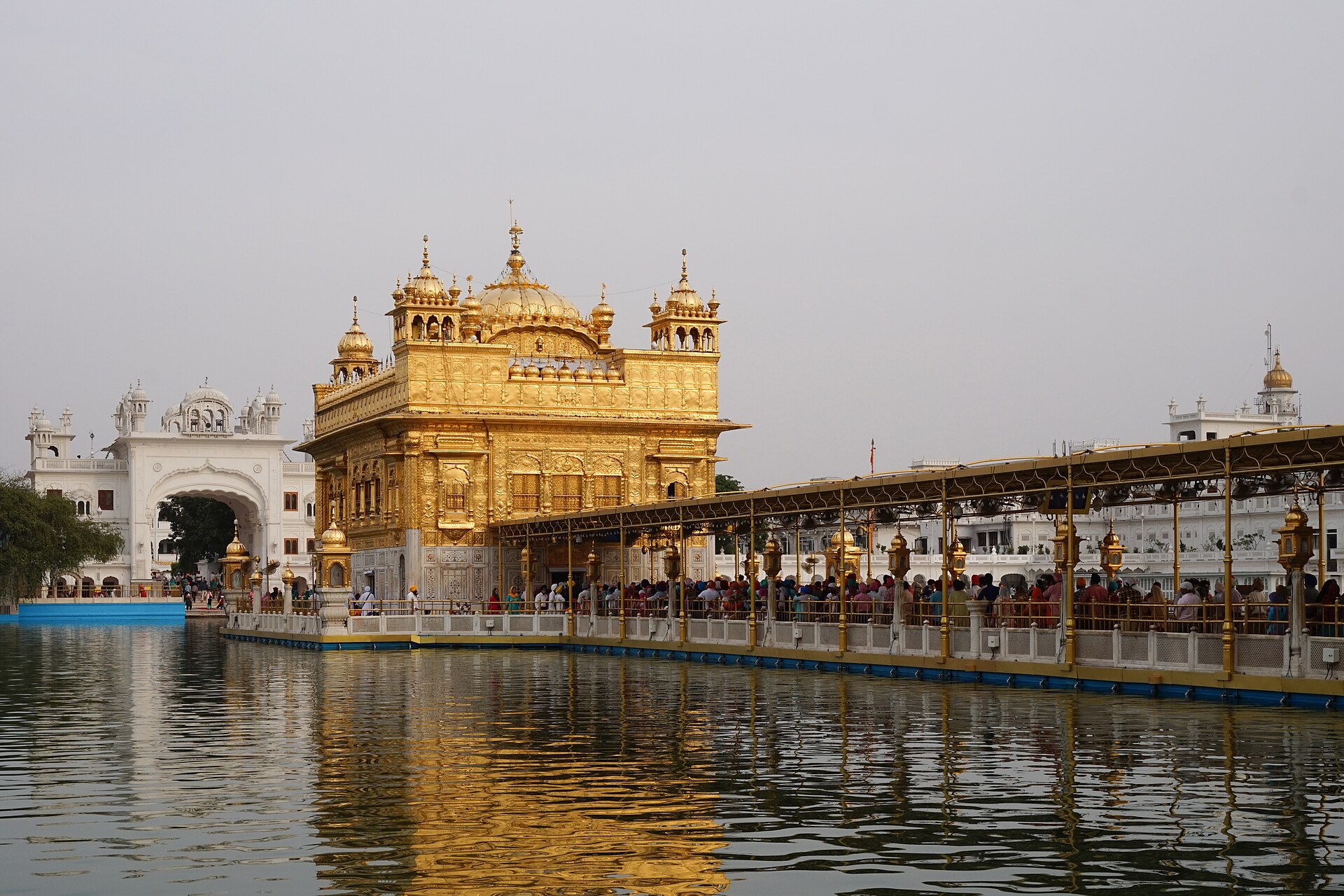
Chardi kala — spirits that will not go down.
Usually translated as high spirits, and closer to a standing refusal of despair. It is the last thing said in the Ardas, twice a day, by a community whose prayer has just finished listing everyone who was tortured to death.
Chardi kala is the most quoted Punjabi phrase in Sikh life and it is not optimism. It translates roughly as ascending spirit or rising high, and it names a stance rather than a mood: the refusal to be reduced by circumstance, on the theological ground that circumstance is hukam and hukam is not hostile. It is the last line of the Ardas — through the Name, chardi kala, and in Your will, the good of all — which means a community says it twice a day immediately after reciting a list of its own tortured dead. Its actual uses are ordinary: it is what a Punjabi family says to someone whose business has failed, and it is on the banner of every Sikh relief team. The critique from inside is that it can shade into a prohibition on grieving, and Sikh mental health organisations in Britain and Canada have started saying so directly, arguing that chardi kala was never meant to mean do not tell anyone you are struggling.
The same ground, other faiths
claims that share this one's ideasSign in to open the first thread. Everything here is attributed.