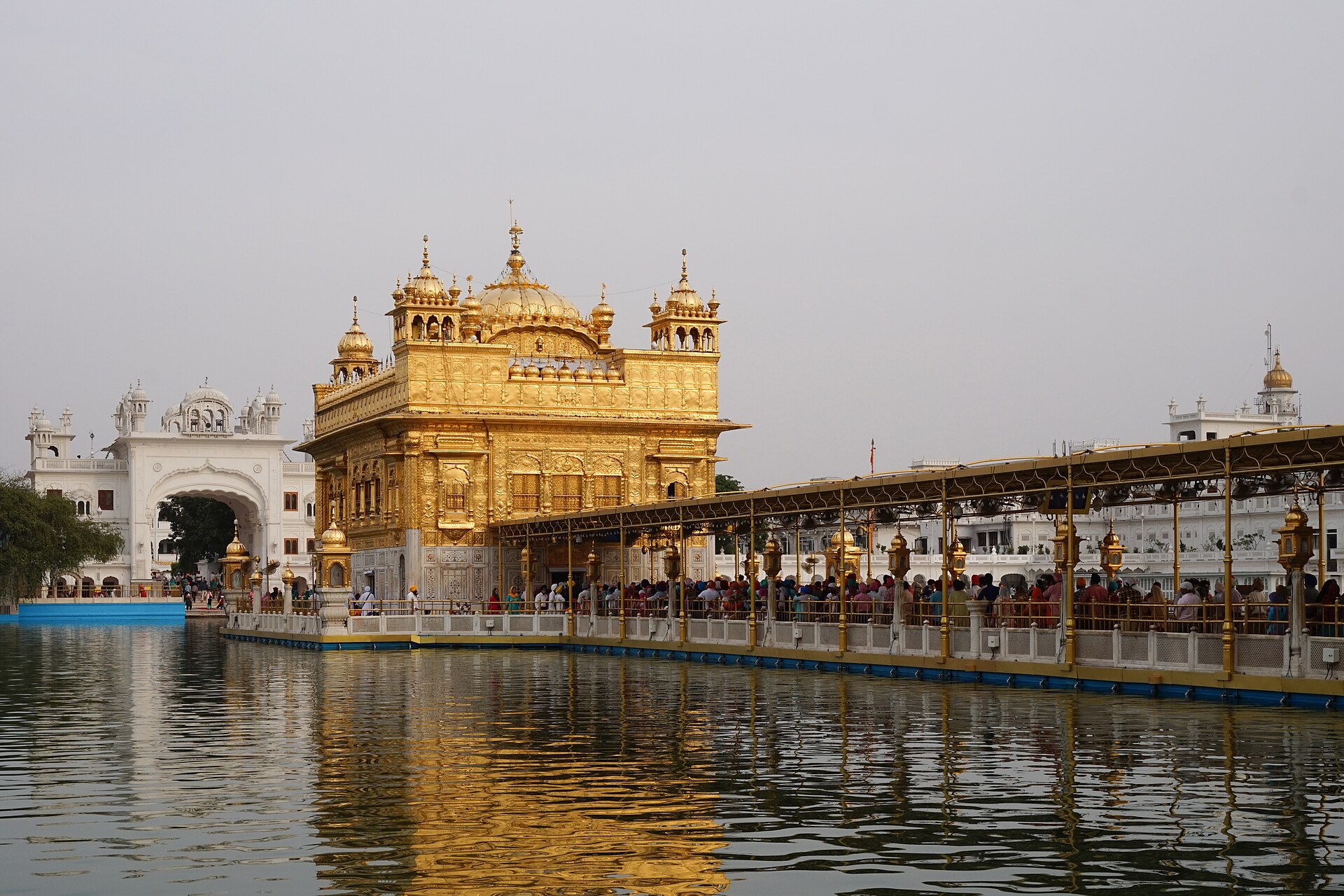
Harmandir Sahib, Amritsar · Bernard Gagnon · CC BY-SA 4.0

Sikhism

Tradition·Founded 1499 CE·est. ~26 million worldwide

Sikhism → 1 branch

Branch
The Interior of Sikhism

Nam simran — the Name, repeated.

The discipline Guru Nanak set at the center: remembrance of the Name until remembrance becomes the background of everything else.

Reached throughNam simran — repetition of the Name, alone or in the sangat's singing
What it is likeThe chattering self quiets; what remains is described as settled radiance (sahaj)
What it signifiesUnion with the One not after death but in the middle of a working life
Understanding it — context, not catechism: how this passage is held

Nam simran is remembrance of the Name, practiced alone in the pre-dawn hours or communally in kirtan, and Sikhism places it at the center in a way that makes the rest of the ethic possible: the working, earning householder cannot retreat to a cave, so the practice has to be portable. The described result is sahaj — a settled, unforced equipoise — rather than ecstasy, and the tradition is explicit that the goal is union while living an ordinary life, not after it.

From the sources — the passages this rests on; concise renderings, cited

In the ambrosial hours before dawn, meditate on the true Name.

Guru Granth Sahib, Japji Sahib (rendered)

The hour named in the scripture itself.

The same ground, other faiths

claims that share this one's ideas
Samadhi — union in stillness. Hinduism Go deeper →
The four who went into the orchard. Judaism · story Read it in full →
The Philokalia. Christianity · scripture Open the book →
The Yellow Court Classic. Taoism · scripture Open the book →
Sing HU. Eckankar · rite Go deeper →
Sound rightly spoken has power. Vedic Religion · core tenet Go deeper →

The conversation

argument stays attached to the claim it is about All discussion →

Sign in to open the first thread. Everything here is attributed.

Built on Hatchable