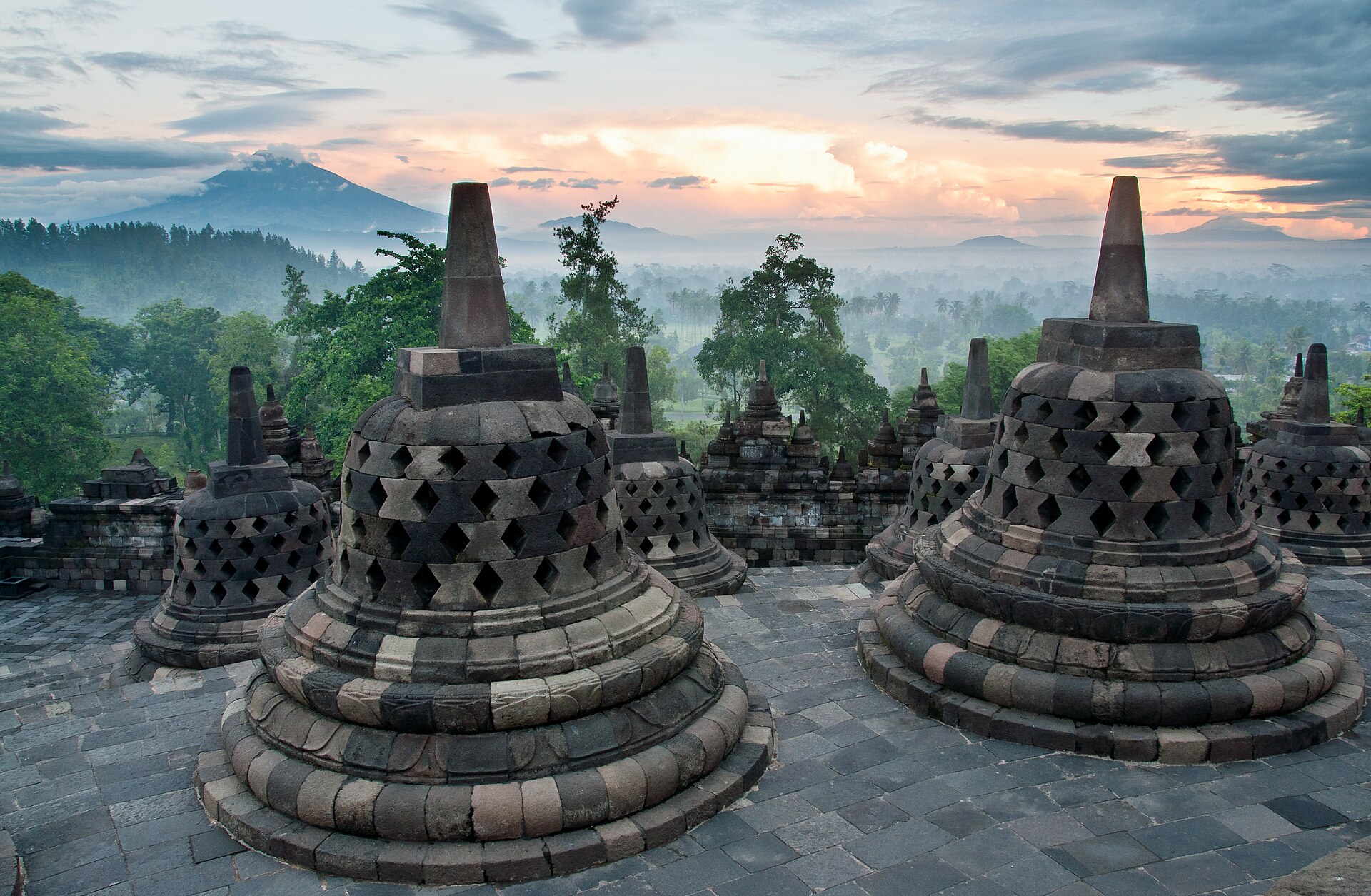
Story of Buddhism
The night under the tree.
Temptation, stillness, and the earth called as witness — awakening at dawn.
Where it is toldThe awakening narratives of the canon
Who appearsGautama; Mara and his armies; the earth itself, called as witness
What it teachesResolve, tested by everything the mind can throw, holds — and dawn comes
Understanding it — context, not catechism: how this passage is held
The night under the tree is told as a siege. Mara — death, desire, the personification of everything that keeps a mind in orbit — attacks with armies, then daughters, then the one question that actually lands: who authorizes you? The Buddha touches the earth, and the earth answers. Buddhist art returns to that gesture (bhumisparsha, the earth-touching mudra) more than any other, because it is the tradition's answer to the demand for credentials: no god, no lineage, no scripture — just the ground, and what happened on it.
The same ground, other faiths
claims that share this one's ideas
Every soul is already omniscient.
Jainism · core tenet
Go deeper →
Liberation happens while you are alive.
Sikhism · core tenet
Go deeper →
Knowledge liberates.
Advaita Vedānta · core tenet
Go deeper →
The arhat completes the path.
Theravāda · core tenet
Go deeper →
Buddhahood is reachable in one lifetime.
Vajrayāna · core tenet
Go deeper →
Awakening is sudden, not gradual.
Zen · core tenet
Go deeper →
Sign in to open the first thread. Everything here is attributed.