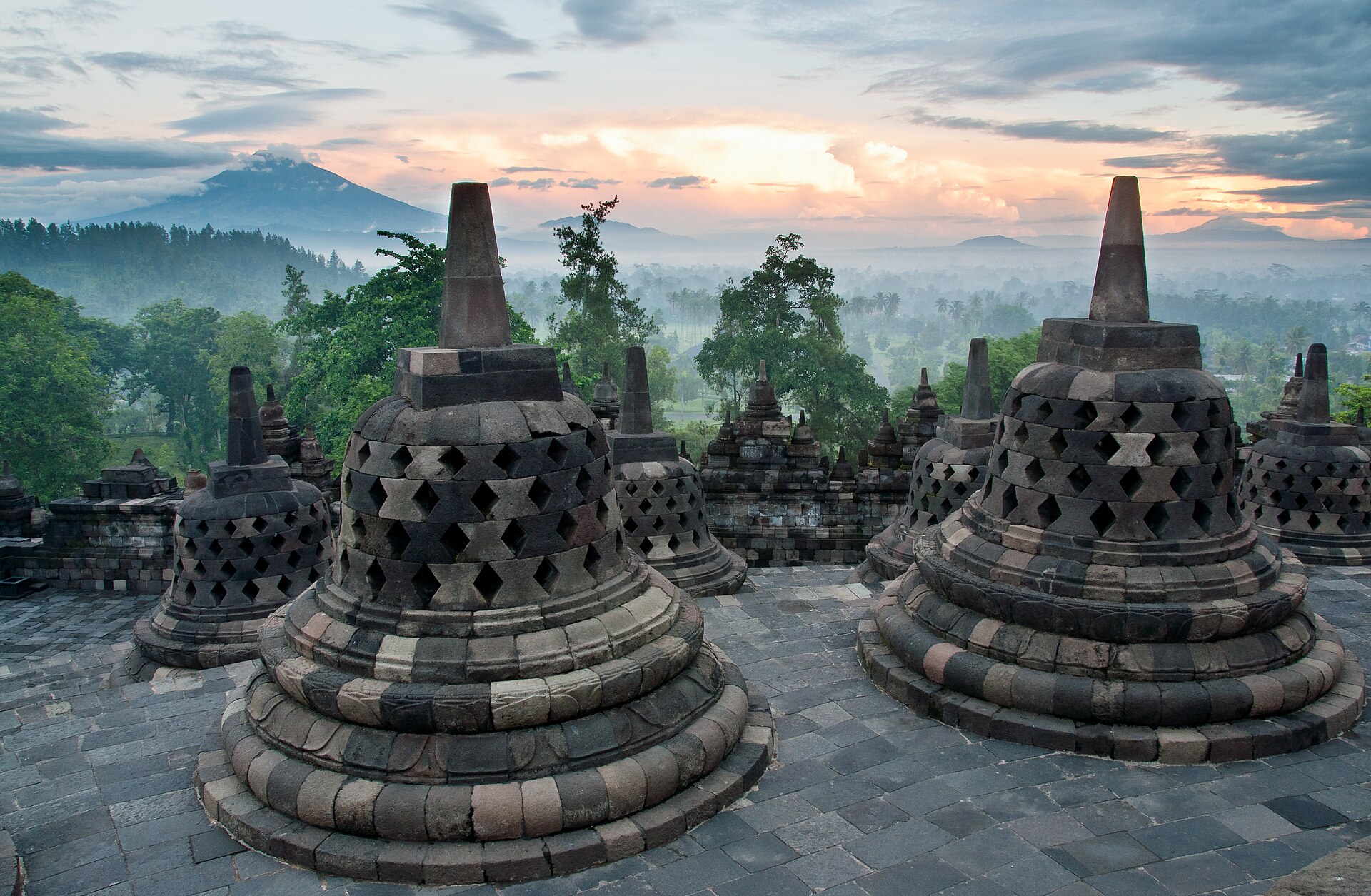
Borobudur at sunrise · Justine Hong · CC BY 2.0

Buddhism

Tradition·Founded c. 480 BCE·est. ~500 million worldwide

Vedic Religion → Buddhism → 3 branches

Branch
Rite of Buddhism

Kora — going round.

Clockwise, always: round the stupa, round the temple, round the whole mountain. Merit measured in laps, and the most common religious act in the Tibetan world.

⏱ whenever you pass one◌ everyone, clockwise, without exception
What happensWalk the stupa, the temple, the mountain — clockwise, keeping it on your right; spin the wheels as you go
What it needsSomething sacred and the legs to go round it
What it aims atMerit made by the step; a whole pilgrimage measured in laps
Understanding it — context, not catechism: how this rite is held

Circumambulation is the most common Buddhist act in the Himalaya and the least discussed. You keep the sacred object on your right — clockwise, and the direction is not negotiable — and you go round: a stupa three times on the way past, a temple daily, the Barkhor circuit in Lhasa in an unbroken human current, or, for the serious, the fifty-two kilometres round Mount Kailash. Some pilgrims perform the whole circuit in full-body prostrations, measuring the mountain in their own lengths, which can take weeks. The logic is merit by repetition, and the practice needs no literacy, no liturgy, and no permission.

The same ground, other faiths

rites that share this one's ideas
Shrine visit (sanpai). Shinto Go deeper →
The Passover on Gerizim. Samaritanism Go deeper →
Ritual sustains the order of the world. Vedic Religion · core tenet Go deeper →
Paryushana. Jainism Go deeper →
The commandments are how the covenant is lived. Judaism · core tenet Go deeper →

The conversation

argument stays attached to the rite it is about All discussion →

Sign in to open the first thread. Everything here is attributed.

Built on Hatchable