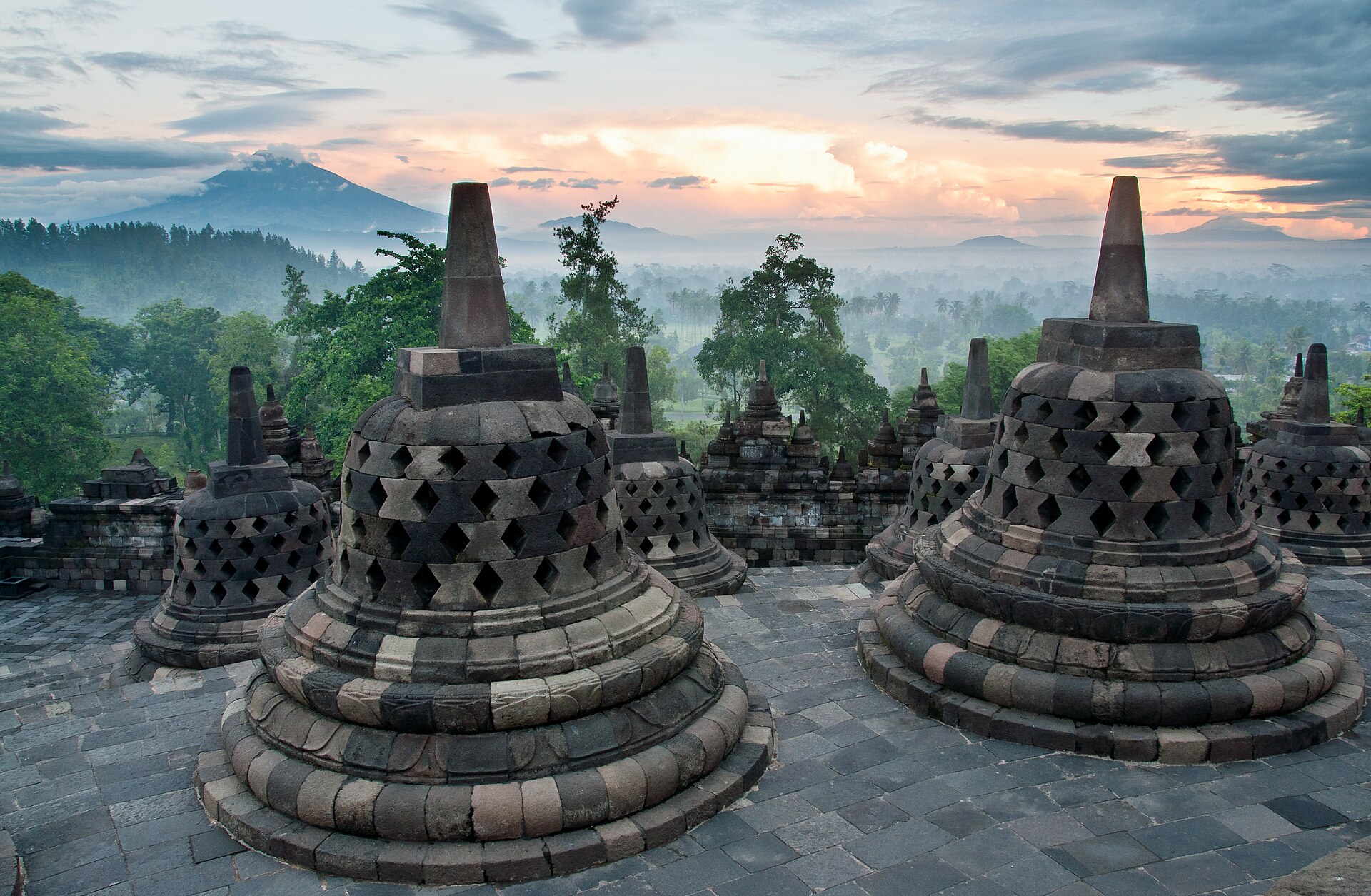
Borobudur at sunrise · Justine Hong · CC BY 2.0

Buddhism

Tradition·Founded c. 480 BCE·est. ~500 million worldwide

Vedic Religion → Buddhism → 3 branches

Branch
Rite of Buddhism

The sand mandala.

Days of work, laid grain by grain — a palace, a cosmos, exact to the millimetre. Then it is swept into a pile and poured into moving water, on purpose.

⏱ occasional — days of work, minutes of ending◌ monks with chak-pur funnels; a crowd watching
What happensColoured sand laid grain by grain into a precise cosmic palace over days, consecrated, then swept up and poured into a river
What it needsDyed sand, drawn lines, and the discipline to destroy it
What it aims atImpermanence enacted rather than argued; the blessing carried off by the water
Understanding it — context, not catechism: how this rite is held

The sand mandala is a teaching aid disguised as an artwork. Monks work for days from memorised proportions, laying dyed sand through narrow metal funnels tapped with a rod, and what emerges is the floor plan of a deity's palace, exact to the grain. It is consecrated, used, and then — in front of everybody, usually while a Western audience visibly struggles — cut through with a vajra, swept into a heap, and poured into the nearest river so the blessing travels downstream. The destruction is not a lesson bolted on afterwards. It is the reason the thing was made.

The same ground, other faiths

rites that share this one's ideas
Ise, rebuilt every twenty years. Shinto Go deeper →
Drawing the vèvè. Haitian Vodou Go deeper →
A memorial with no heaven in it. The Ethical Culture Movement Go deeper →
Ritual sustains the order of the world. Vedic Religion · core tenet Go deeper →
Paryushana. Jainism Go deeper →

The conversation

argument stays attached to the rite it is about All discussion →

Sign in to open the first thread. Everything here is attributed.

Built on Hatchable