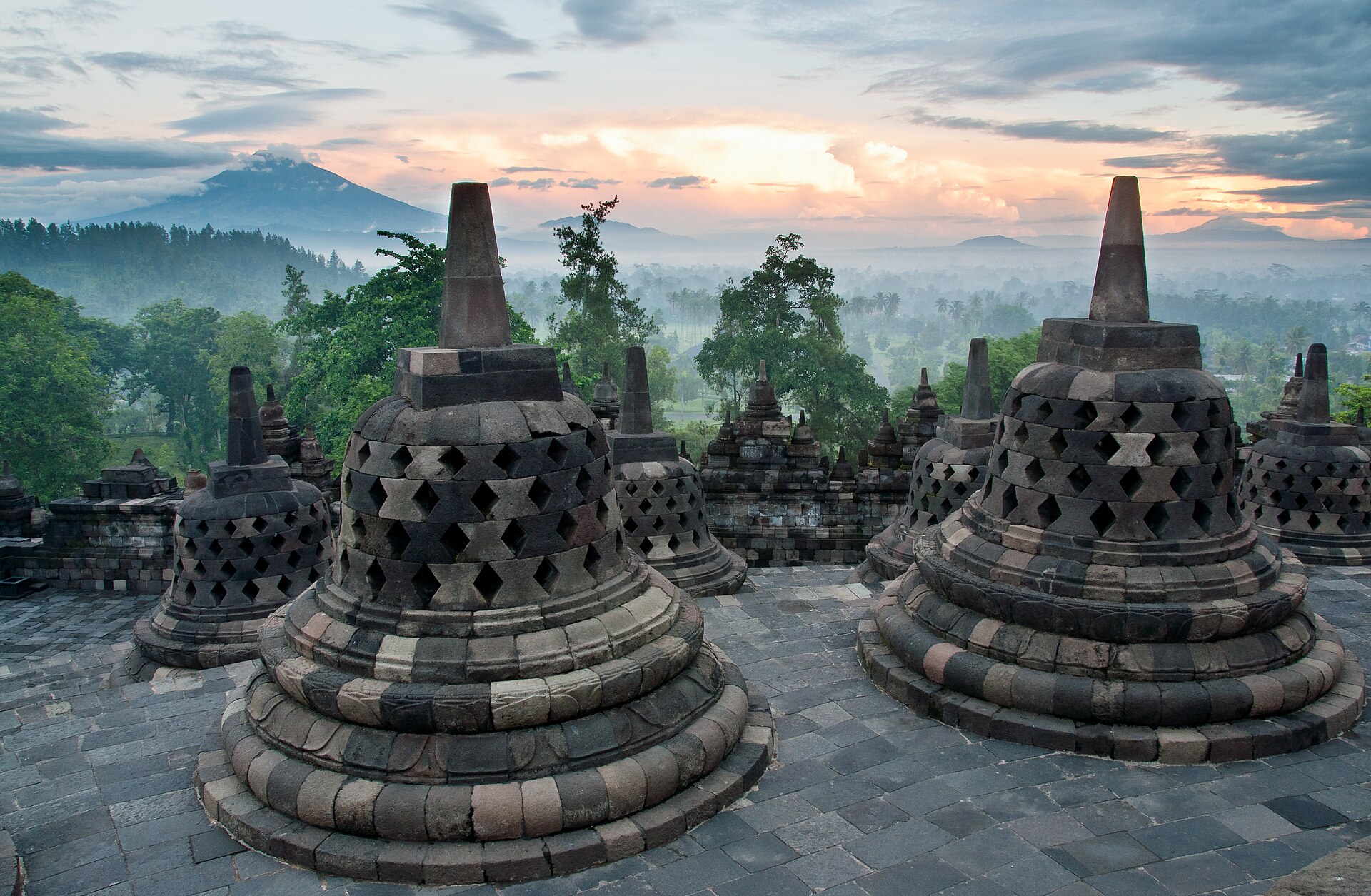
Borobudur at sunrise · Justine Hong · CC BY 2.0

Buddhism

Tradition·Founded c. 480 BCE·est. ~500 million worldwide

Vedic Religion → Buddhism → 3 branches

Branch
Rite of Buddhism

Magha and Asalha Puja.

The other two full moons: the day 1,250 monks arrived unsummoned, and the day the wheel was first turned. The laity circle the hall three times with candles.

⏱ annual — the full moons of the third and eighth months◌ the laity at the temple, circling with candles
What happensCandle-lit circumambulation three times round the hall, and the recitation of what was taught on the day
What it needsA full moon, a temple, and a candle that stays lit
What it aims atMarking the two other founding days — the spontaneous assembly, and the first sermon
Understanding it — context, not catechism: how this rite is held

Magha Puja commemorates an assembly that was not organised: 1,250 arhats, all ordained by the Buddha himself, arrived at the same place on the same full moon without being summoned, and he delivered a summary of the teaching to them. Asalha Puja marks the first sermon and opens the rains retreat the following day. In Thailand both are public holidays and both are observed the same way — the laity gather at dusk and circle the main hall three times carrying candles, incense and a flower, once each for the Buddha, the dharma and the sangha. It is the most photographed thing Thai Buddhism does, and the least explained.

The same ground, other faiths

rites that share this one's ideas
Puja — the daily offering. Hinduism Go deeper →
The eightfold offering. Jainism Go deeper →
Tefillin and tallit. Judaism Go deeper →
The sign of the cross. Christianity Go deeper →
The diwan — the gurdwara service. Sikhism Go deeper →
The divine feminine acts in the world. Shaktism · core tenet Go deeper →

The conversation

argument stays attached to the rite it is about All discussion →

Sign in to open the first thread. Everything here is attributed.

Built on Hatchable