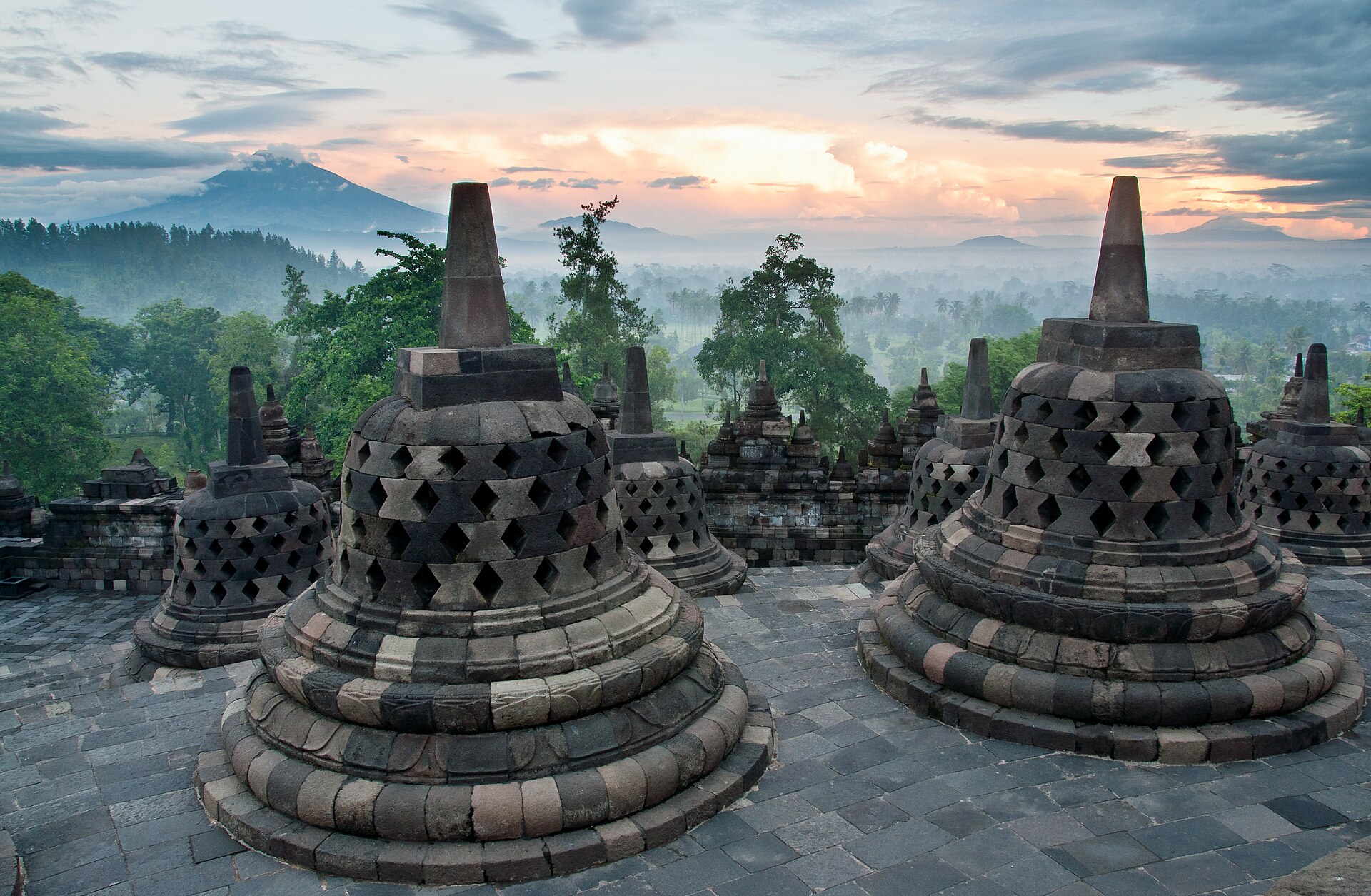
Borobudur at sunrise · Justine Hong · CC BY 2.0

Buddhism

Tradition·Founded c. 480 BCE·est. ~500 million worldwide

Vedic Religion → Buddhism → 3 branches

Branch
Rite of Buddhism

Opening the eyes.

The last stroke on a new image is the pupils, and it is done in ceremony. Before it: a statue. After it: someone in the room.

⏱ once, when the image is finished◌ the artist, a senior monk, the waiting community
What happensThe last thing painted or carved is the eyes; the image is consecrated, and from that moment it is treated as present rather than depicted
What it needsA finished image, a consecrator, and relics or written mantras sealed inside
What it aims atThe difference between a statue of a buddha and a buddha
Understanding it — context, not catechism: how this rite is held

A buddha-image is not treated as a representation once its eyes have been opened. The eye-opening is the final act of making — often literally painting or carving the pupils last — accompanied by consecration, and by sealing relics, grain, or written mantras into a cavity in the body. From that moment the image is handled as a presence: it is not stepped over, not photographed casually in some traditions, not moved without ceremony, and if a temple is decommissioned the image is deconsecrated first. It is the clearest instance of a tradition that denies a permanent self nevertheless being precise about where presence lives.

The same ground, other faiths

rites that share this one's ideas
Puja — the daily offering. Hinduism Go deeper →
The eightfold offering. Jainism Go deeper →
Tefillin and tallit. Judaism Go deeper →
The sign of the cross. Christianity Go deeper →
The diwan — the gurdwara service. Sikhism Go deeper →
The divine feminine acts in the world. Shaktism · core tenet Go deeper →

The conversation

argument stays attached to the rite it is about All discussion →

Sign in to open the first thread. Everything here is attributed.

Built on Hatchable