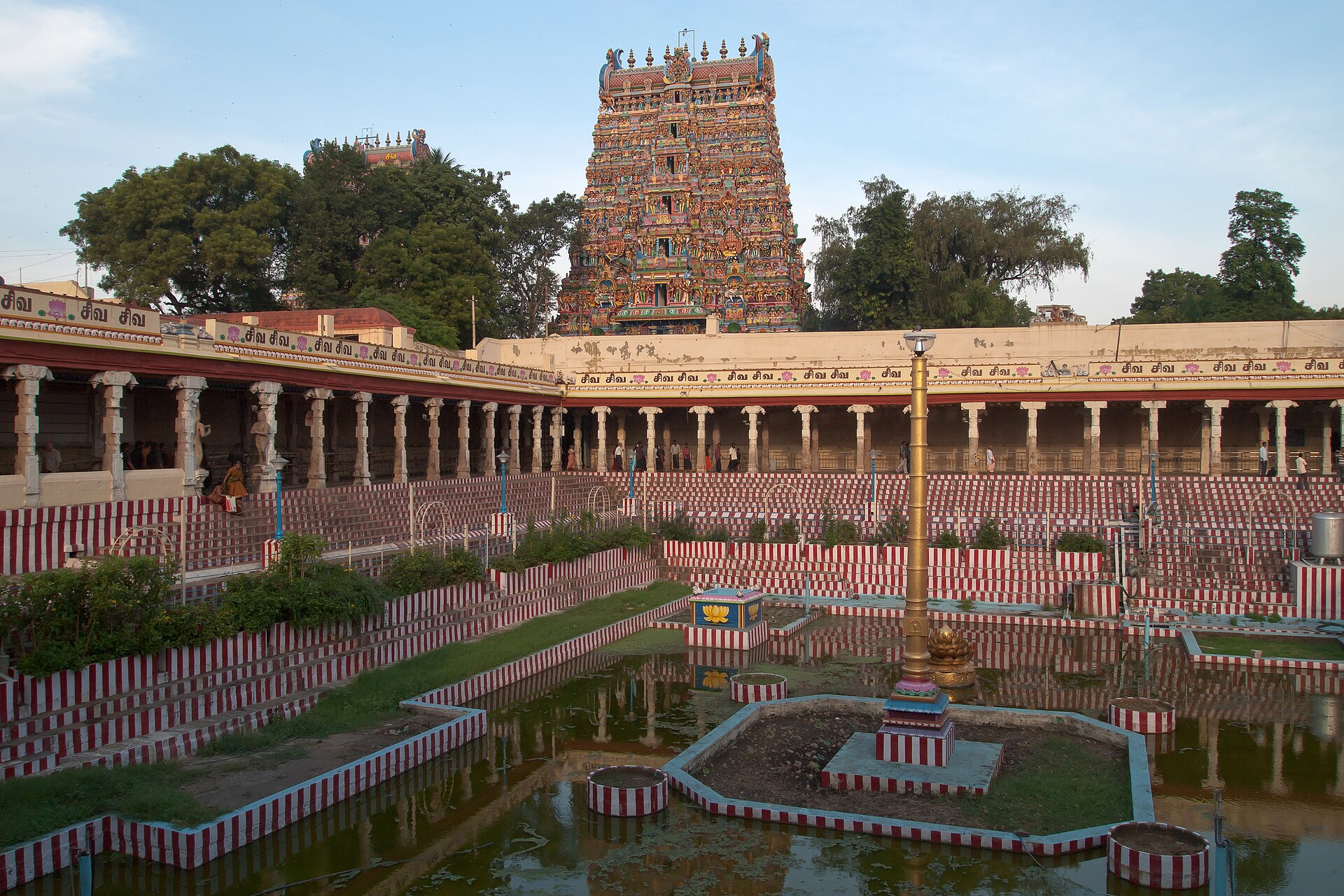
Rite of Hinduism
Puja — the daily offering.
Flame, flowers, food before the deity's image — hospitality to the divine as household routine.
⏱ daily — at the home shrine◌ the household
What happensInvoke; offer light, incense, flowers, food; receive back the blessed offering as prasada
What it needsAn image or emblem, a lamp, something to give
What it aims atDarshan — seeing the deity, and being seen
Understanding it — context, not catechism: how this rite is held
Puja is the ordinary machinery of Hindu practice, performed at home shrines far more often than in temples: the deity is treated as an honored guest — awakened, bathed, dressed, fed, shown light, and put to rest. That hospitality frame is the theology. The offering returns to the worshipper as prasada, food that the deity has tasted, which is why the exchange is not a transaction but a shared meal. What is offered can be elaborate or a flower and water; the Gita explicitly says the latter is enough.
The same ground, other faiths
rites that share this one's ideas
Taking refuge.
Buddhism
Go deeper →
The eightfold offering.
Jainism
Go deeper →
Tefillin and tallit.
Judaism
Go deeper →
The sign of the cross.
Christianity
Go deeper →
The diwan — the gurdwara service.
Sikhism
Go deeper →
The divine feminine acts in the world.
Shaktism · core tenet
Go deeper →
Sign in to open the first thread. Everything here is attributed.