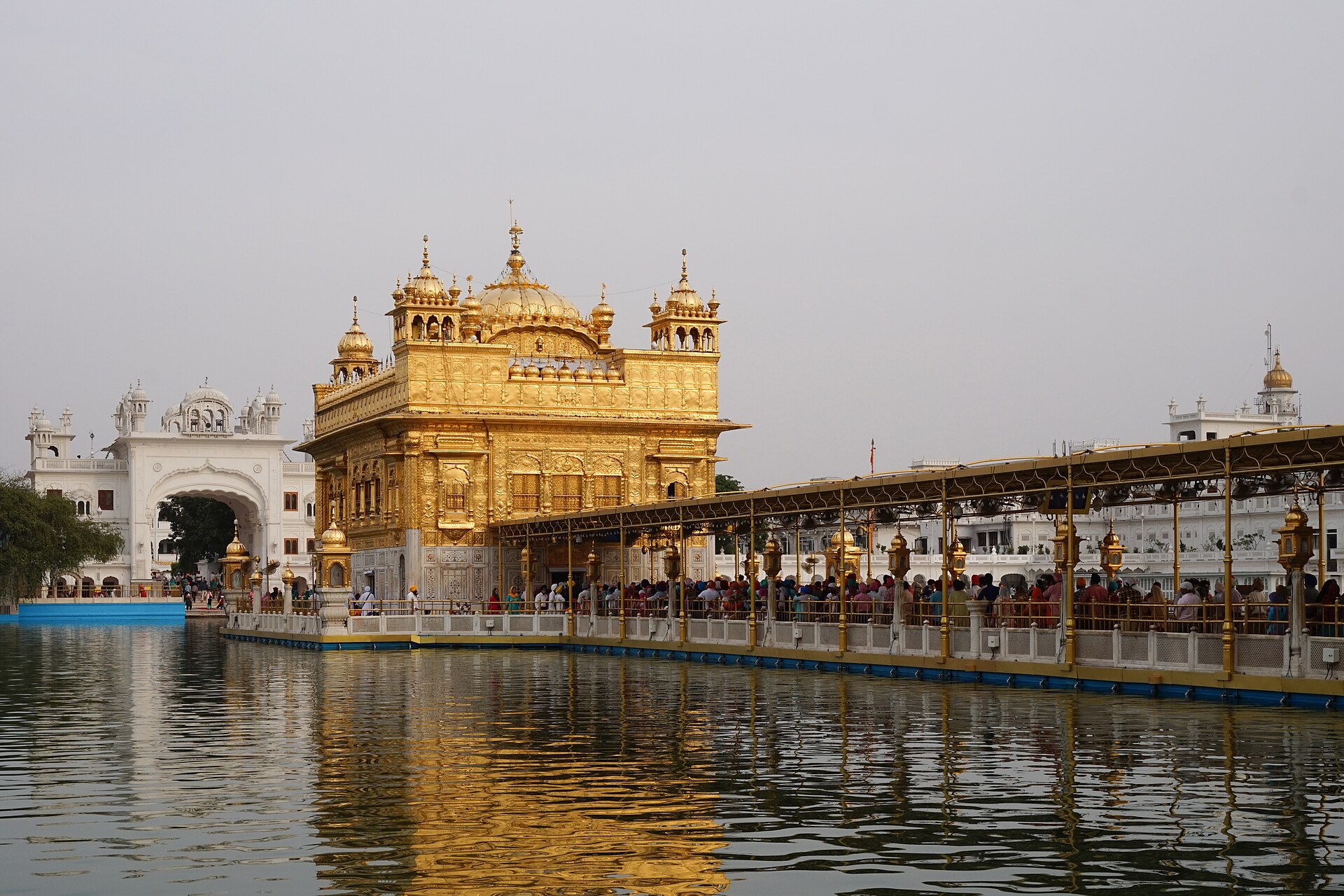
The diwan — the gurdwara service.
Kirtan, then katha, then Anand Sahib, Ardas, the hukamnama, prasad, and langar — the same shape in Amritsar, Southall and Surrey. Sikhism has no sabbath: Sunday morning is a diaspora convenience, and in Punjab the gurdwara simply runs from before dawn until late.
The order of a gurdwara service is remarkably stable worldwide, which is one of the Rehat Maryada's few unambiguous successes. Kirtan, katha, the first five and last stanzas of Anand Sahib, Ardas standing, the hukamnama, karah prasad, langar. What varies is everything around it: whether there are chairs at the back for the elderly, whether men and women sit separately, which language the katha is in, whether the ragis are salaried professionals or teenagers. Sikhism has no sabbath and no obligatory weekly attendance — the Sunday morning diwan is a diaspora adaptation to the Western working week, and Punjab simply runs its gurdwaras from before dawn until night with people dropping in. The diaspora consequence is that Sunday has become far more socially load-bearing abroad than it ever was at home: it is where the Punjabi school, the youth kirtan class, the wedding negotiations and the committee politics all happen.
The same ground, other faiths
rites that share this one's ideasSign in to open the first thread. Everything here is attributed.