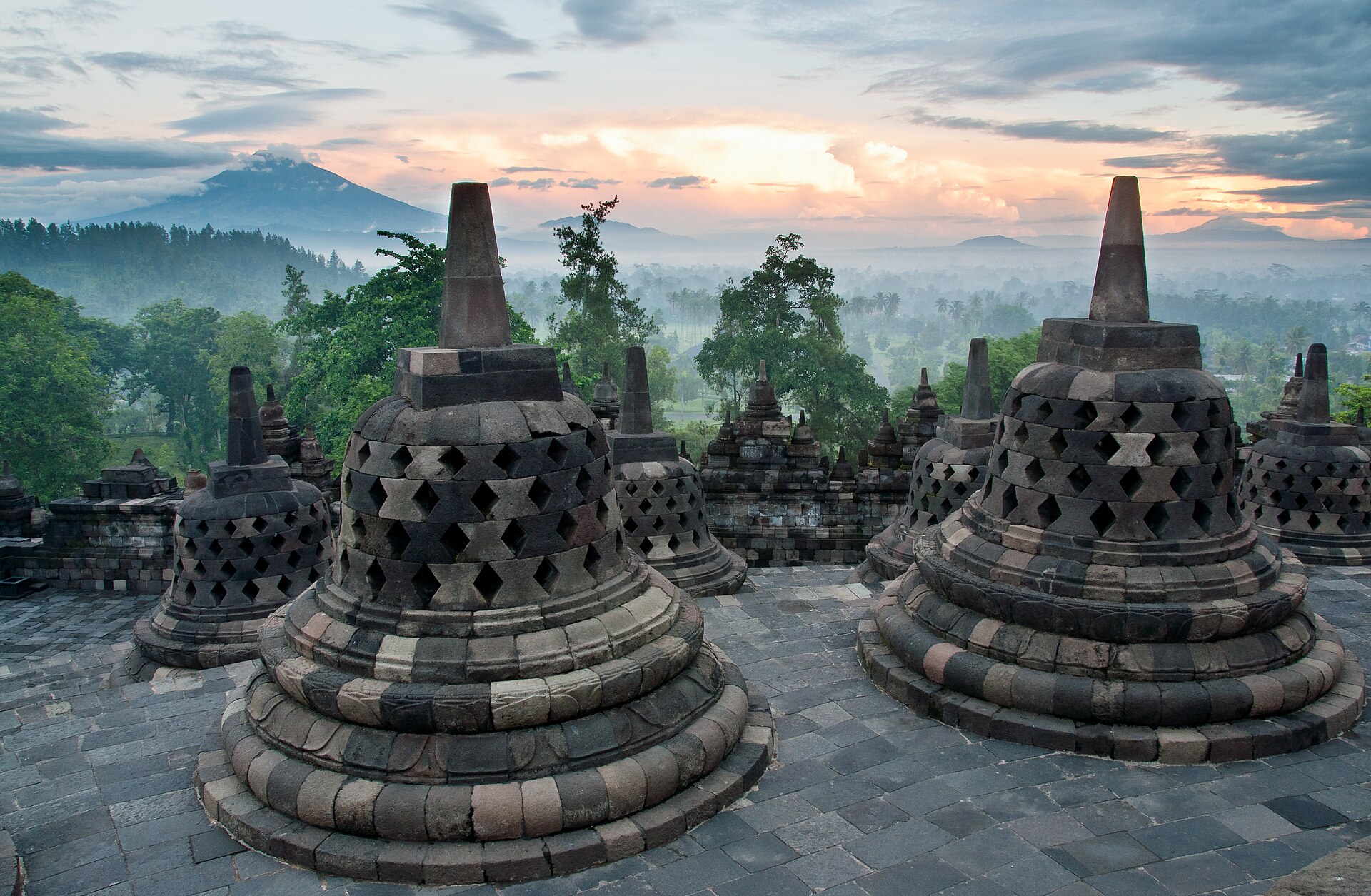
Borobudur at sunrise · Justine Hong · CC BY 2.0

Buddhism

Tradition·Founded c. 480 BCE·est. ~500 million worldwide

Vedic Religion → Buddhism → 3 branches

Branch
Scripture of Buddhism

The Jataka tales.

547 previous lives, most of them animal. This is the Buddhism children actually receive — a hare that jumps into a fire, a monkey that makes a bridge of himself, a prince who gives away his children.

LanguagePali, with vast vernacular retellings
Composedc. 3rd century BCE onward, absorbing older folklore
What it holds547 tales of the Buddha's previous lives, as king, hare, monkey, merchant, tree-spirit
How it is usedTold to children, painted on temple walls, danced, and preached at festivals
Understanding it — context, not catechism: how this passage is held

The Jatakas are how Buddhism is actually transmitted to most of the people who hold it. Each tale is a previous life of the Buddha-to-be, usually as an animal or a minor king, demonstrating one perfection — generosity, patience, resolve — with a tag at the end identifying who in the story became whom. They absorbed a great deal of pre-Buddhist Indian folklore on the way, which is why versions of several turn up in Aesop and the Panchatantra. In Southeast Asia the Vessantara Jataka is recited in full at an annual festival that can take a day; the walls of Ajanta, Borobudur and every village temple in Thailand are covered in them.

The same ground, other faiths

claims that share this one's ideas
The soul is liberated by its own effort. Jainism · core tenet Go deeper →
Guard the tongue. Judaism · precept Go deeper →
Love of God and neighbor is the whole law. Christianity · core tenet Go deeper →
Your parents have a claim on you. Islam · precept Go deeper →
Bhai Kanhaiya's water. Sikhism · story Read it in full →

The conversation

argument stays attached to the claim it is about All discussion →

Sign in to open the first thread. Everything here is attributed.

Built on Hatchable