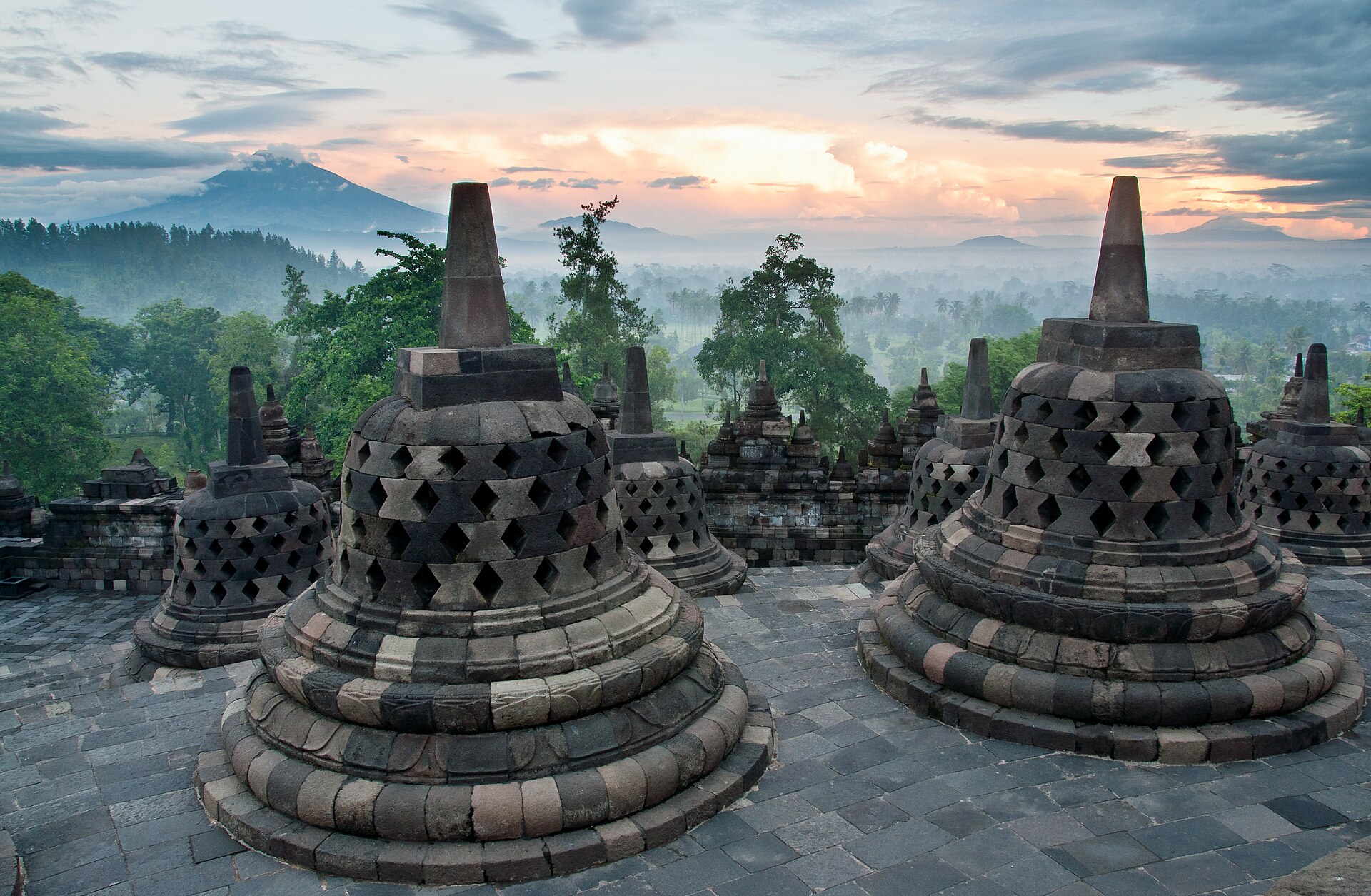
Borobudur at sunrise · Justine Hong · CC BY 2.0

Buddhism

Tradition·Founded c. 480 BCE·est. ~500 million worldwide

Vedic Religion → Buddhism → 3 branches

Branch
Scripture of Buddhism

The Vimalakirti Sutra.

A householder falls ill and the great bodhisattvas are afraid to visit him, because he will out-argue them. He does. Asked to define non-duality, he says nothing, and that is the winning answer.

LanguageSanskrit, surviving mainly in Chinese and Tibetan
Composedc. 1st–2nd century CE
What it holdsA layman who out-argues the greatest bodhisattvas, and answers the final question with silence
How it is usedThe favourite text of educated East Asian laypeople, for obvious reasons
Understanding it — context, not catechism: how this passage is held

The Vimalakirti Sutra is the text East Asian laypeople loved, and it is easy to see why. Vimalakirti is a rich householder with a family, servants and business interests, and he is spiritually superior to the entire monastic establishment; the sutra opens with the great disciples each declining to visit him because he has previously humiliated them in argument. The climax is a discussion of non-duality in which each bodhisattva offers a formulation, Manjushri says the truth is beyond words, and Vimalakirti — asked last — says nothing at all. The silence is the sutra's answer, and it became one of Chan Buddhism's founding gestures.

The same ground, other faiths

claims that share this one's ideas
Atman and Brahman are one — the self is the absolute. Hinduism · core tenet Go deeper →
The fourfold sangha. Jainism · community Go deeper →
Every human bears the image of God. Judaism · core tenet Go deeper →
The good Samaritan. Christianity · story Read it in full →
The farewell sermon. Islam · story Read it in full →
All human beings are equal. Sikhism · core tenet Go deeper →

The conversation

argument stays attached to the claim it is about All discussion →

Sign in to open the first thread. Everything here is attributed.

Built on Hatchable