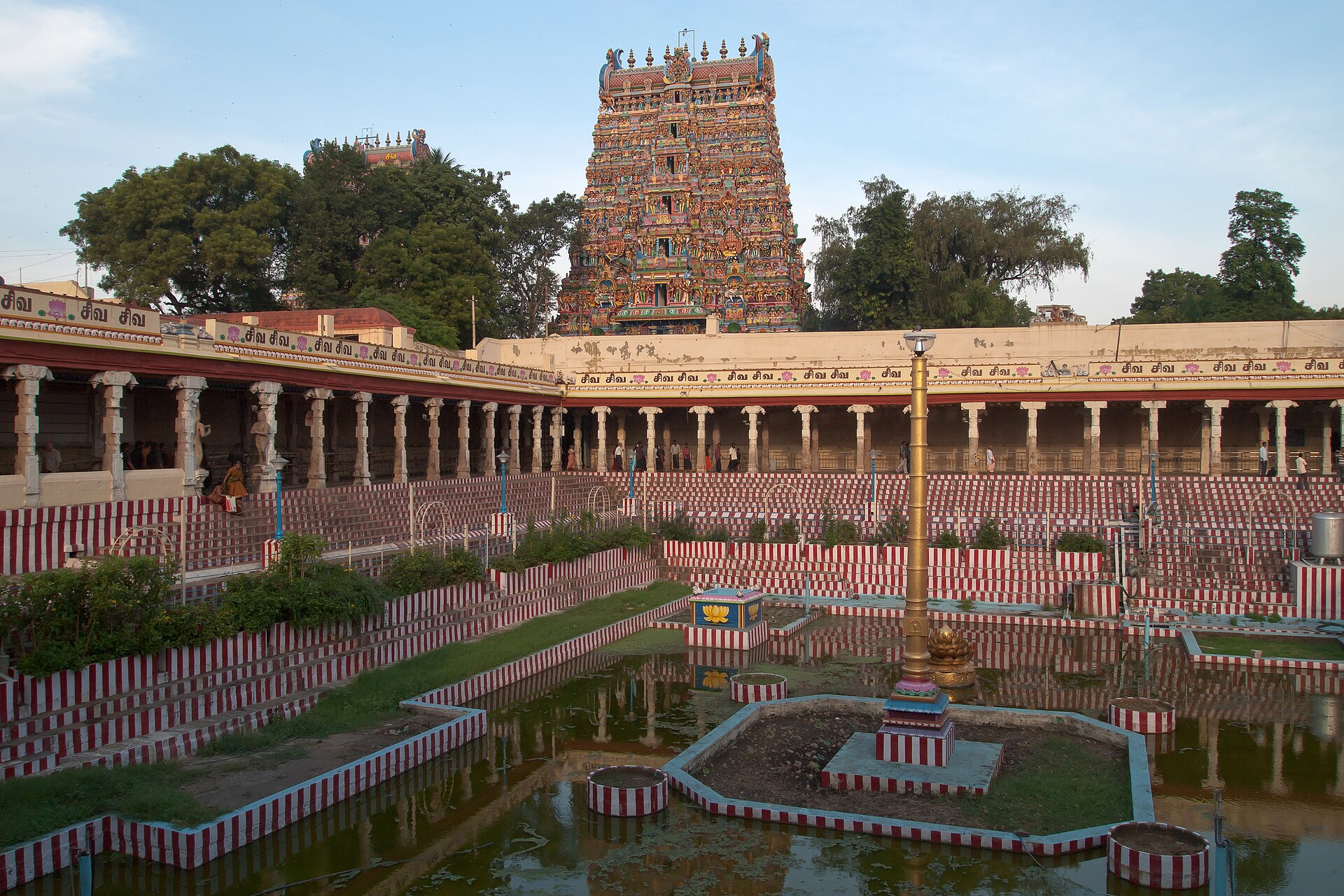
Darshan — going to be seen.
You do not attend a service. You queue, look at the deity through a doorway for a few seconds, and are looked at back. Tirupati moves sixty to eighty thousand people through that doorway on an ordinary day.
Darshan is the central act of Hindu religious life and the hardest to translate, because the English word worship implies the wrong direction. To take darshan is to be granted sight of the deity and, more importantly, to be seen by it — the eyes of a temple image are the last thing carved and the first thing consecrated, and the exchange of gaze is the transaction. The practical shape is a queue. At the big pilgrimage temples the queue is industrial: barricaded cattle-runs, timed tokens, paid fast-track lines that cost between a few hundred and a few thousand rupees, and a few seconds at the front before you are moved on. That the wealthy can buy a shorter queue to a god is criticised inside Hinduism constantly and defended as the thing that funds the free line. There is no sermon, no congregation, no fixed hour, and nothing you are required to say.
The same ground, other faiths
rites that share this one's ideasSign in to open the first thread. Everything here is attributed.