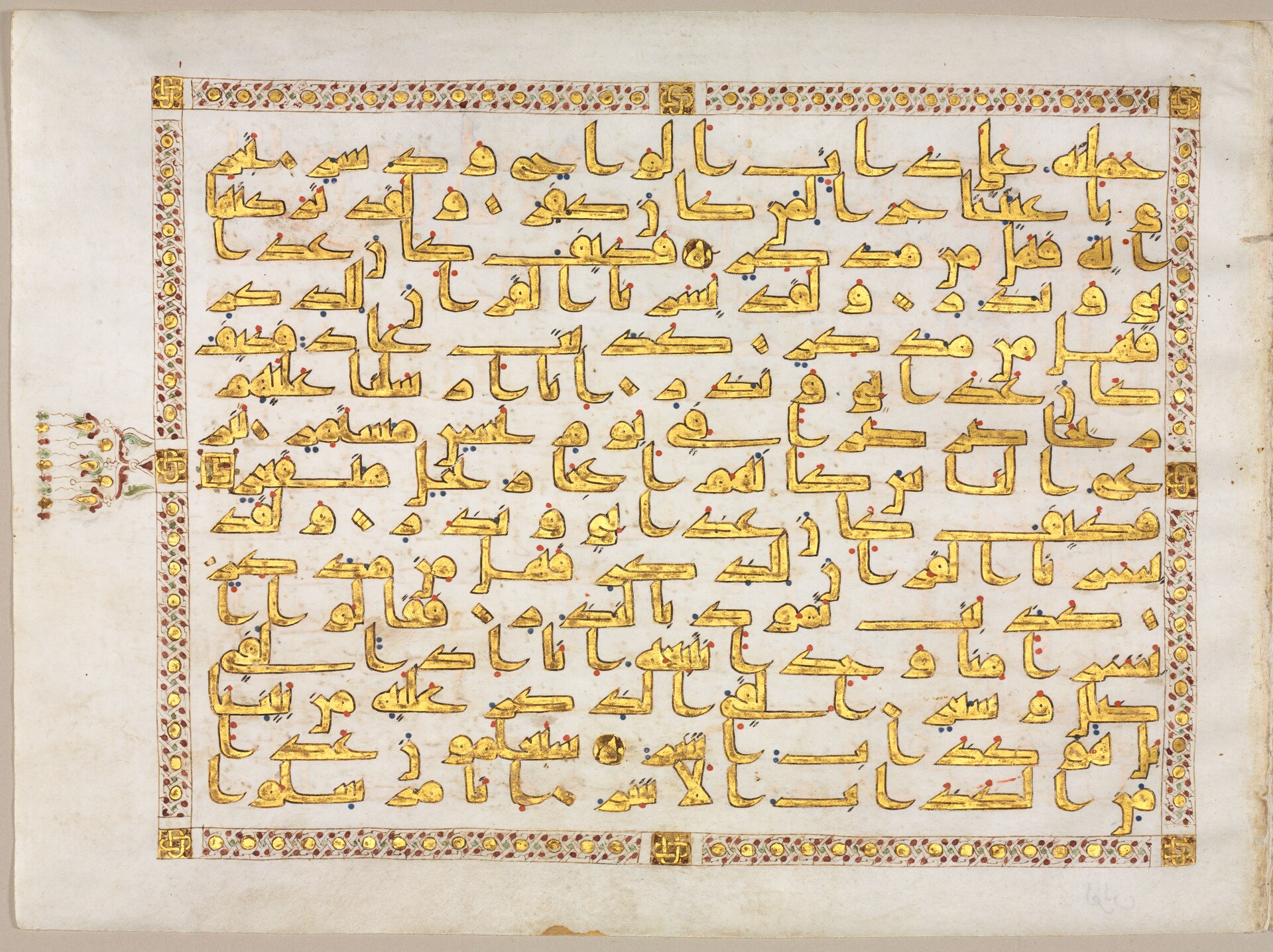
Yusuf.
The one story the Quran tells straight through, in a single sura it calls the most beautiful of accounts. Thrown in a well by his brothers, sold, imprisoned on a false accusation, raised to run Egypt's grain — and when the brothers arrive starving, he feeds them before he tells them who he is.
Sura 12 is unique in the Quran: a single continuous narrative from beginning to end, which the text itself calls the most beautiful of accounts. Yusuf is thrown into a well by his brothers out of jealousy, sold to a caravan, taken into an Egyptian household, falsely accused by the master's wife after he refuses her, imprisoned, interprets dreams there and then for the king, and rises to control Egypt's grain in a famine. When his brothers arrive to beg for food and do not recognise him, he feeds them first and only afterwards tells them who he is, and says there is no reproach on them today. The sura is read as a manual for enduring injustice without becoming unjust, and it is one of the most beloved texts in the Quran across the Muslim world — the subject of Persian and Turkish narrative poetry, of Indonesian and Bengali retellings, and of endless sermons on patience. The episode of the women of the city cutting their hands while distracted by his beauty is among the most illustrated scenes in Islamic manuscript painting.
The same ground, other faiths
claims that share this one's ideasSign in to open the first thread. Everything here is attributed.