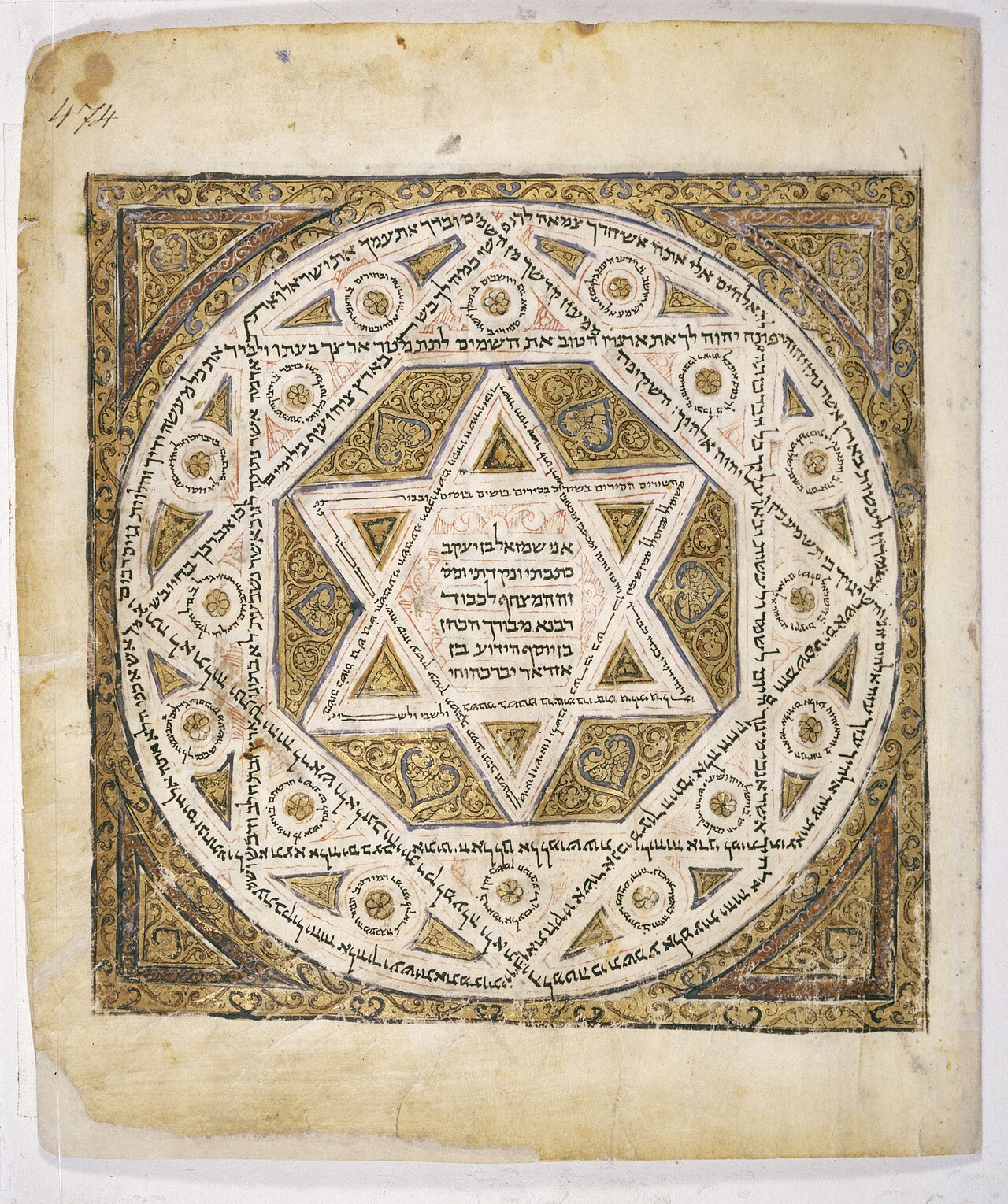
The mezuzah on the doorpost.
The Ashkenazi tilt is a compromise between Rashi, who said vertical, and his grandson Rabbeinu Tam, who said horizontal — a family argument frozen into every doorframe in Europe. Sephardi practice ignored the compromise and hung them straight.
The mezuzah is the most visible Jewish object in the world and the most misunderstood: the decorative case is not the ritual object, the parchment inside is. A trained scribe writes the first two paragraphs of the Shema by hand on treated animal skin with a quill, in a specified script; a single malformed or cracked letter renders it invalid, which is why they are meant to be inspected twice in seven years. It goes on the right doorpost as you enter, in the upper third, and every room in the house gets one except the bathroom — an Israeli flat may have six. Ashkenazi practice tilts it inward, which is a literal compromise between Rashi, who ruled it should be vertical, and his grandson Rabbeinu Tam, who ruled horizontal; Sephardi and Yemenite communities hang it vertically and always did. People touch it and kiss their fingers on the way past. The tradition is emphatic in some sources that it is not an amulet and popular practice has always treated it as one — checking the mezuzot when misfortune strikes a household is a standard piece of pastoral advice in Hasidic and Sephardi communities and an embarrassment to the rationalist end of the tradition.
The same ground, other faiths
rites that share this one's ideasSign in to open the first thread. Everything here is attributed.