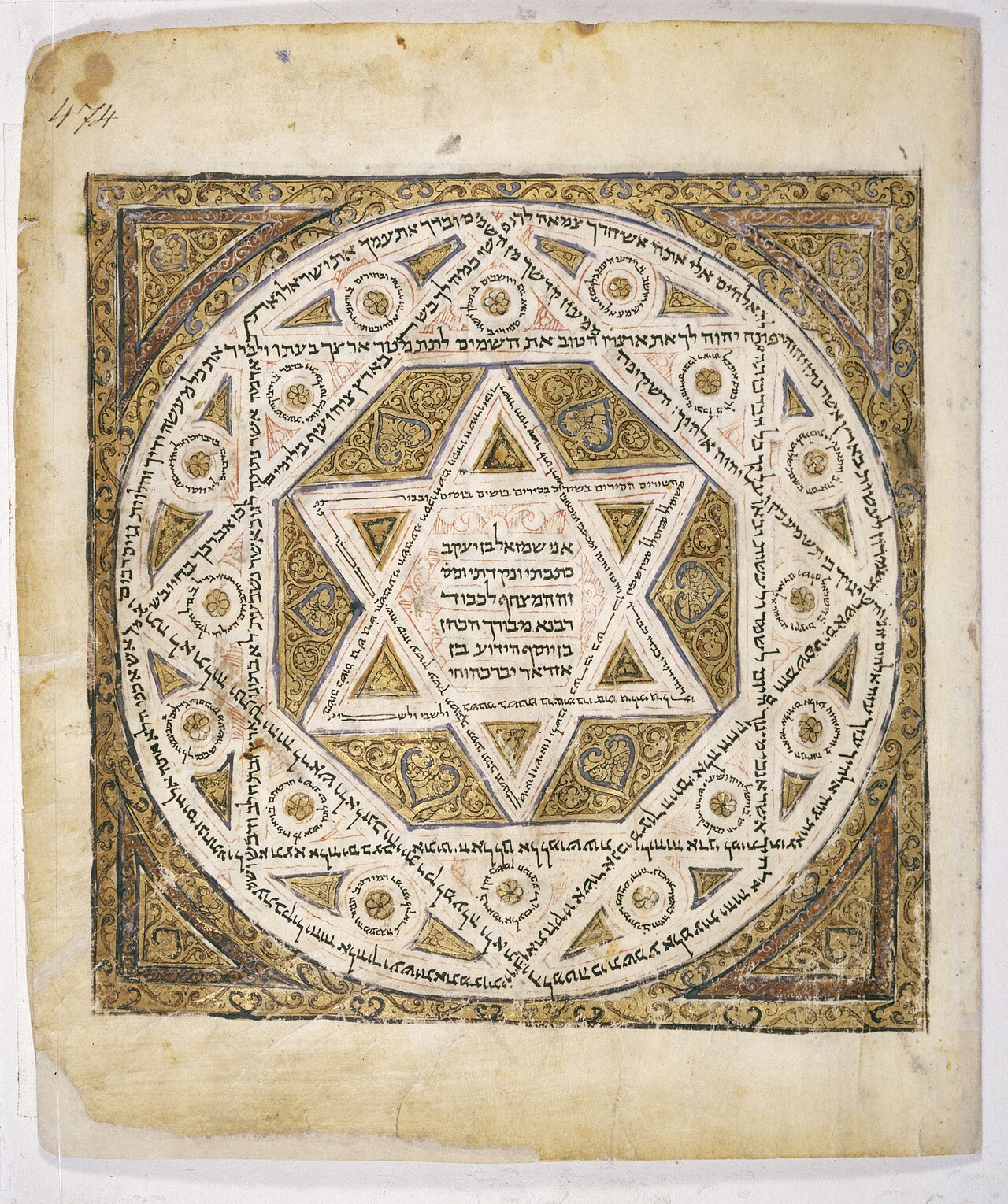
Purim — the scroll, the parcels, the drink.
The Talmud says to drink until you cannot tell cursed Haman from blessed Mordechai, and later authorities spent centuries walking that back. Money for the poor is given the same day and the law says not to investigate whether they deserve it.
Purim has four obligations and only one of them is the reading, which is why it is the most communal day in the year. The scroll of Esther is read aloud twice, at night and again in the morning, and the congregation makes as much noise as possible whenever Haman is named; children come in costume and so, increasingly, do adults. Mishloach manot are parcels of at least two ready-to-eat foods sent to at least one other person, and in practice a street of Jewish families spends the morning driving parcels to each other. Matanot la-evyonim is money to at least two poor people, given that same day, and the halakha explicitly says not to examine whether the recipient is deserving. The seudah is a long afternoon meal with drink, and the Talmud's instruction to drink until you cannot distinguish cursed Haman from blessed Mordechai has been softened by nearly every later authority into a nap, with limited success — alcohol harm on Purim is a recurring subject of rabbinic letters in Orthodox communities every year. The book's violence and the day's hilarity sit next to each other without resolution, and Israeli Purim carries an additional shadow since the 1994 Hebron massacre, carried out on the day by a man who read the story as a warrant.
The same ground, other faiths
rites that share this one's ideasSign in to open the first thread. Everything here is attributed.