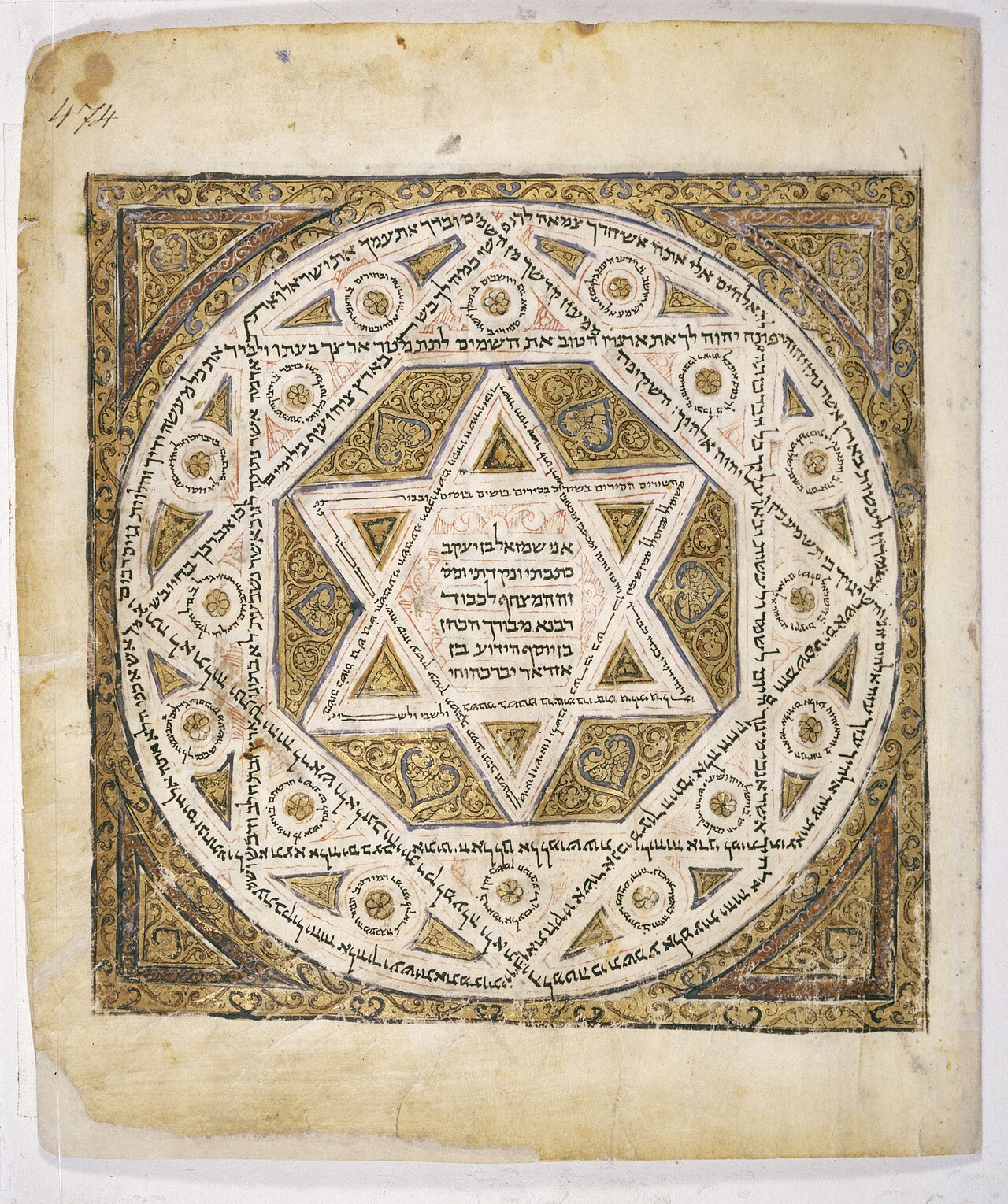
The siddur.
What is in it is the sharpest denominational marker after food: which blessings, whether the matriarchs are named, whether the resurrection is literal, whether the prayer for the state is printed. Sephardi and Mizrahi rites carry far more poetry, sung to modes that change with the week's portion.
The prayer book is where a community's identity is most exactly recorded, which is why arguments about it are never only liturgical. Its skeleton was set by the Geonim — Amram Gaon of Sura sent an ordered rite to Spain in the ninth century, and Saadia Gaon produced another in the tenth — and everything since is variation. Ashkenaz, Sepharad, the Mizrahi rites of Iraq, Syria and Morocco, the Yemenite Baladi tiklal, the Nusach Ari used by Hasidim, the Italian and Romaniote rites: they differ in wording, order, and above all in how much liturgical poetry they carry, with the Sephardi and Mizrahi rites keeping far more piyyut, sung to maqam modes that rotate with the weekly Torah portion. What is printed is a doctrinal statement: whether the matriarchs are named in the opening blessing, whether the second blessing says who revives the dead or who gives life to all, whether the blessing thanking God for not making me a woman is present, altered, or gone, and whether the prayer for the State of Israel appears. Every one of those has been fought over in the last fifty years, and you can date and place a congregation from its siddur in about thirty seconds.
The same ground, other faiths
claims that share this one's ideasSign in to open the first thread. Everything here is attributed.