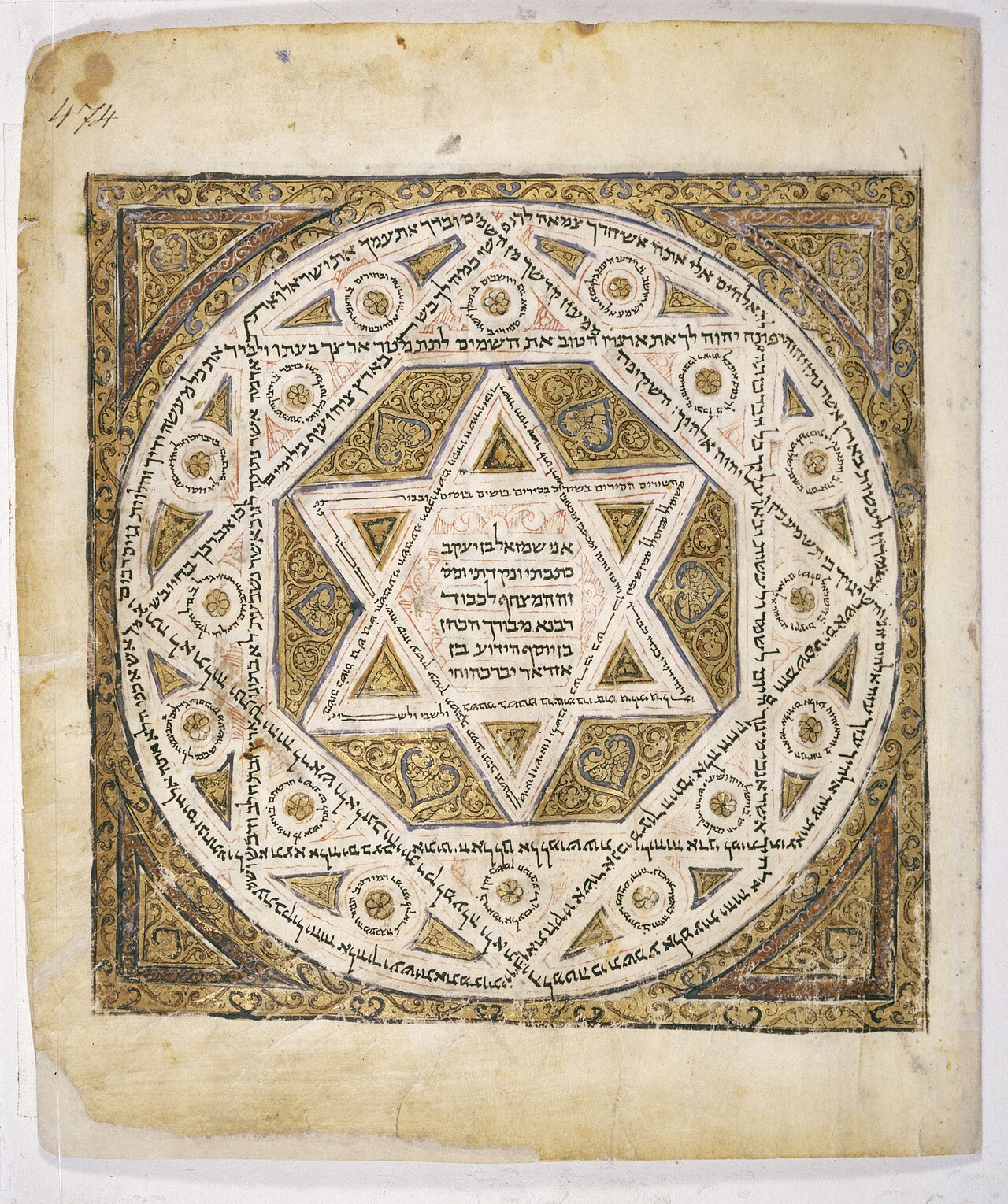
The Zohar.
Its authorship has been disputed since the decade it appeared, by Yemenite and Lithuanian sceptics long before any academic. It is nevertheless the third pillar of Jewish literature by influence, and Lecha Dodi, sung everywhere on Friday night, comes straight out of its world.
The Zohar appeared in Castile in the 1280s, circulated by Moses de Leon, who said he was copying an ancient manuscript of the second-century sage Shimon bar Yochai. His widow reportedly said he wrote it himself, and the question has never closed — Yemenite and Italian sceptics attacked the attribution within a couple of centuries, the Vilna Gaon's circle treated it as authentically ancient, and modern scholarship following Gershom Scholem places it firmly in thirteenth-century Spain, written in an Aramaic that no one ever spoke. None of which affected its authority. It became the third pillar of Jewish literature after the Bible and the Talmud, supplying the sefirot, the Shechinah as the feminine divine, the sparks and the husks, and the idea that human action affects the inner life of God. Sephardi and Mizrahi communities integrated it into ordinary devotion — Moroccan and Syrian Jews chant it aloud without analysing it, and it is read at a house of mourning. Lithuanian tradition treated it as dangerous and restricted access. Lecha Dodi, sung in every synagogue on Friday night, was written by a Safed kabbalist and is pure Zohar.
The same ground, other faiths
claims that share this one's ideasSign in to open the first thread. Everything here is attributed.