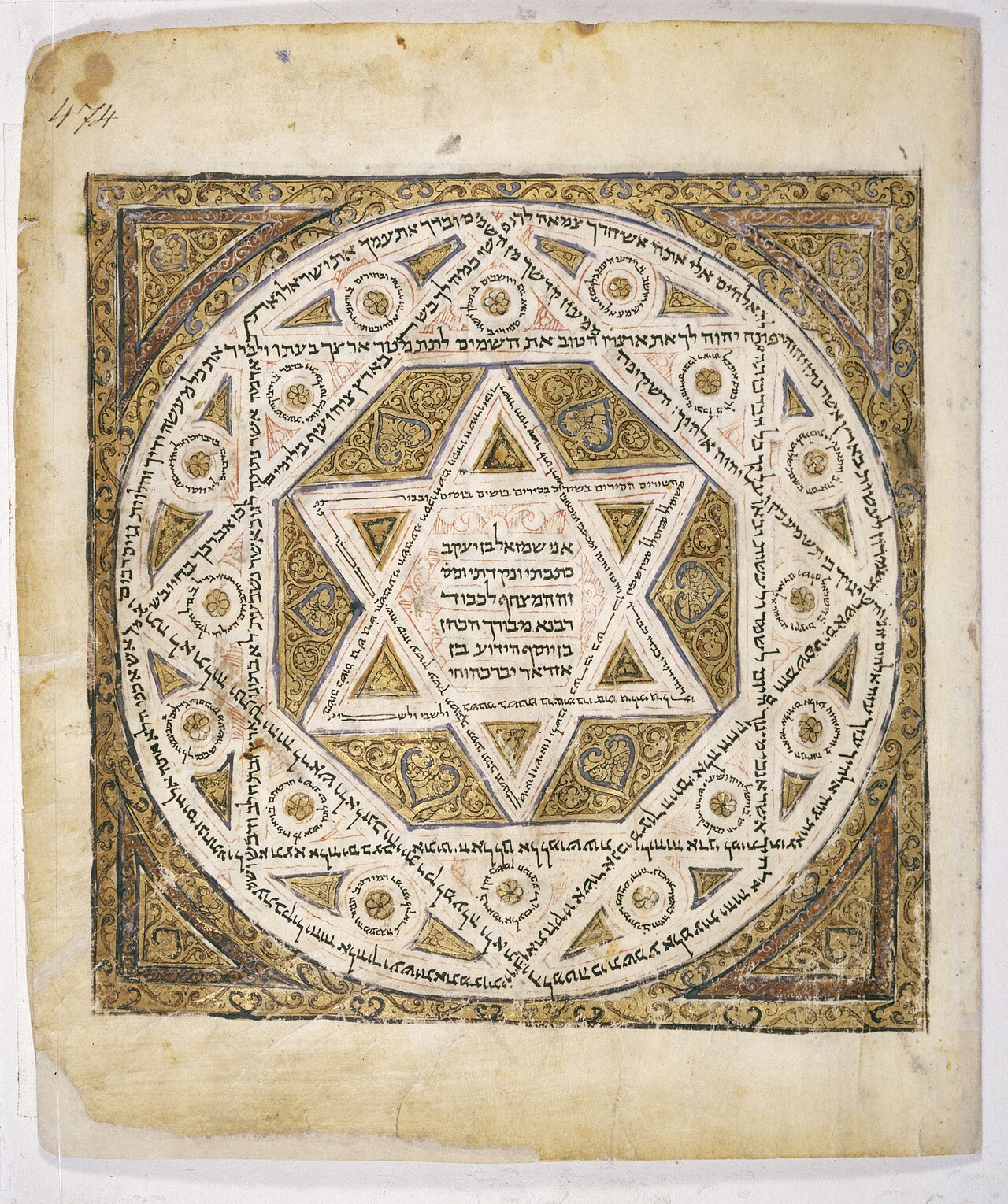
Scripture of Judaism
The Talmud.
The oral law written down: Mishnah plus centuries of argument — Judaism's operating system, preserved in debate form.
LanguageHebrew and Aramaic
Composedc. 200–600 CE
What it holds63 tractates of law and lore — 2,711 pages in the standard printing
How it is usedStudied daily; the Daf Yomi cycle finishes it in seven and a half years
Understanding it — context, not catechism: how this passage is held
The Talmud is not a book of answers but a transcript of argument: the Mishnah states a law, the Gemara interrogates it across centuries and continents, and dissenting views stay on the page. Its typical printed page surrounds the text with medieval commentators who argue with it and each other, so the layout itself teaches that study is participation. There are two — the Babylonian, which became authoritative, and the Jerusalem — and traditional study is done aloud, in pairs, by design.
The same ground, other faiths
claims that share this one's ideas
The dharma of one's station.
Hinduism · precept
Go deeper →
The Five Precepts.
Buddhism · precept
Go deeper →
Ahimsa at the table.
Jainism · precept
Go deeper →
The Ten Commandments.
Christianity · precept
Go deeper →
Halal — the lawful.
Islam · precept
Go deeper →
Whether Sikhs should eat meat.
Sikhism · core tenet
Go deeper →
Sign in to open the first thread. Everything here is attributed.