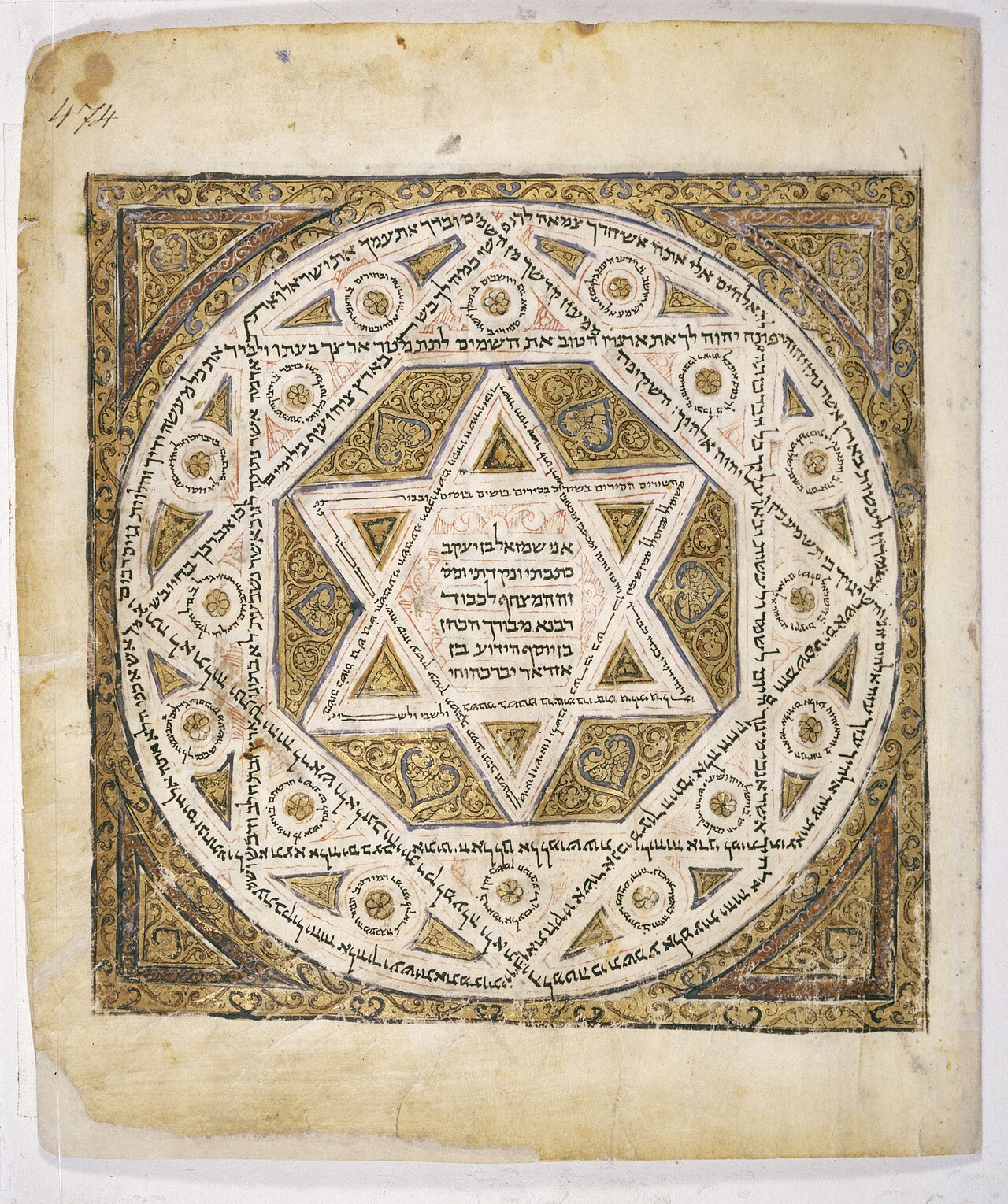
Rashi.
He answers the question a reader is about to ask, and writes I do not know when he does not. His grandsons became the Tosafists who argue with him in the outer margin, so the family disagreement is printed around every page.
Shlomo Yitzchaki of Troyes wrote the commentary that every Jewish child meets first and every scholar keeps open, and its power is its restraint. He explains the word the reader has just stumbled on, gives the plain sense before the homiletic one, quotes midrash selectively and says when he is doing so, and — famously — writes that he does not know the meaning of a passage rather than manufacturing one. Around a thousand Old French words appear in Hebrew letters as glosses, and Romance philologists use them as evidence for eleventh-century French pronunciation. He made his living from vineyards. His three daughters were learned and their husbands and sons became the Tosafists, who printed their objections to him in the outer margin of the Talmud page, so that the standard page a student opens has Rashi arguing with the text on one side and his own grandsons arguing with him on the other. The first dated Hebrew book ever printed, in 1475, was Rashi on the Torah.
The same ground, other faiths
claims that share this one's ideasSign in to open the first thread. Everything here is attributed.